- Nearest
- MRT Wat Mangkon (Blue Line)
- Price
- Street meals are inexpensive
- Best for
- Street-food crawls
Chinatown after dark: the city's great street-food spectacle
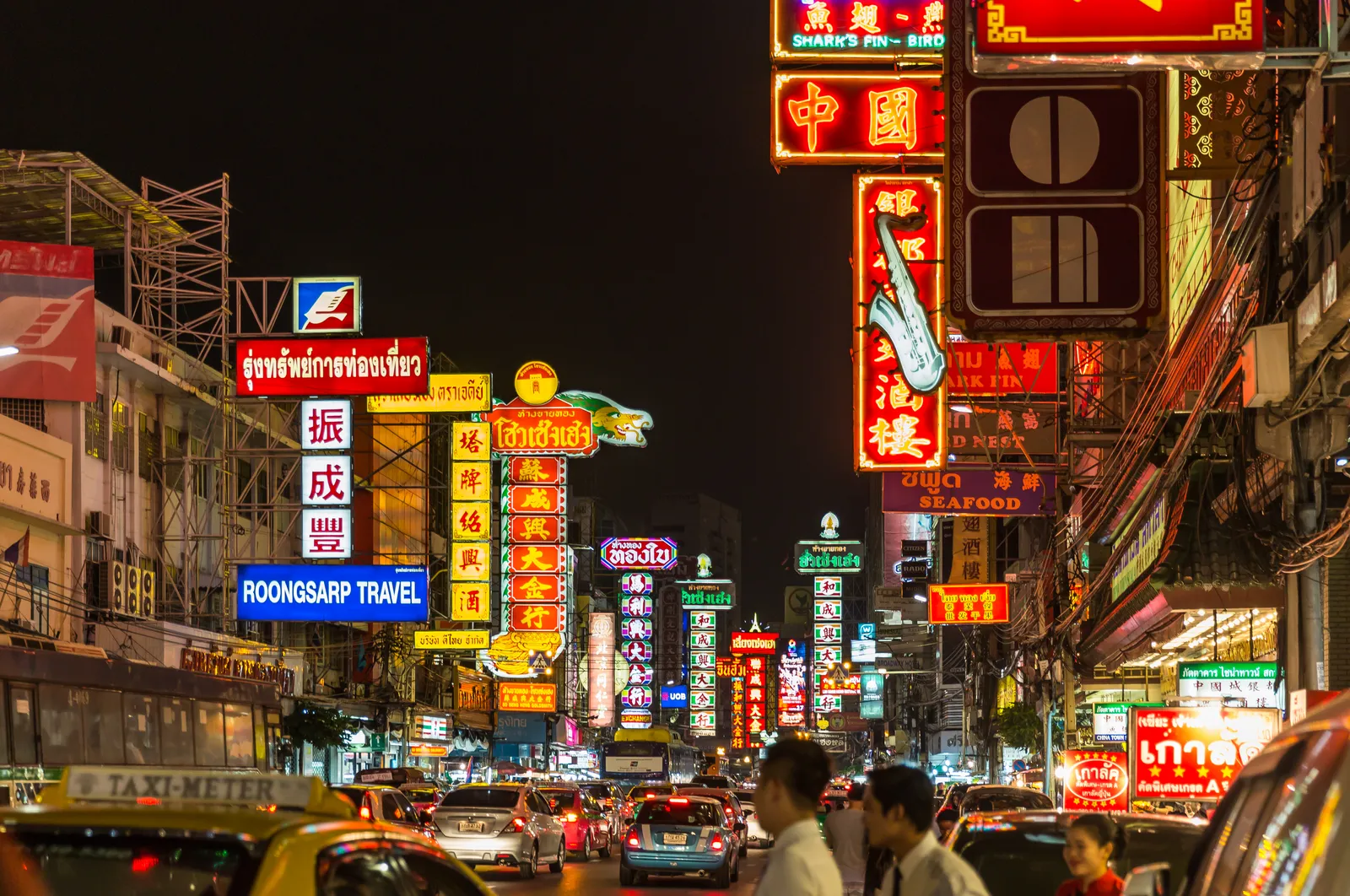
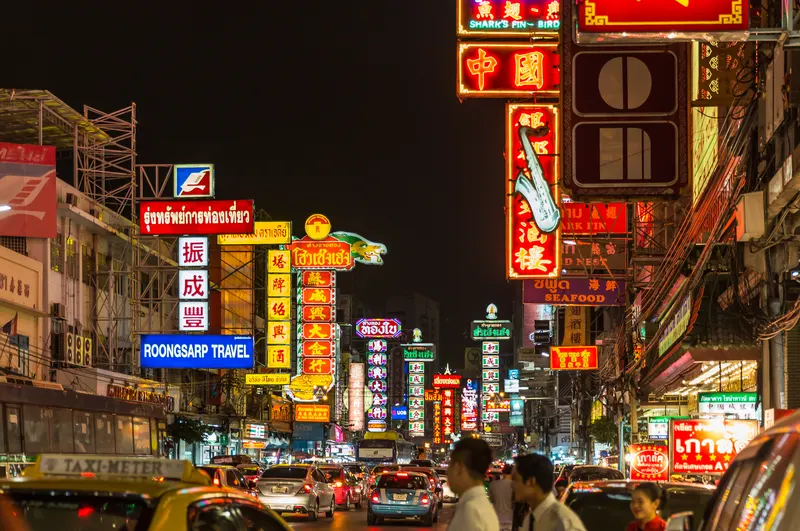
Yaowarat is a walking experience best had at night. By day it is hot, dense and frankly a slog; after sunset it transforms into a river of neon signs, sizzling woks and tables that spill onto the pavement. The main thoroughfare, Yaowarat Road, is the spine, but the real magic is in the side sois — fish-ball noodle stalls, oyster omelettes, grilled seafood and stands selling toasted-bread desserts and fresh-cut fruit. Come hungry and walk slowly, grazing as you go.
Start near the Chinatown Gate at Odeon Circle and drift west along Yaowarat, ducking into the gold-shop lanes and the lantern-strung alleys as you go. It is loud, crowded and gloriously alive — one of the city's great free spectacles and a genuinely romantic place to eat in the evening, all warmth, steam and shared plates. Wear comfortable shoes; the sidewalks are uneven and the best spots are often the most crowded.
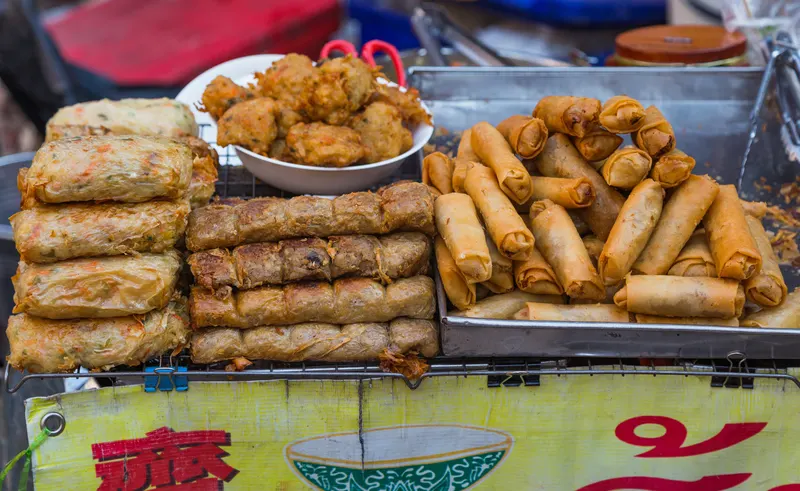
- Walk Yaowarat Road and its food sois after dark, weekend evenings are peak
- Start at the Chinatown Gate / Odeon Circle and head west
- Look for stalls with Thai customers and short menus over laminated photo menus
- Carry small cash notes — most stalls do not take cards
Watch out
Politely decline tuk-tuk drivers pitching cheap city tours or 'closed temple' stories near the gates; mind your phone and bag in the late-night crush
Find your bearings
Map pins
Map data © OpenStreetMap contributors · Tiles © OpenFreeMap
Where to stay in Chinatown
The standout places to stay right here, by price tier — tap a card for the property. We don't quote rates, so check live prices on each hotel's own site.
- Chinatown · Talat Noi฿฿ · ~฿2,200/night
Ago Hotel Chinatown
A modern urban-retreat boutique built around a lush garden with a rooftop saltwater pool, set on Mahapruttharam Road on the edge of the old Talat Noi quarter.
- Chinatown · Soi Nana฿฿
Ba Hao Residence
Two en-suite guest rooms sit above the moody Ba Hao cocktail bar in a renovated shophouse on Chinatown's hip Soi Nana, with one room overlooking the lane and another facing Wat Traimit.
- Chinatown · Yaowarat฿฿ · ~฿3,500/night
Shanghai Mansion Bangkok
Set in an 1892 building on Yaowarat Road that once served as Bangkok's first Chinese opera house, the Thai stock exchange and a textile-trading house.
jazz-age Chinatown glamour ✦
- Chinatown · Talat Noi฿ · from ~฿400
Loftel 22 Hostel
Tucked into the century-old Talat Noi riverside quarter, within walking distance of Chinatown, Wat Pho and the Grand Palace.
design-hostel value off the river ✦
- Chinatown · Yaowarat฿ · from ~฿350
Luk Hostel
A completely renovated Chinese-style building with an impressive rooftop and glasshouse, three minutes' walk from Yaowarat's food stalls.
The daytime trading city: gold, temples and market lanes
Yaowarat is one of the world's great Chinatowns, settled largely by Hokkien and Teochew Chinese, and the daytime quarter still runs on commerce. The main road is lined with gold shops whose red-and-gold signage glows even in daylight, interrupted by herbal pharmacies, dried-goods sellers and the cramped market lanes of Sampeng and Talat Kao, where wholesalers move everything from fabric to festival decorations. It is hot and elbow-to-elbow, but it is the real working heart of the neighborhood.
The temples give the area its quieter counterpoint. Wat Traimit, near the Chinatown Gate and Hua Lamphong, holds a five-and-a-half-tonne solid-gold Buddha that was hidden under plaster for generations. A few minutes north, Wat Mangkon Kamalawat — the dragon temple that gave the MRT station its name — is the spiritual center of Thai-Chinese Bangkok, thick with incense and busiest around the festivals. Cover your shoulders and knees if you step inside either.
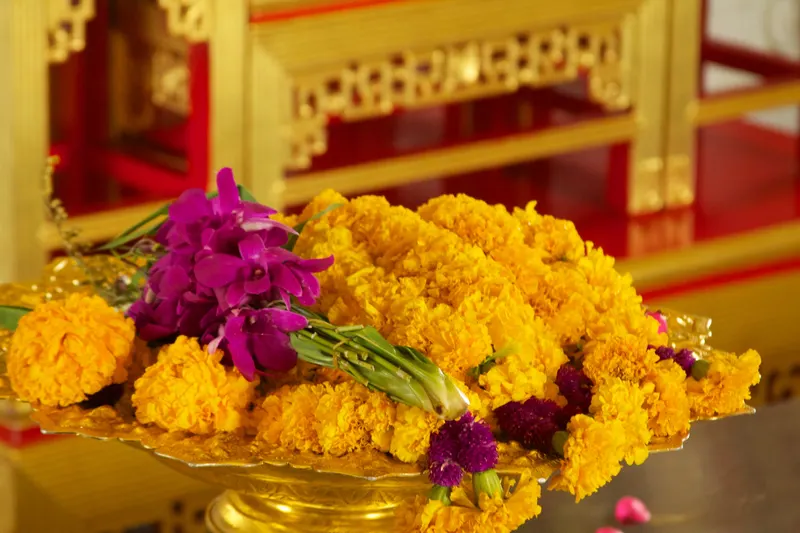
- Gold shops, herbal pharmacies and the Sampeng / Talat Kao wholesale lanes by day
- Wat Traimit: the solid-gold Buddha near the Chinatown Gate and Hua Lamphong
- Wat Mangkon Kamalawat: the incense-thick dragon temple beside its MRT station
- Daytime is hot and dense — keep visits short and save the eating for the evening
Festivals and the crowd: Chinese New Year and the Vegetarian Festival
Twice a year Yaowarat stops being a neighborhood and becomes an event. Chinese New Year (late January or February, on the lunar calendar) drapes the whole quarter in red and gold, fills the streets with lion dances and firecrackers, and draws crowds so thick that walking Yaowarat Road becomes a slow shuffle. The Vegetarian Festival (Jay), usually in late September or October, turns the food stalls meat-free and the air yellow with festival flags, with temples running special rites and queues forming at the most famous Jay kitchens.
Both are extraordinary, but plan around the pressure. Go early in the evening before the crush peaks, keep a hand on your bag, and accept that you will move at the speed of the crowd. If big crowds aren't your thing, visit Chinatown on a normal weeknight instead — the food is just as good and you can actually find a seat. For exact dates, which move every year, check our festival guides before you commit a night to it.
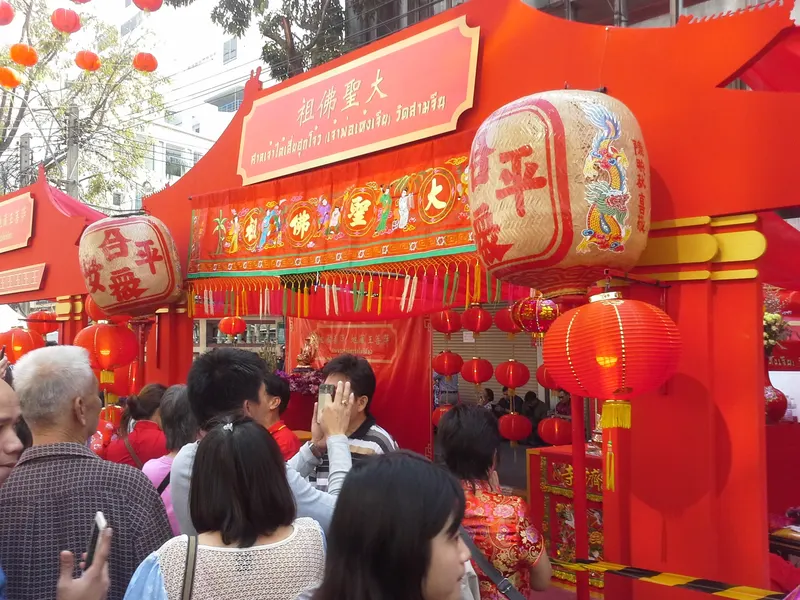
- Chinese New Year: lion dances, firecrackers and red-and-gold streets, intensely crowded
- Vegetarian Festival (Jay): meat-free stalls, yellow flags and temple rites in autumn
- Arrive early evening before the peak crush; mind valuables in dense crowds
- For a calmer visit, come on a normal weeknight — the food doesn't change
Staying in Yaowarat: MRT access, hotels and who it suits
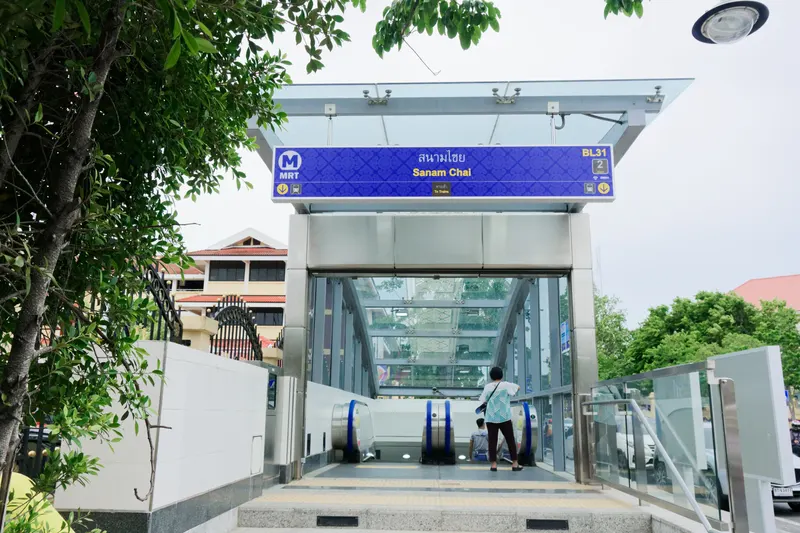
Until recently Chinatown was firmly off the rail grid; the MRT Blue Line changed that, with Wat Mangkon station depositing you in the middle of the action and Hua Lamphong covering the southern edge. That makes Yaowarat far more viable as a base than it used to be — you can be on the subway in a couple of minutes and reach the Old City temples, Silom or the river without a taxi. The Chao Phraya boats at Ratchawong pier add a scenic second option for the river temples and ICONSIAM.
The hotels here lean toward small, characterful boutique and heritage stays carved out of old shophouses, with a handful of higher-end options; this is not a district of big chain towers. Yaowarat suits travelers who prioritize atmosphere, street food and being in the thick of it, and who don't mind noise and crowds on the doorstep. Light sleepers and families wanting pools and space will be happier in Siam or Sukhumvit and can visit Chinatown for dinner. Compare the boutique options before you book, and confirm rates directly.
- MRT Wat Mangkon puts you in the center; Hua Lamphong covers the south edge
- Boutique and heritage shophouse stays dominate — characterful but compact
- Best for: street-food lovers and atmosphere-seekers happy with noise and crowds
- Less ideal for: light sleepers and families wanting pools, space and quiet

Sources
- MRT Bangkok (MRTA) ↗
Official Blue Line network and stations, including Wat Mangkon.
- Chao Phraya Express Boat ↗
Official river-boat routes and piers, including Ratchawong.
- TAT — Chinese New Year Festival 2026 ↗
Official festival dates and Bangkok/Yaowarat programme (dates move yearly).
- TAT — Yaowarat Chinese New Year ↗
Official event listing for the Chinatown New Year celebration.