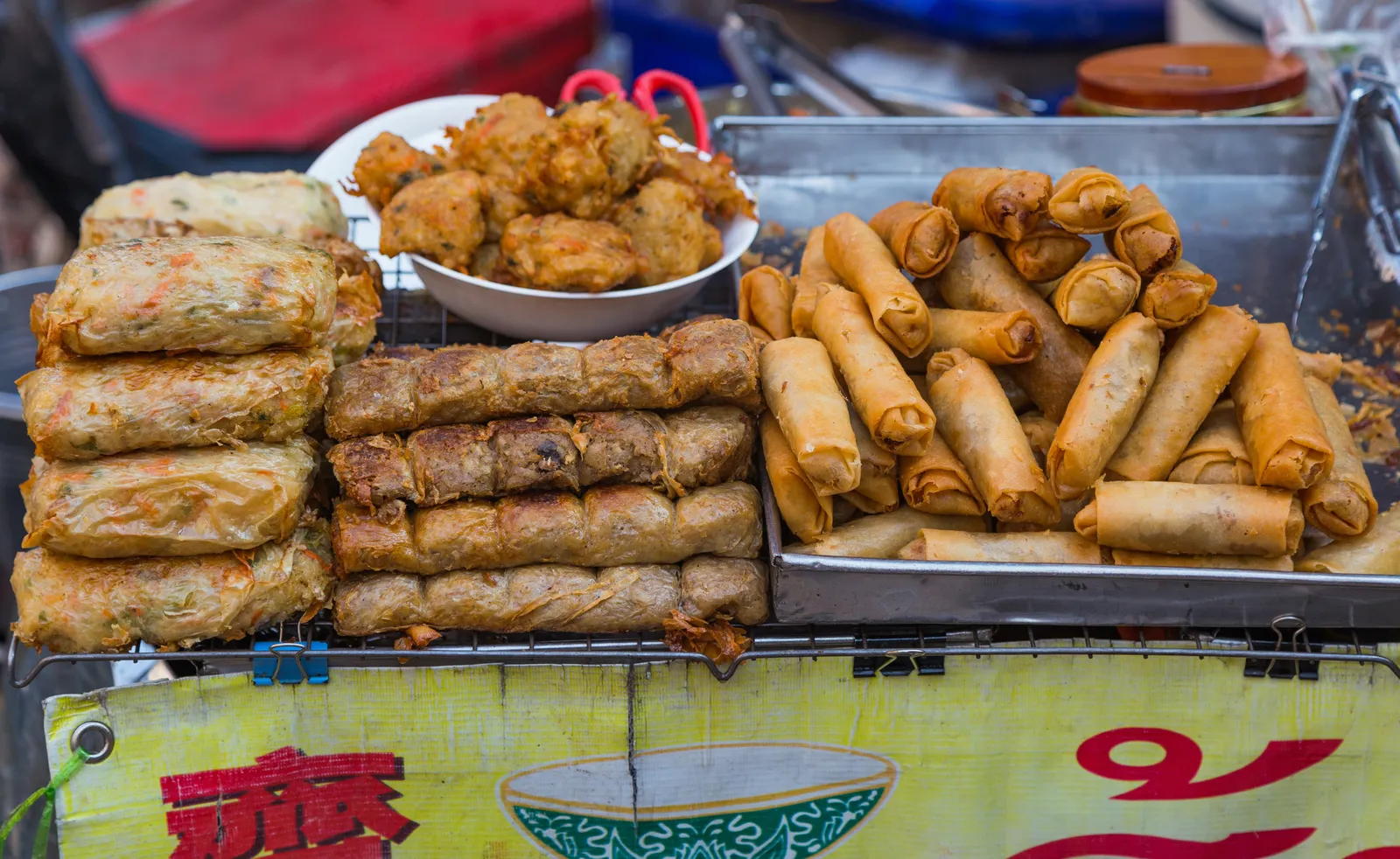
- Time needed
- Morning carts for breakfast and lunch
- Getting there
- Chinatown via MRT Wat Mangkon
- Price
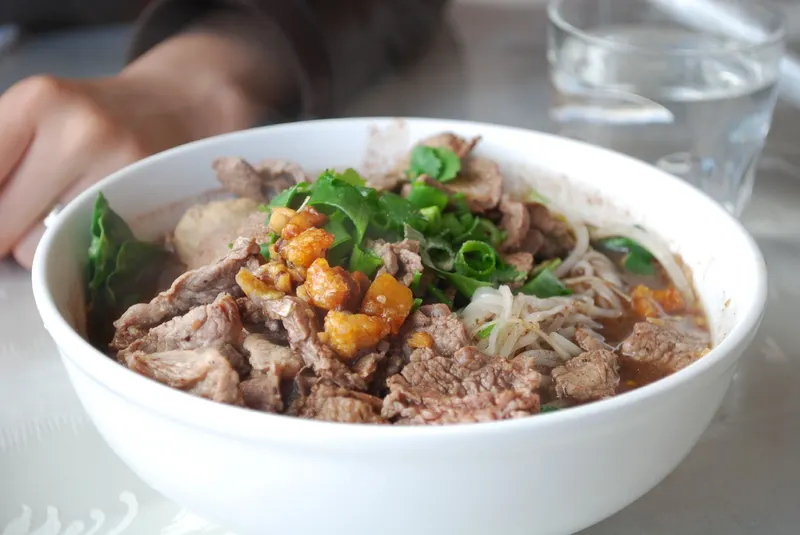
- A noodle
- Best for
- First-timers
Why street food is the soul of Bangkok
Bangkok's best meals rarely come with a tablecloth. They come from a wok on a sidewalk, a charcoal grill rolled out at dusk, or a noodle stall that has perfected a single bowl for thirty years. Pull up a plastic stool, point at what looks good, and pay very little for some of the most satisfying food you will eat anywhere. Treating street food as the main event rather than a budget fallback is the single best decision a first-time eater can make.
The reason it works is craft and repetition. A vendor who cooks one dish all day, every day, for decades, gets very good at it, and the economics of a cheap stall reward consistency over variety. That is why a 40-baht plate of noodles can outshine a hotel kitchen, and why following a long local queue is almost always the right call.
It is also how you read the city. Mornings belong to rice-and-curry carts and grilled-pork-skewer stalls feeding the commute; afternoons go quiet in the heat; evenings explode back into life as the night stalls and markets fire up their woks. Match your grazing to that rhythm and the heat works for you rather than against you.

- Eat where it's busy and freshly cooked — turnover is the best hygiene signal there is.
- Follow local queues over tourist crowds; a line of office workers at lunch is a strong recommendation.
- Graze in stages: order from one stall, eat, then move on to the next rather than committing to one menu.
- Mornings for breakfast carts, evenings for the big night scene; midday is for air conditioning.

Cash & cards
Cash only at most stalls — carry small notes; vendors rarely break large bills and almost never take cards
Where to eat: Chinatown, markets, malls and night stalls
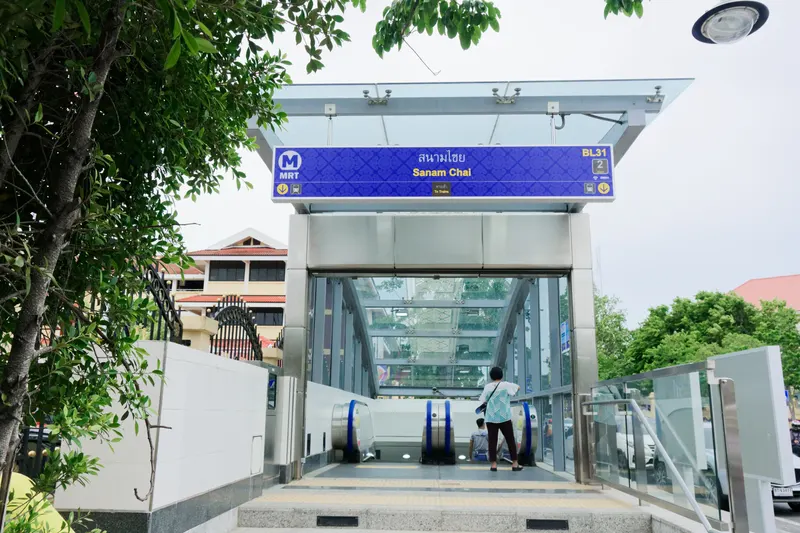
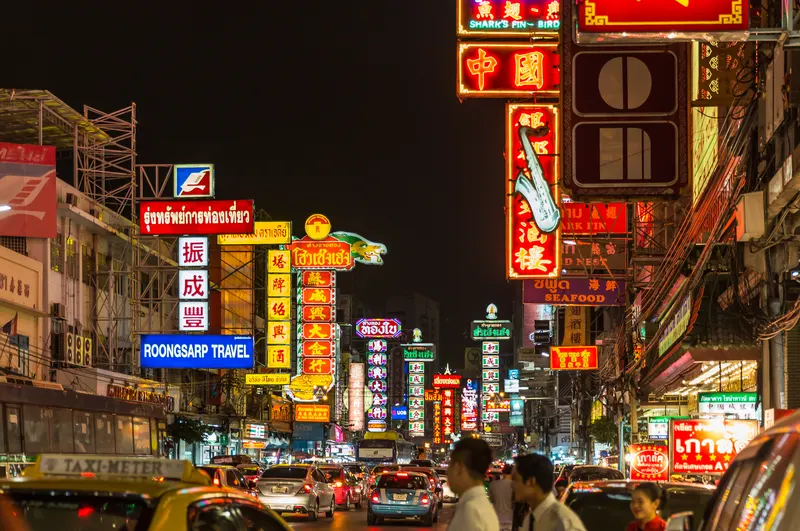
If you do one street-food outing, make it Yaowarat after dark. Bangkok's Chinatown turns into an open-air dining hall once the neon flickers on — grilled seafood on plastic stools, peppery rice-roll soup, oyster omelets and a long row of dessert shophouses. The easiest approach is the MRT to Wat Mangkon station, then a slow graze down the main road and into the side sois. Weekends are heaving; a weeknight is calmer.
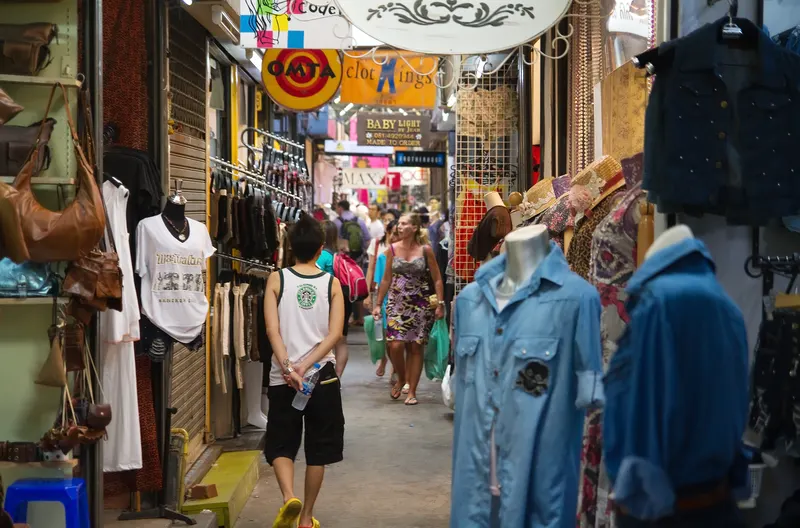
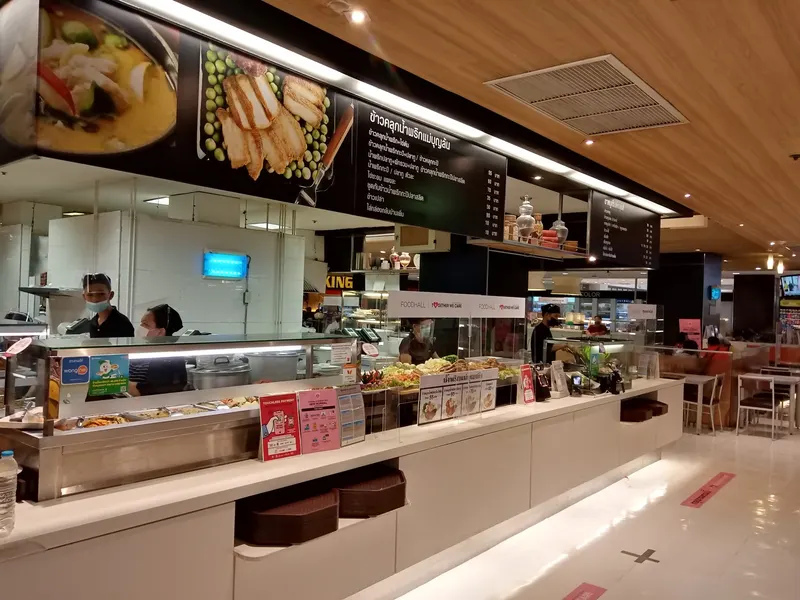
By day, fresh markets and food courts carry the scene. Markets like Or Tor Kor sell immaculate fruit and ready-to-eat curries; night markets turn dinner into an event with rows of stalls and shared tables. When the midday heat peaks or the afternoon rain arrives, a mall food court is the comfortable backup — clean, cheap, air-conditioned, and a low-stress way to sample a dozen Thai dishes by tapping a stored-value card from stall to stall.
Beyond the headline spots, the best street food is wherever you happen to be standing. A busy soi corner with a single wok and a steady stream of locals is as good a meal as any famous name. Keep your eyes open as you walk and let the smoke and the crowd guide you.
- Yaowarat (Chinatown): the city's best night-time street food — MRT Wat Mangkon, then graze the sois.
- Fresh markets like Or Tor Kor: daytime curries, fruit and dessert stalls under one roof.
- Night markets: rows of stalls, shared tables and a party atmosphere after dark.
- Mall food courts: the air-conditioned, hygienic backup for heat and rain.
Eating safely: hygiene, spice and water
Street food in Bangkok is, on the whole, safe and delicious, and the precautions are common sense rather than fear. The single best filter is volume: a busy stall with high turnover cooks fresh and sells out fast, so the food never sits. Look for a vendor cooking to order over a hot wok or grill, watch the plate come straight off the heat, and favor stalls where locals are eating rather than ones angled at passing tourists.
Drink bottled or filtered water rather than tap, which is fine for brushing teeth but not for drinking. Ice from a proper supplier — the cylindrical tube ice with a hole, used in drinks across the city — is generally fine; it is mass-produced and trucked sealed. Fresh fruit that a vendor peels and cuts in front of you is a safe, cooling snack in the heat.
Spice is real here, so pace yourself. The phrase mai phet (not spicy) and phet nit noi (a little spicy) will save you if you are unsure, though som tam and southern curries can still surprise. Start mild, build up, and keep a sweet drink or a plate of plain rice handy as a fire extinguisher.
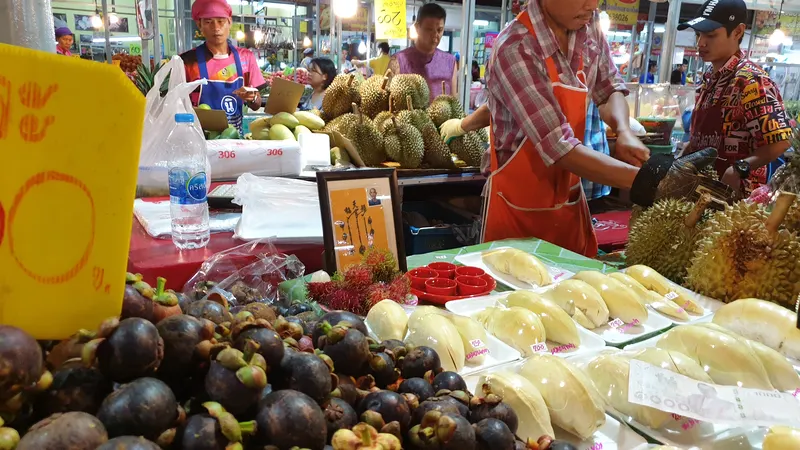
- Pick busy, high-turnover stalls cooking to order — the best hygiene signal is a crowd.
- Bottled or filtered water only; tube ice from a proper supplier is generally fine.
- Say mai phet for not spicy or phet nit noi for a little — and start milder than you think.
- Fruit peeled and cut in front of you is a safe, cooling snack in the heat.

Cash, ordering and a plan
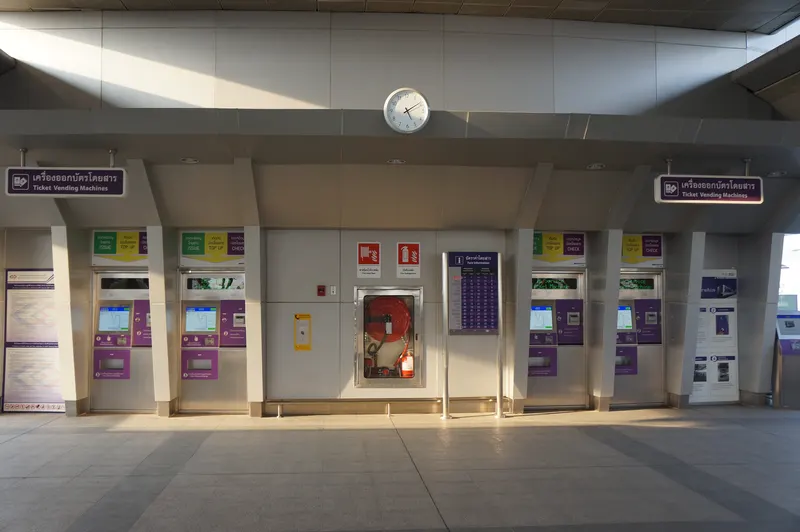
Street food runs on cash. Most stalls do not take cards, and a noodle vendor will struggle to break a large bill, so carry a mix of small notes and coins — 20s and 100s are the workhorses. Convenience stores are everywhere if you need to break a bigger note or grab a cold drink between stops.
Ordering is easier than it looks. Pointing works, the staples have simple names, and most vendors are used to visitors. Order one dish at a time, eat it where you bought it or perched nearby, then move on; this graze-and-go rhythm lets you taste far more across an evening than sitting down to a single big plate. If you would rather not improvise, a guided food tour walks you through a neighborhood's best stalls and teaches you to order with confidence.
For a structured evening, slot a street-food crawl into a wider day. The food itinerary sequences grazing without backtracking, and the what-to-eat guide gives you a hit list to work through. Go hungry, pace your spice, keep small notes handy, and let the busiest woks make your decisions for you.

Sources
- MRT Bangkok (MRTA) ↗
Official metro operator — Wat Mangkon station (BL29) is the Chinatown/Yaowarat stop.
- Tourism Authority of Thailand ↗
Official destination information for Bangkok markets and street-food districts.