- Time needed
- Tied to mall hours
- Getting there
- Most sit inside BTS- or MRT-connected malls
- Price
- A single plate at a mall food court costs about the s…
- Best for
- Families
Why food courts are a smart Bangkok move
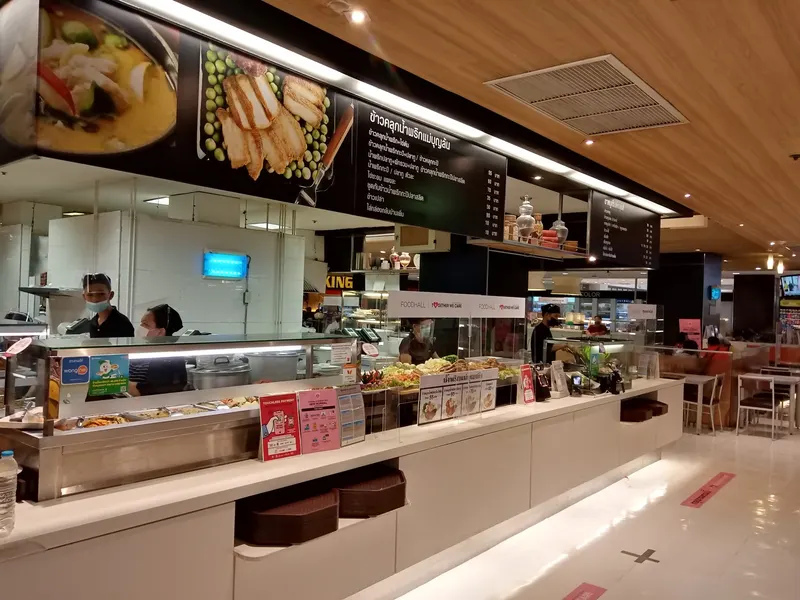
Mall food courts are one of Bangkok's quiet travel hacks. They take everything that makes street food great — variety, low prices, freshly cooked Thai dishes — and remove the friction: the heat, the hygiene worry, the language gap and the where-do-I-even-start paralysis. You walk into a cool, bright room, scan rows of stalls with photo menus, point at what you want, and carry a tray to shared seating. For a family with a tired toddler, a first-timer nervous about a stall, or anyone who's had enough sun for one day, that's a genuine relief.
They're also the perfect midday or rainy-afternoon meal in a heat-smart plan. While the street stalls bake at noon and the temples fill with tour groups, a food court gives you proper Thai food in air-conditioning, often one escalator from a BTS or MRT station. You can eat well, cool down, and step back out at four o'clock ready for the evening. Pair that logic with the wider rainy-day playbook and you've got an indoor backup that doubles as a real meal rather than a compromise.
- Variety: pad thai, boat noodles, khao man gai, curries, papaya salad and dessert under one roof.
- Hygiene and comfort: aircon, clean tables, and stalls cooking in plain sight.
- Low stress: photo menus, English signage, and no need to commit to one stall.
- Transit-linked: most are inside malls wired straight to the BTS or MRT.

Book ahead
No reservations; many food courts use a prepaid card or QR system — top up at the counter, eat, then refund the balance on the way out
How the card and QR system works
Many Bangkok food courts run on a prepaid system rather than cash at each stall, and it trips up first-timers. The model is simple once you know it: stop at a top-up counter near the entrance, load a card or scan a QR for whatever amount you expect to spend, then use that balance to order at the stalls. After you eat, return to the counter and they refund any unspent balance. Some newer halls have switched to scan-and-pay or take cash directly, so glance at the signage when you walk in.
A few practical notes keep it smooth. Load a little more than you think you'll need so you can go back for dessert or a drink without re-queuing, and don't lose the card. Prices are posted clearly at each stall, a single plate costs about what a street meal does, and you can taste several dishes across a table for very little. Carry small change anyway — a juice cart or a stall just outside the food court may still be cash-only.
- Top up a card or QR at the entrance counter, then order stall to stall.
- Refund the unspent balance at the same counter before you leave.
- Load a bit extra so you can return for dessert without re-queuing.
- Some halls are cash or scan-and-pay direct — check the signage on the way in.
Mall courts vs. premium food halls
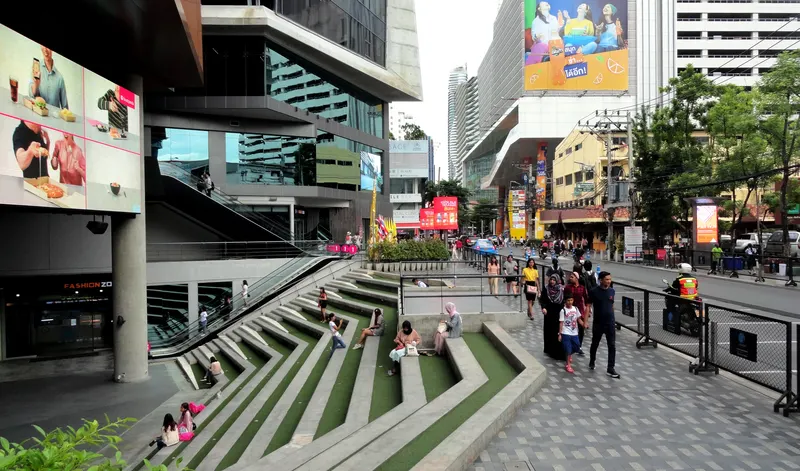
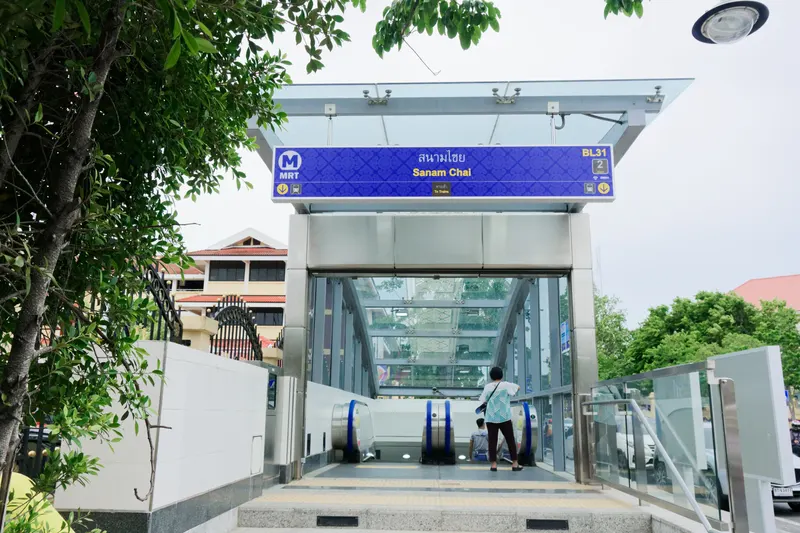
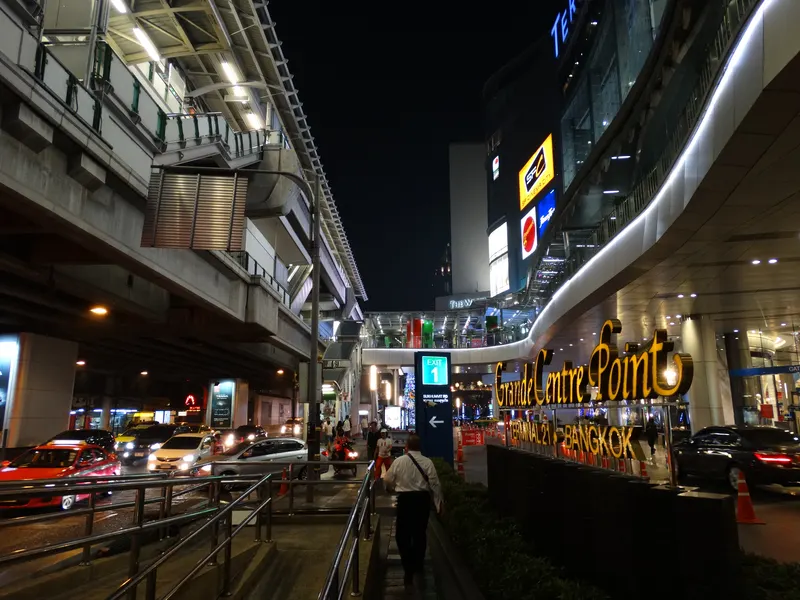
There are really two tiers. The classic mall food court is the everyday workhorse: rows of stalls, plastic trays, a card system and rock-bottom prices, found in malls across the city and especially handy in the central shopping cluster around Siam. They're not glamorous, but the food is honest and the value is unbeatable — the place to introduce nervous eaters to Thai food without any risk.
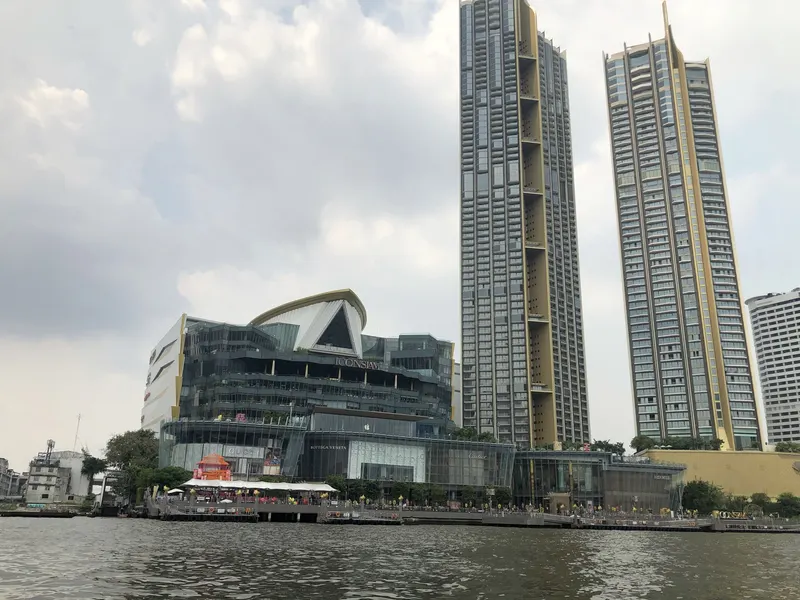
The premium food halls are a step up in setting and ambition. The big riverside mall ICONSIAM put a whole indoor floating-market food hall under one air-conditioned roof, with stalls themed around Thailand's regions and canal-side staging; it's a destination in its own right and pairs naturally with the mall's river views and the boat over. These premium halls cost a little more than a basic court but still undercut a sit-down restaurant, and they let you eat regional dishes — northern, southern, Isan — you might not otherwise track down. Choose the basic court for pure value and convenience, the premium hall when the meal is part of the day out.
- Basic mall courts: cheapest, fastest, found citywide — great near Siam.
- Premium food halls: regional Thai dishes, nicer staging, a destination feel.
- ICONSIAM's indoor floating-market hall pairs with river views and the boat trip.
- Both beat restaurant prices; premium halls cost a touch more than basic courts.
What to order at a food court
The joy of a food court is that you can build a whole Thai table in one lap of the room. Hit a noodle stall for boat noodles, pad see ew or a bowl of tom yum noodles; a rice stall for khao man gai (poached-chicken rice) or khao moo daeng (red pork rice); and a stir-fry counter for pad krapao (holy-basil minced pork or chicken over rice with a fried egg), the dish to order when you can't decide. Add a som tam (green-papaya salad) for heat and crunch, and you've covered the classics that street stalls do — only cooler and calmer.
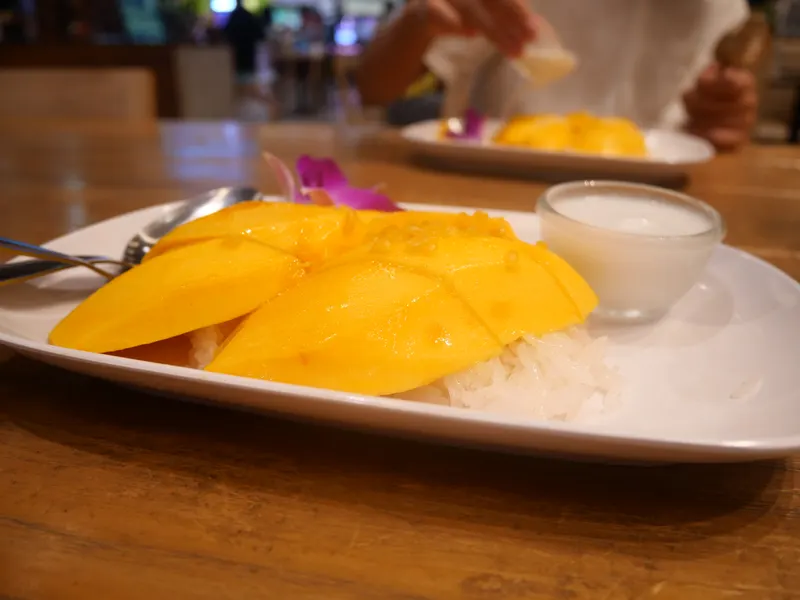
Most stalls cook on order, so it's fresh, and most will dial the chili down if you ask for it not too spicy (mai phet). Finish at the dessert and drinks counter: mango sticky rice when mango's in season, a bowl of shaved ice with toppings, or a cha yen (Thai iced tea) to wash it all down. Because portions are single-plate sized and cheap, the smart move is to order a few small things across the table rather than one big plate each — the food court is the easiest place in Bangkok to taste widely without commitment.
- Noodles: boat noodles, pad see ew, tom yum noodle soup.
- Rice plates: khao man gai, khao moo daeng, and pad krapao with a fried egg.
- A som tam for heat and crunch; say mai phet if you want it milder.
- Dessert and drinks: mango sticky rice, shaved ice, and a cha yen.
Who should make food courts a habit
Families get the most out of food courts: kids can pick familiar fried rice or noodles while the adults graze something more adventurous, the seating is roomy enough for strollers, and nobody has to keep a toddler quiet through a long restaurant meal. First-timers building confidence with Thai food can sample widely before braving the night markets, and travelers on a tight budget can eat three full meals a day here for less than one mid-range dinner.
They're also the answer to a few specific Bangkok problems: the midday heat that makes a street lunch unpleasant, the sudden afternoon storm, and the group that can't agree on one cuisine. Use them as the air-conditioned anchor in a day of outdoor sights — one cool meal for every hot block — and lean on the street and markets when the evening cools and the stalls come alive.
- Families: easy menus, space, and something for every appetite.
- First-timers: a low-risk way to learn what you like before the markets.
- Budget travelers: full Thai meals for very little, all day.
- Groups, heat-shy and rain-caught diners: one room solves all three.