- Time needed
- A focused temple morning covers two to four sites
- Best time
- Start at opening
- Nearest
- The headline temples cluster on Rattanakosin by the r…
- Price
- The big royal temples charge an entry fee
The headline temples, and how they differ
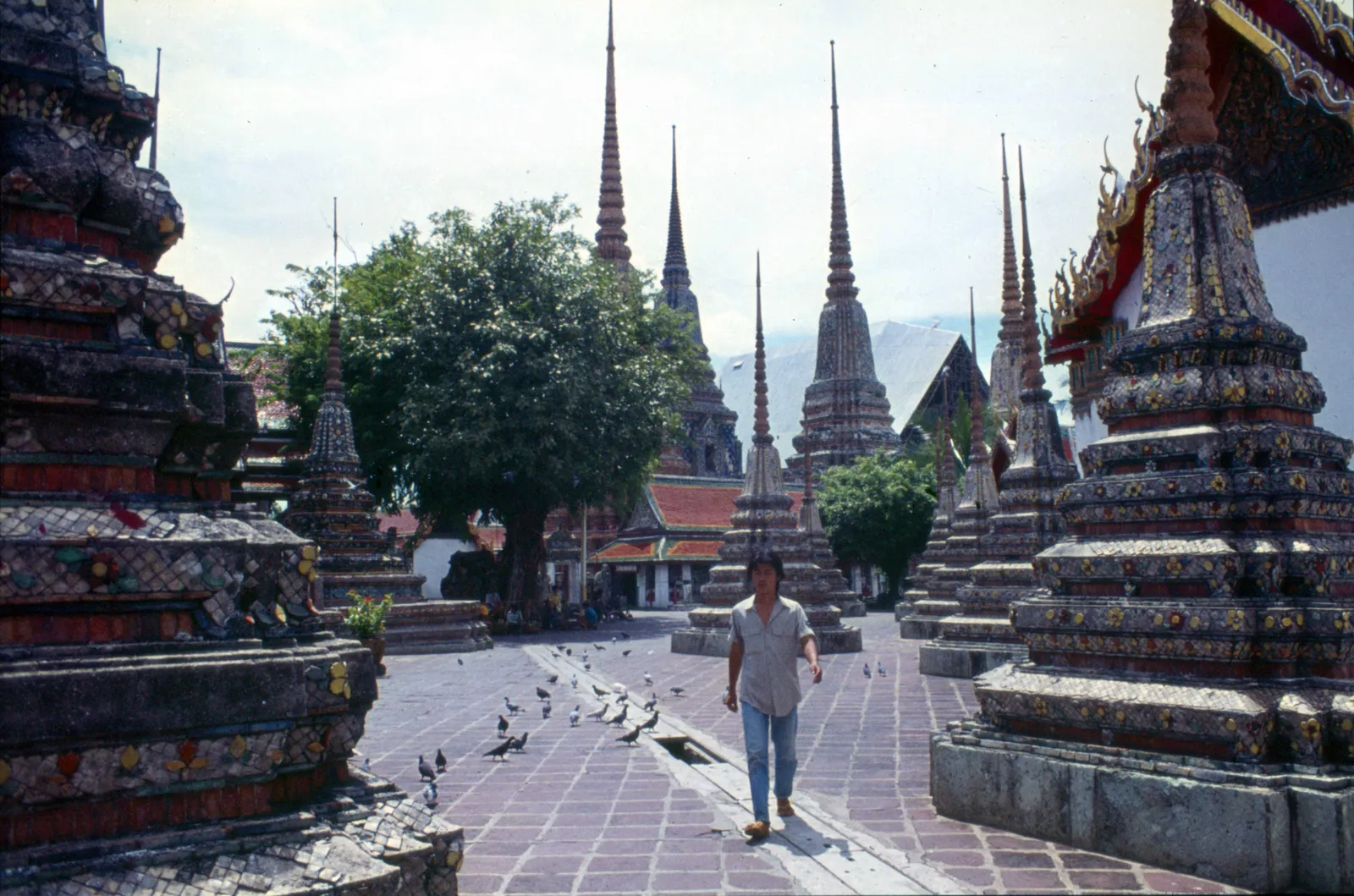
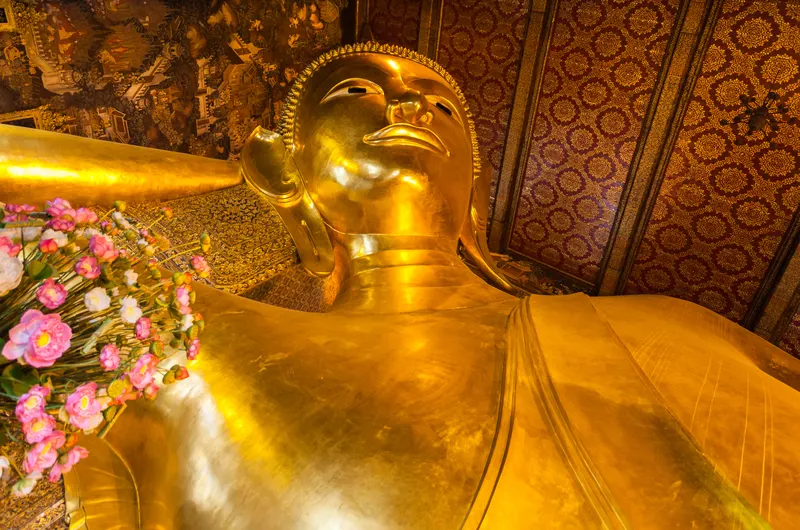
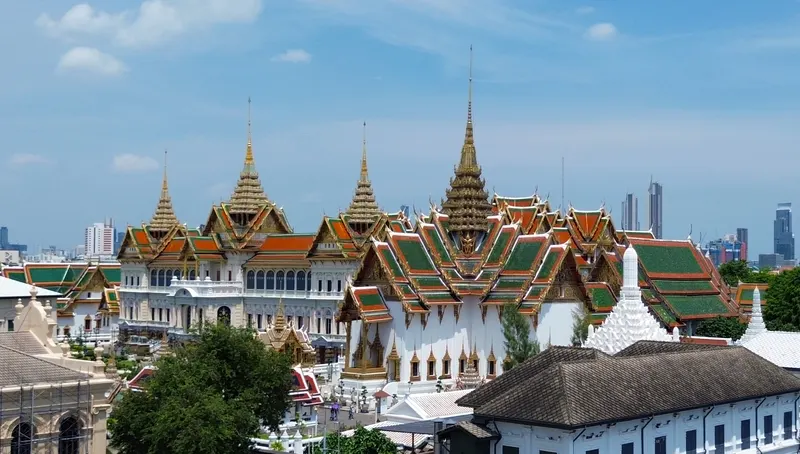
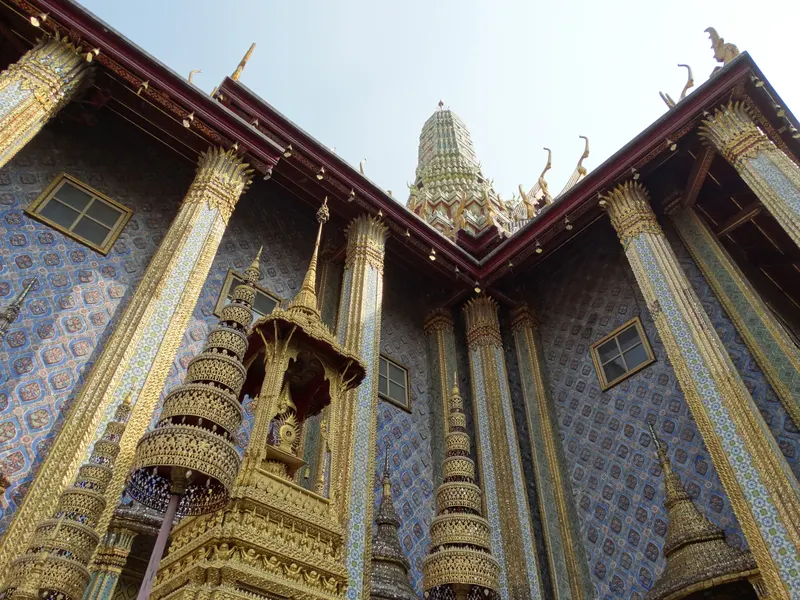
Bangkok's signature temples cluster on Rattanakosin, the old royal island by the Chao Phraya, and the classic morning runs three of them in a row. Wat Pho is home to the enormous gilded Reclining Buddha and quiet cloisters of golden images that photograph beautifully in soft side-light; it is also the spiritual home of Thai massage. Next door, the Grand Palace and Wat Phra Kaew (the Temple of the Emerald Buddha) are pure maximalism — glittering chedis, mythic guardians and the most ornate, busiest and strictest-on-dress complex in the city.
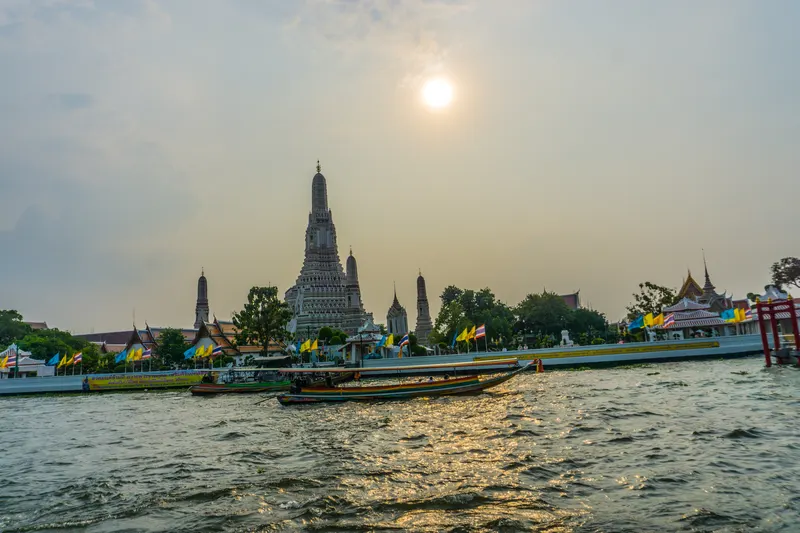
A short cross-river ferry brings you to Wat Arun, the Temple of Dawn, whose porcelain-studded central prang glows best in late-afternoon light — which is exactly why many people see it last, not first. Together these three are the must-sees, but they reward intention over box-ticking: do them early, give the giants the time they deserve, and resist the urge to cram a dozen temples into a day.
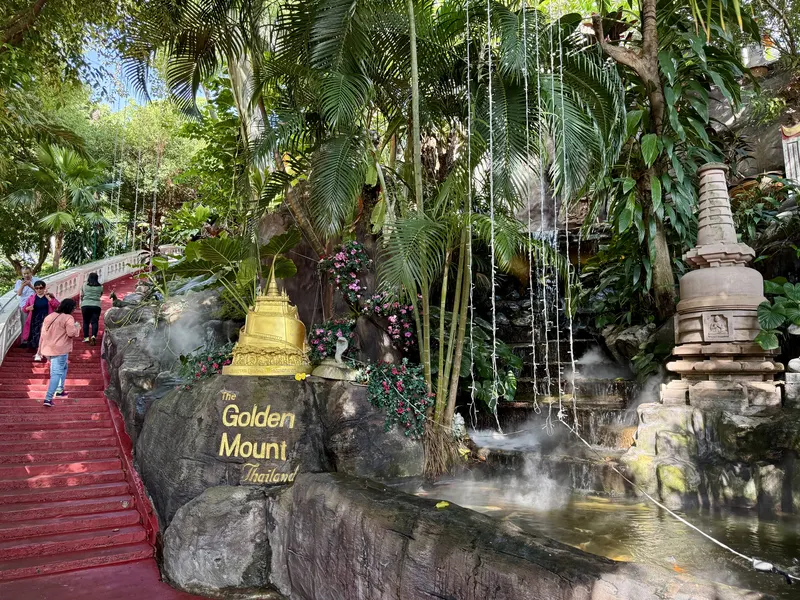
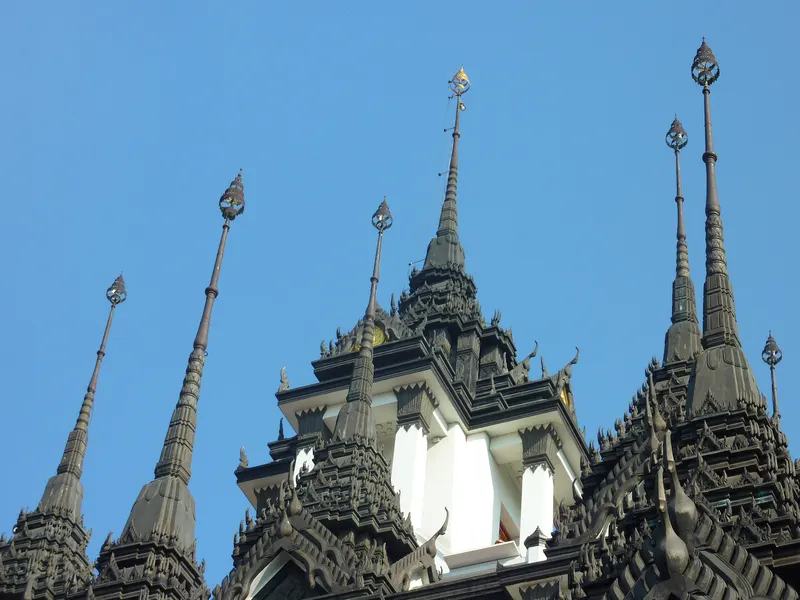
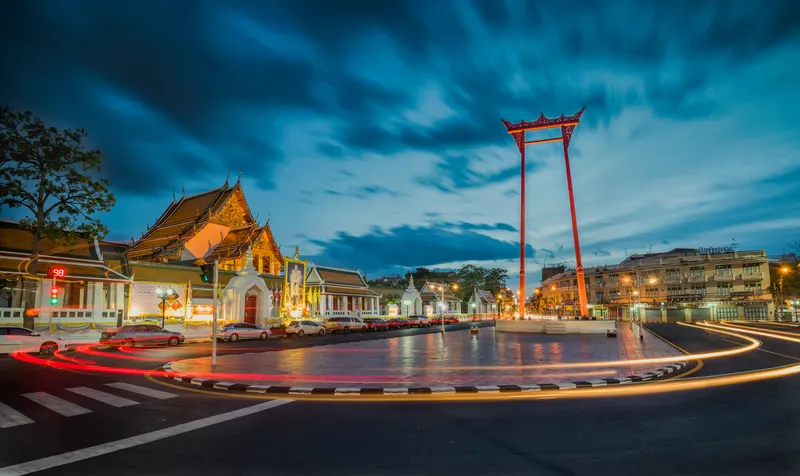
Beyond the trio, the quieter temples are where Bangkok's atmosphere really lives. Wat Suthat, by the towering red Giant Swing, holds a serene hall and some of the finest murals in the city, usually near-empty. Loha Prasat is the world's last 37-spire metal castle, with a calm rooftop climb. The Golden Mount earns a 360-degree Old City panorama. And in Chinatown, Wat Traimit guards a solid-gold Buddha while Wat Mangkon offers an incense-thick Chinese-temple experience entirely different from the royal sites.
- Grand Palace & Wat Phra Kaew — grandest, busiest, strictest dress code; go at opening
- Wat Pho — the Reclining Buddha, golden cloisters and the home of Thai massage
- Wat Arun — cross by ferry and stay for golden hour on the river
- Wat Suthat, Loha Prasat, Golden Mount — calmer, cheaper Old City alternatives
- Wat Traimit & Wat Mangkon — Chinatown's Golden Buddha and its great Chinese temple
Watch out
Ignore touts near the Grand Palace, Wat Pho and Wat Arun who claim a temple is 'closed today' and offer a tuk-tuk gem tour — walk to the official gate
Dress code
Cover shoulders and knees everywhere; the Grand Palace is the strictest — no exceptions at the gate
Choosing by effort, crowds and cost
Not every traveler wants the same temple day, so choose by what you can give. If you have one morning and want the icons, do Wat Pho and the Grand Palace and finish at Wat Arun — accept the crowds and the entry fees as the price of the headliners. If you want grandeur without the queues, swap one royal site for Wat Suthat or Loha Prasat, which are calm, photogenic and free or nearly so.
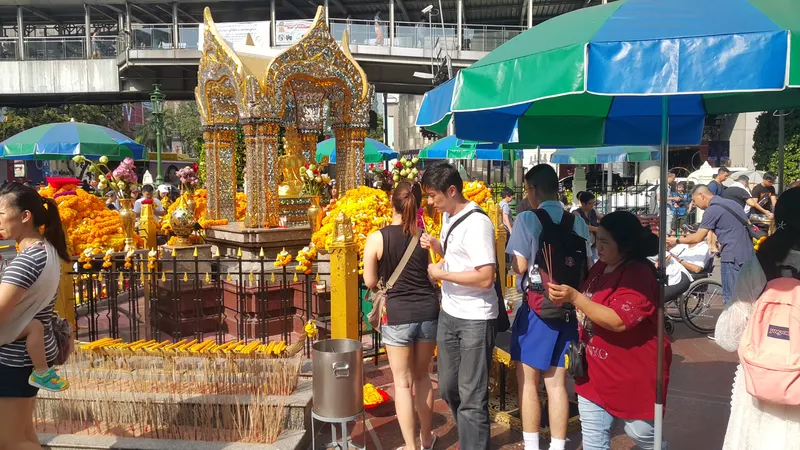
Effort is the other axis. The headline temples are flat walking, but the most memorable views ask for a climb: around 300 gentle steps up the Golden Mount, or the tight central spiral of Loha Prasat. Both pay off with a breeze and a panorama, and both are best in the cool of the morning. For a low-effort, high-reward cultural stop with no climbing and no ticket, the Erawan Shrine and Wat Mangkon are free, central and quick.
Cost-wise, the pattern is simple: the big royal temples charge a real entry fee, while neighborhood and Chinese temples are free or take a small donation. Carry small baht notes for donations and offerings, and budget your spending and your energy toward the two or three temples you most want to do properly rather than spreading thin across a dozen.
- One icon morning: Wat Pho → Grand Palace → Wat Arun (fees and crowds included)
- Calm and cheap: Wat Suthat, Loha Prasat, Golden Mount in the Old City
- For a view, expect a climb — Golden Mount (~300 steps) or Loha Prasat's spiral
- Free and central: the Erawan Shrine and Wat Mangkon, no ticket, no climbing
Sequencing a respectful route
The single biggest lever on a good temple day is timing. Start at opening, before the heat and the tour groups build, and front-load the open-air sights into the cool morning. Keep one air-conditioned block — a museum, a mall food court, a café — ready for the worst of the midday heat, and save Wat Arun for late afternoon, when the light is at its best and the morning crowds have thinned. In the rainy season, watch the sky and keep a covered backup for the inevitable downpour.
Geography makes the route. The Rattanakosin temples are walkable from one another and best linked on foot or by the river boats; the Chinatown temples cluster around the MRT Blue Line, with Wat Mangkon and Hua Lamphong stations both useful entry points. Use the Chao Phraya boats and the trains to move between clusters rather than sitting in traffic — and let a ready-made temple itinerary handle the heat-smart ordering so you do not improvise in the sun.
Above all, remember these are living religious sites, not just photo backdrops. Cover your shoulders and knees, be ready to remove your shoes inside the halls, keep your voice low, never point your feet at a Buddha image, and dress especially carefully for the Grand Palace, which turns visitors away at the gate. A little care here is what keeps these places special — and it is the difference between visiting Bangkok's temples and merely photographing them.
Where these are
Map pins
Map data © OpenStreetMap contributors · Tiles © OpenFreeMap
Sources
- Tourism Authority of Thailand ↗
Official tourism information for temple hours and events.