- Getting there
- Pick an area on the BTS
- Price
- Every tier is here
- Best for
- First-timers choosing one decisive base by transport…
The one rule that decides your first trip: stay near the train
Bangkok's traffic is legendary, and it is the single thing most likely to wreck a first-timer's plans. The fix is simple: pick a hotel within a five-minute walk of a BTS Skytrain or MRT subway station. From there the city opens up — the trains are clean, air-conditioned, frequent and almost never stuck. If your shortlist hotel is more than ten minutes' walk from a station, think hard about it; a cheaper room that costs you a taxi and twenty-five sweaty minutes every time you leave is not a bargain.
Distance from a station matters more than the neighborhood name. A so-so area beside a BTS stop will serve you better than a trendy one that strands you. The one exception is the riverside, where the Chao Phraya express boat acts as a transit line of its own. Hold that rule in mind as you read the contenders below — it cuts through almost every hard choice a first-timer faces.
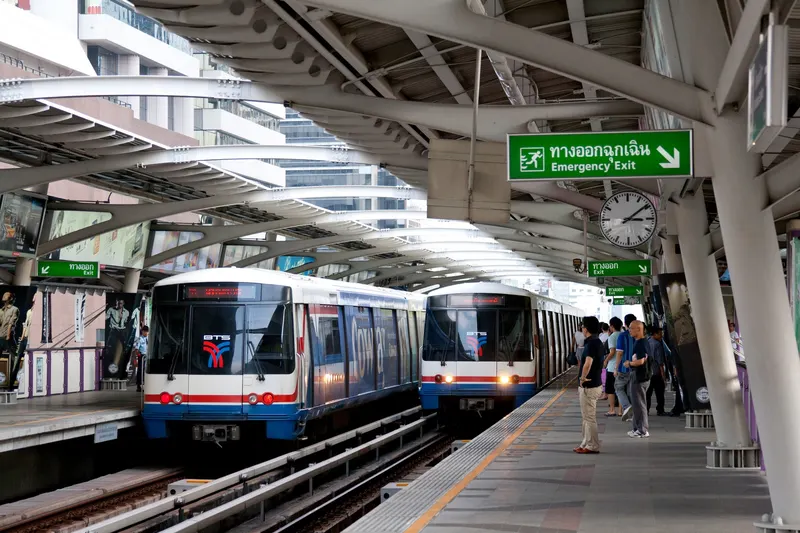
- BTS Sukhumvit and Silom lines cover most hotel districts above ground
- The MRT Blue Line loops through Chinatown, the Old City fringe and Chatuchak
- The Airport Rail Link runs from Suvarnabhumi to Phaya Thai (BTS interchange)
- Chao Phraya express boats serve the riverside and old town like a water Skytrain


Book ahead
For a first trip, Sukhumvit (Asok) or Siam is the safe, transit-easy default — book early in the cool season
Sukhumvit and Siam: the easy first-timer bases
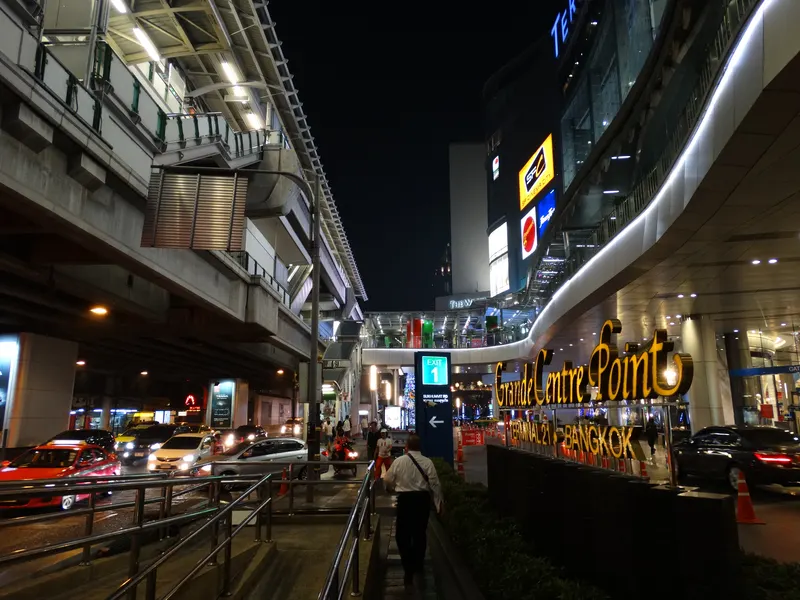
If this is your first time in Bangkok and you want zero friction, base yourself around Sukhumvit or Siam. Sukhumvit is the long BTS-lined spine of modern Bangkok and holds more hotels than any other part of the city; Asok (where the BTS meets the MRT) and Phrom Phong are the sweet spots, dense with dining, malls and rooms at every price, and a few minutes from Siam by train. Siam itself is the geographic and transit heart — the only BTS interchange, surrounded by malls linked by air-conditioned skywalks, with the Old City a short hop west.
Neither is the most atmospheric corner of Bangkok; both are shopping and skyscrapers. But for sheer convenience nothing beats them, and that is exactly what a first trip needs. You will rarely wait more than a few minutes for a train, you can walk to dinner and a rooftop without a cab, and you can reach almost any sight with at most one change. Pick Asok for the transit interchange, Phrom Phong for polish, and Siam if you want to be dead-center and rain-proof.
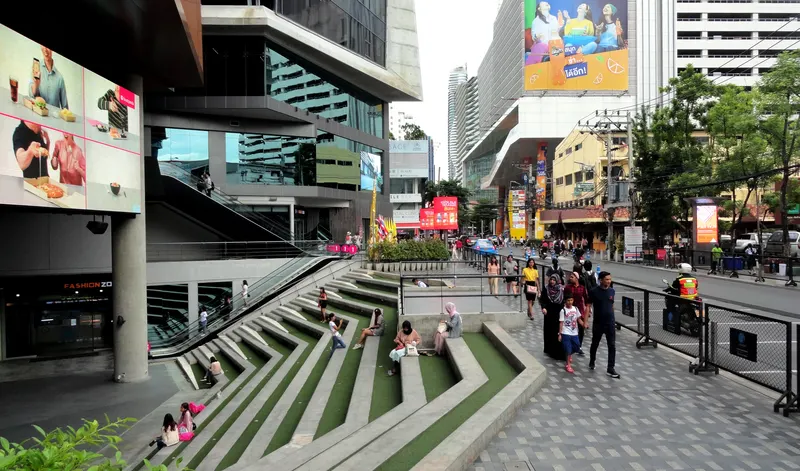
- Best for: first-timers, shoppers and anyone who hates planning logistics
- Sukhumvit: Asok (BTS/MRT interchange) and Phrom Phong are the sweet spots
- Siam: the central BTS interchange, malls linked by skywalks, rain-proof
- Trade-off: corporate and busy rather than especially charming

Riverside, Silom and the Old City: romance, rooftops and temples
For atmosphere over pure convenience, stay by the Chao Phraya. The Riverside holds some of the city's grandest hotels, with sunset terraces and express boats and free shuttle ferries that glide past Wat Arun and the old town; there is nothing more romantic than a drink on a terrace over the water. The Saphan Taksin BTS station sits right at the central pier, knitting the river into the Skytrain network — though some riverside hotels rely on shuttle boats, so factor in a short ferry hop. Silom and Sathorn add skyline rooftops, fine dining and the green of Lumphini Park, all on the BTS and MRT.
If your priority is the headline temples — the Grand Palace, Wat Pho and Wat Arun across the water — the Old City (Rattanakosin) and neighboring Banglamphu put them on your doorstep, and you can walk to them at dawn before the crowds. The catch is transit: the historic core has no BTS and only the edge of the MRT, so you lean on boats, walking and the occasional taxi. Chinatown is the same trade-off with a street-food bent, now reachable via the MRT at Wat Mangkon. Choose these areas when temples or atmosphere are the point of the trip.
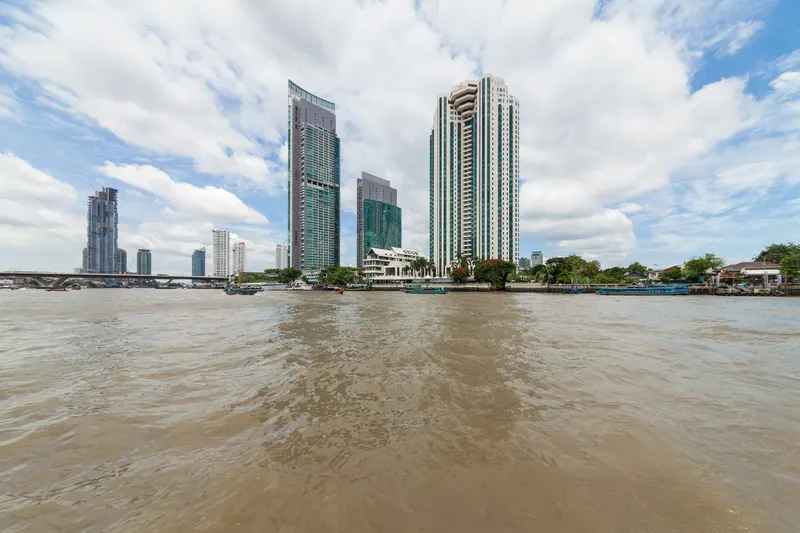
- Riverside: grande-dame hotels, sunset terraces and boats — peak romance
- Silom and Sathorn: rooftops, fine dining and Lumphini, all on the BTS/MRT
- Old City and Banglamphu: walk to the Grand Palace and Wat Pho, but no BTS
- Chinatown: street food and atmosphere, now on the MRT at Wat Mangkon

Match your area to your trip — and your season
Once you know the contenders, the choice is mostly about who you are and how long you have. A first-timer on a short trip should lean toward Sukhumvit or Siam for transit ease. A couple chasing romance should look riverside, then Silom. A temple pilgrim belongs in the Old City or Chinatown, and a shopper in Siam or Pratunam. Whatever you pick, plan your days around the area you chose so you are not crossing the whole city twice a day, and let the trains and boats do the work.
Season matters at the margins. In the hot months (roughly March–May) you will value air-conditioned mall-and-Skytrain districts; in the cool season (November–February), the most pleasant time to visit, riverside and old-town walking really shines. Rainy-season afternoons (June–October) make a transit-close hotel even more worthwhile when a downpour hits. When you have your area, move on to the curated hotel guides to compare by trip type rather than star rating alone — and always confirm current rates directly with the property.
- First trip, short stay: Sukhumvit (Asok) or Siam
- Romance and river views: the Riverside, then Silom
- Temples and atmosphere: the Old City, Banglamphu or Chinatown
- Shopping: Siam, or Pratunam for budget and an airport link