- Time needed
- Almost always an evening tour of around three to four…
- Nearest
- MRT Wat Mangkon (Blue Line)
- Price
- Group tours sit at a mid-range per-person price with…
- Best for
- First-timers
What a Yaowarat food tour covers
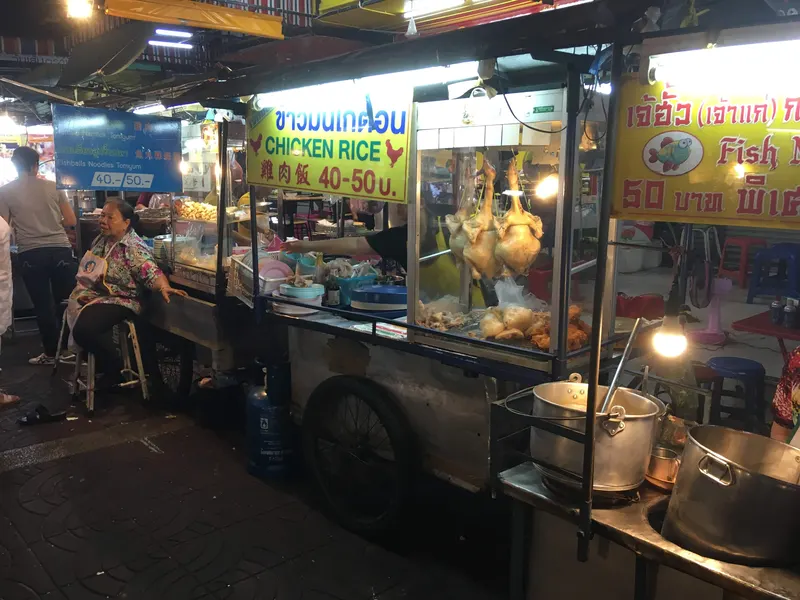
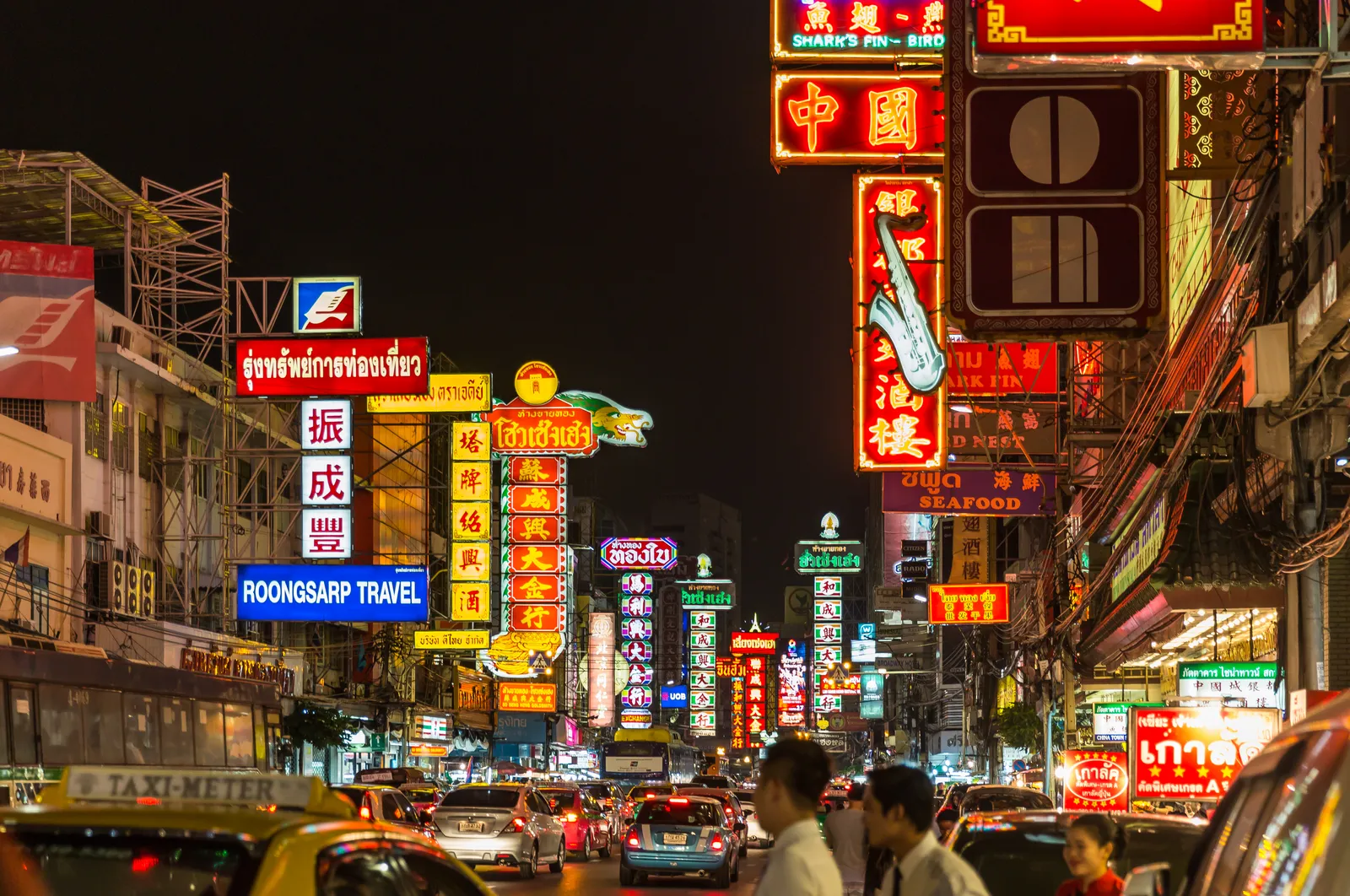
Yaowarat, Bangkok's Chinatown, is a destination meal in itself. After dark the main road and its sois turn into an open-air dining hall: stalls sling fire-grilled seafood onto plastic stools, woks throw flames over the curb, and old shophouses serve braised goose, bird's-nest soup, dim sum and bowls of peppery guay jub rice-roll soup. A typical food tour starts near the Chinatown Gate at Odeon Circle or a nearby pier and works west along Yaowarat Road, ducking into the gold-shop lanes and the lantern-strung alleys for the stalls that are easy to walk past.
Across an evening you will usually graze grilled or steamed seafood, a noodle dish or two, a Thai-Chinese braise, a dessert shophouse and a drink stop — fresh juice, herbal tea or the bright-orange cha yen. A good guide threads in the history of the neighborhood as you eat: the gold shops, the shrines and temples, the waves of Chinese-Thai migration that shaped the cooking. You come away understanding not just what to order but why Chinatown tastes the way it does.
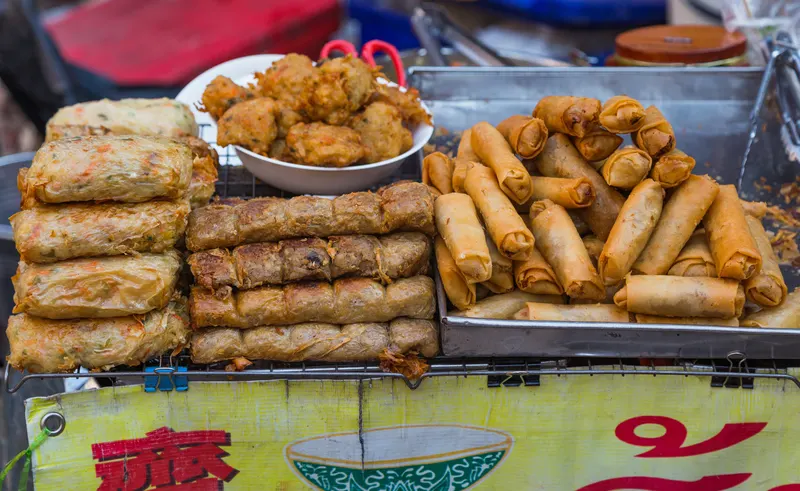
- Grilled and steamed seafood from the curbside stalls.
- Noodle counters and Thai-Chinese braises in old shophouses.
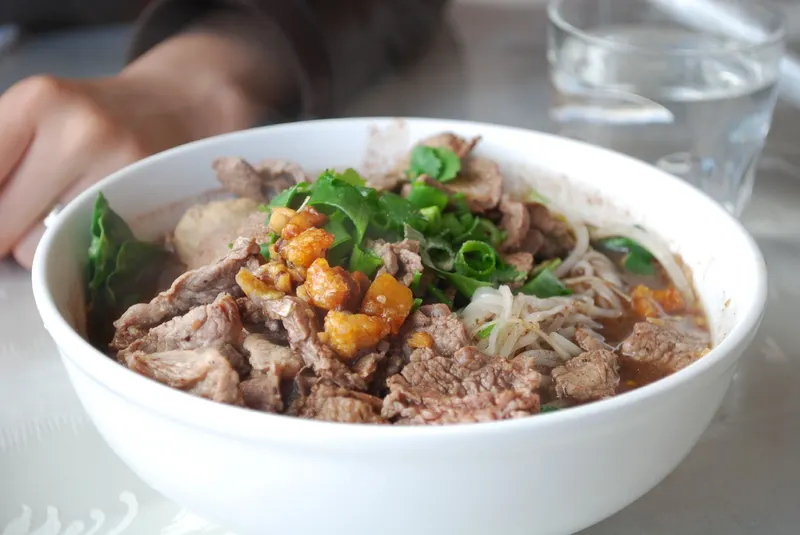
- Guay jub, dim sum and other Chinese-Thai classics.
- A dessert shophouse and a drink stop — often cha yen or herbal tea.

Book ahead
Book ahead in high season; small-group and private tours fill and let you flag dietary needs
Group, private or tuk-tuk?
Group walking tours are the default and the value pick: a small group, a guide, a set route, and all the tastings rolled into one per-person price. They are sociable, well-paced and ideal for solo travelers, couples and first-timers. The trade-off is that you move at the group's speed and eat the set menu of stops. Look for tours that cap the group small enough to actually gather around a stall — a dozen people crowding a noodle counter is no fun for anyone.
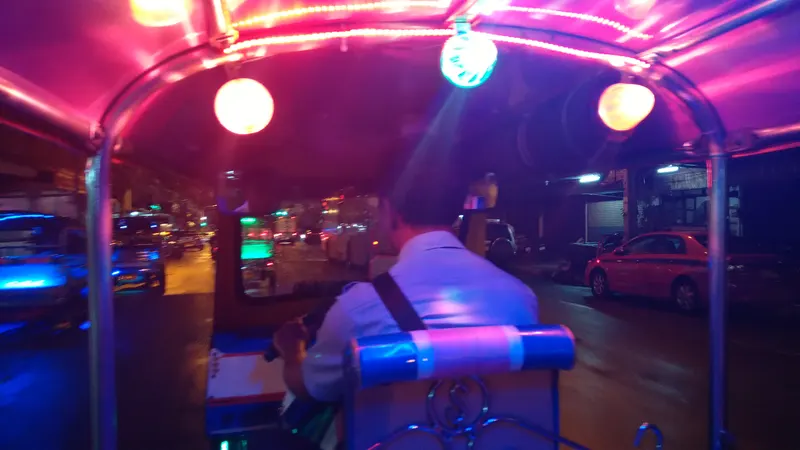
Private tours cost more but buy you the guide's full attention, a route you can shape, and the freedom to linger or skip; they suit families, special occasions and anyone with dietary needs or mobility limits. Tuk-tuk food tours swap some of the walking for an open-air ride between stops, which is genuinely fun and easier on the legs, though pricier and slightly removed from the on-foot intimacy that makes Yaowarat special. Whichever you pick, flag dietary needs when you book — vegetarian, no pork, allergies — and confirm the meeting point, inclusions and how much walking is involved.
- Group walking — value, sociable, set route; best kept small.
- Private — pricier, customizable, full guide attention; good for families.
- Tuk-tuk — fun and low-effort, costlier, less on-foot intimacy.
- Always flag dietary needs and confirm the meeting point at booking.

Tour vs self-guided crawl
The honest question is whether you need a tour at all, because Yaowarat is one of the great free spectacles in Bangkok and walking it yourself is easy. If you are confident pointing at what looks good, happy to wait at a busy stall, and not worried about the language, a self-guided crawl costs only what you eat — and our Yaowarat street-food guide gives you a route, the dishes to chase and how to spot a good stall. Reach Chinatown by the MRT to Wat Mangkon station or by a Chao Phraya pier, start near the Chinatown Gate, and graze west into the sois after dark.
A tour earns its price in three ways: it gets you to the best stalls first instead of by trial and error, it removes the ordering anxiety entirely, and it adds the context that turns a meal into an evening. For a first night in Bangkok, for nervous orderers, or for anyone short on time, that is well worth it. Many travelers do both — take a tour early in the trip to learn the strip, then come back to repeat their favorites on their own. Either way, come hungry, wear comfortable shoes for the uneven pavements, carry small cash, and go on a weekend evening for the full, glorious crush.