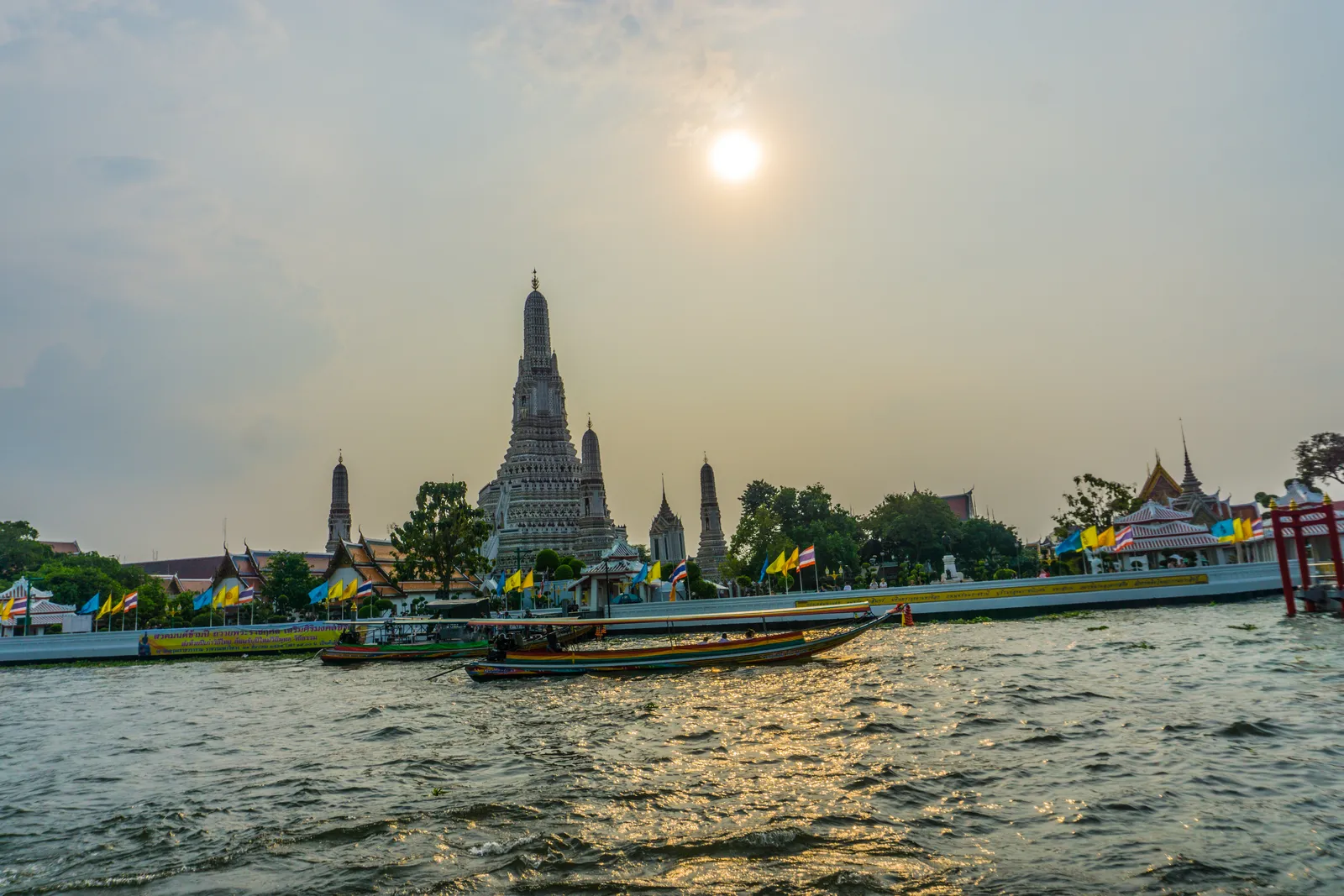
- Time needed
- 20–40 minutes for the courtyards and halls
- Best time
- Late afternoon as Chinatown wakes up
- Nearest
- MRT Wat Mangkon
- Price
- Free to enter
Chinatown's great Chinese temple
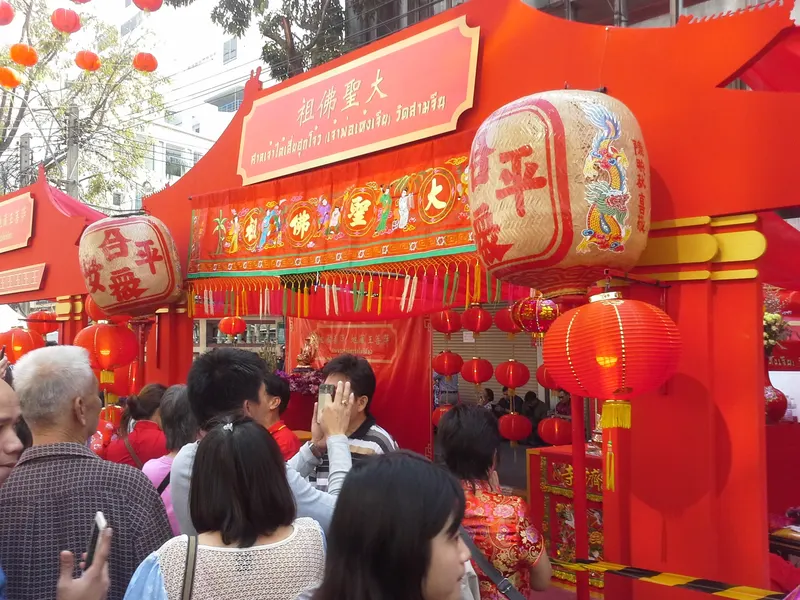
Wat Mangkon Kamalawat — the "Dragon Lotus Temple" — is the largest and most important Chinese Buddhist temple in Bangkok, and the spiritual heart of the city's Chinatown. Step in from the lane and you enter a world of red and gold: incense hangs thick in the air, worshippers light bundles of joss sticks and candles, paper offerings burn in furnaces, and gilt dragons coil along the rooflines. It blends Chinese Mahayana Buddhism with Taoist and Confucian elements, and the shrines inside honor a wide cast of deities and ancestors.
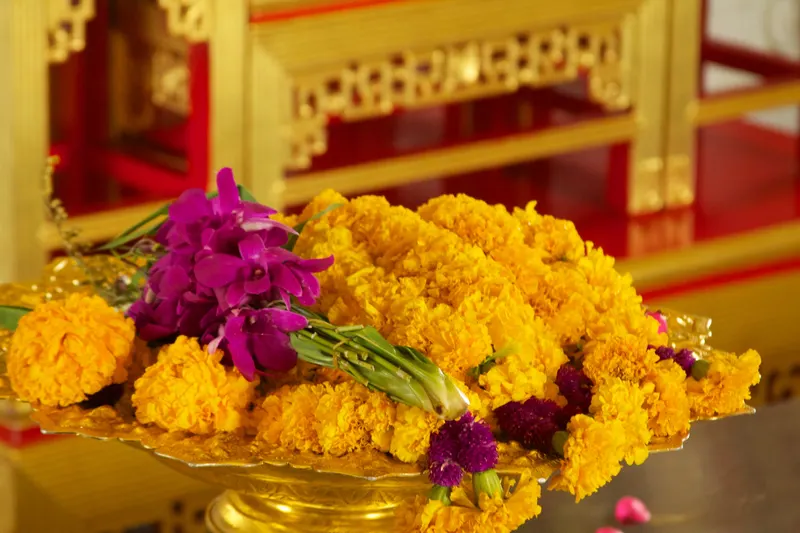
Unlike the ticketed royal temples of Rattanakosin, Wat Mangkon is free to enter and thoroughly a living place of worship rather than a sightseeing stop. You can buy a small set of offerings inside — incense, candles, lotus flowers, cooking oil for the lamps — and watch the steady, unhurried rhythm of merit-making that fills the courtyards from morning to evening. It is a compact temple, so a visit is a short, atmospheric immersion rather than a long tour.
Because it is so active, etiquette matters. Cover your shoulders and knees, step quietly, do not point your feet at the altars or images, and be discreet with photography around people mid-prayer. The temple is busiest on auspicious days in the Chinese calendar, when families come to pray for fortune, health and safe travel — and on those days the incense and color are at their most intense.

- The largest Chinese Buddhist temple in Bangkok, blending Buddhist, Taoist and Confucian worship
- Free to enter; you buy only the incense, candles and offerings you wish to make
- Compact and atmospheric — a 20–40 minute immersion, not a long tour
- Dress modestly, move quietly and be discreet with photos around worshippers
Watch out
Be wary of anyone outside steering you to a 'special' shop or a paid tuk-tuk loop — entry is free; walk straight in
Dress code
Active place of worship — cover shoulders and knees and step quietly
Getting there, festival timing and food nearby
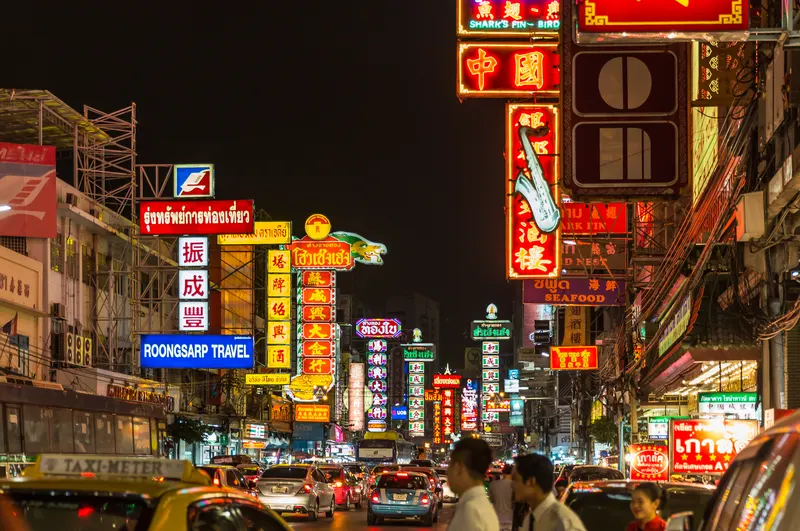
Getting to Wat Mangkon could hardly be easier: the MRT Blue Line's Wat Mangkon station puts you right in the thick of Chinatown, so you can arrive fresh and leave without battling for a taxi in the district's notorious traffic. From the temple it is a short walk down to Yaowarat Road, the neon spine of Chinatown, which means you can combine a quiet temple visit with the city's best night-time street food in a single outing.
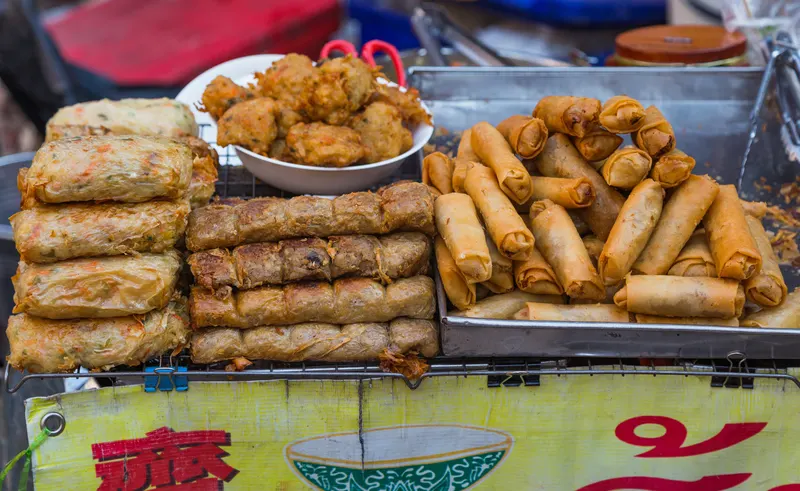
Time your visit around the food. Late afternoon is ideal: see the temple while it is calmer, then walk into the lanes as the woks fire up and the dinner crowd builds toward the early-evening peak. Weekends are busiest; a weeknight is calmer but the energy is still there. In the heat or a rainy-season downpour, the shophouse cafés and covered markets nearby give you a break before you dive back in.
Two festivals transform this temple. Chinese New Year fills Chinatown with lanterns, lion dances and dense crowds, and Wat Mangkon is at the center of it. The annual Vegetarian (Jay) Festival in the ninth lunar month turns the surrounding streets into a sea of yellow flags and meat-free food stalls, with the temple thick with devotees. Both are spectacular and both mean serious crowds — go early in the evening, take the MRT to skip the traffic, and confirm the year's dates in advance, since they shift on the lunar calendar.
- Arrive and leave via MRT Wat Mangkon station to skip Chinatown traffic
- Late afternoon is the sweet spot: quiet temple, then street food at dusk
- Chinese New Year and the Vegetarian Festival are spectacular but very crowded
- Festival dates follow the lunar calendar — verify the year's dates before you go
Sources
- Tourism Authority of Thailand ↗
Official information on Chinatown festivals and timings.