- Time needed
- A working market by day
- Best time
- Late afternoon for markets and temples
- Nearest
- MRT Wat Mangkon (central) or MRT Hua Lamphong (gatewa…
- Price
- Street plates run cheap
The lay of the land
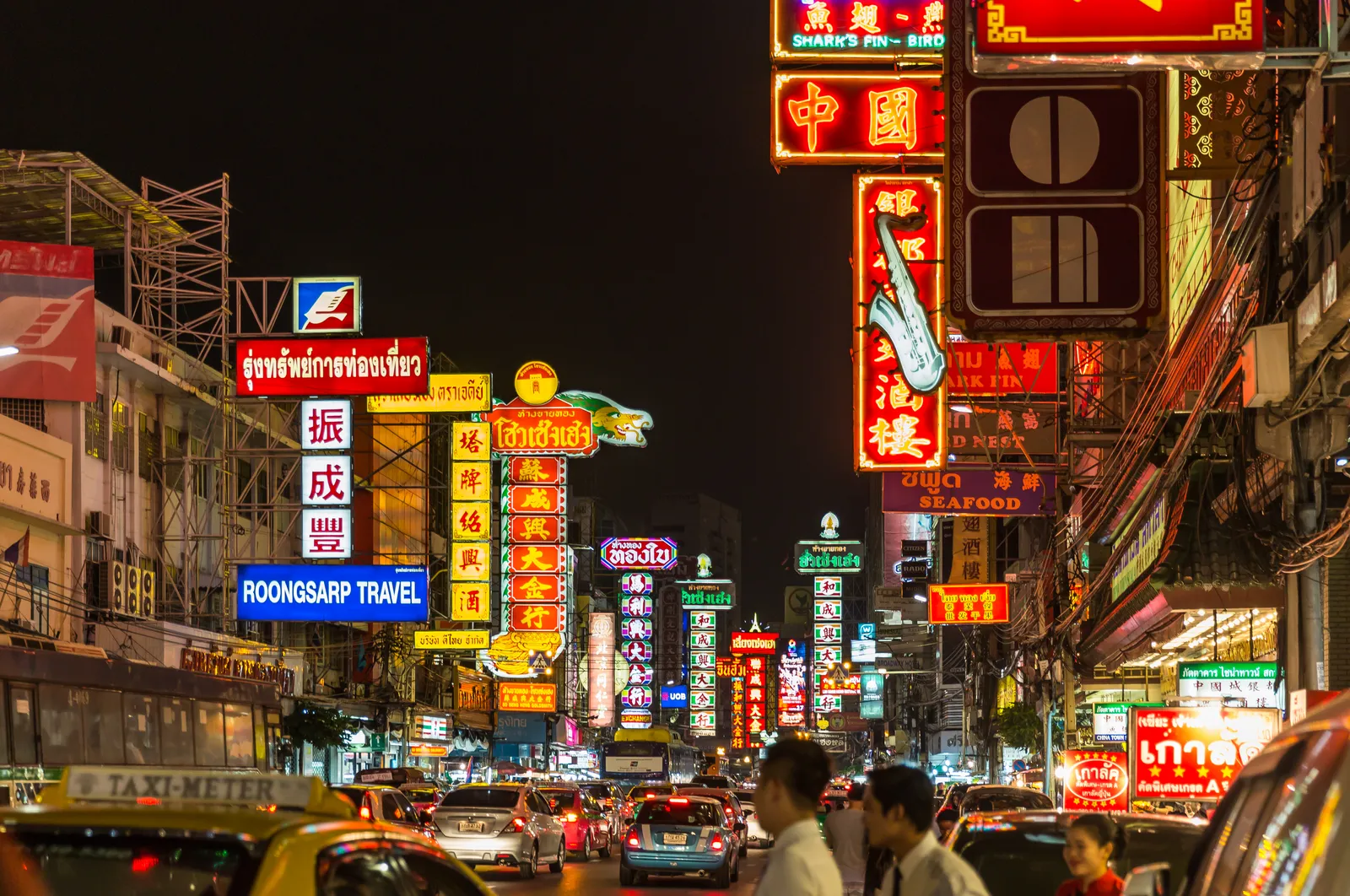
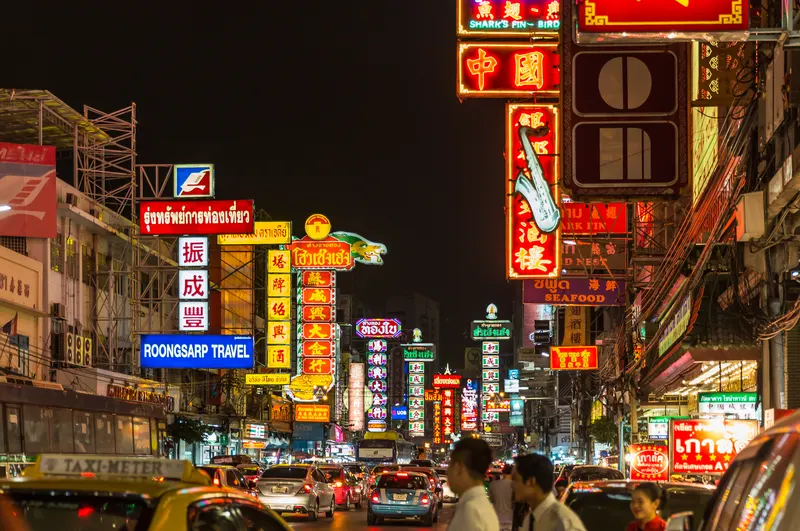
Chinatown sits on the eastern edge of the old city, wedged between the Chao Phraya River and the old Hua Lamphong railway area. Yaowarat Road itself is the famous artery, but the neighborhood's real character lives in the alleys feeding off it — Charoen Krung running parallel, Sampeng Lane threading the wholesale district, and a tangle of sois named for the trades and temples they once served. By day it is a working market quarter, all gold dealers, traditional-medicine shops and porters hauling carts through crowds. By night the same streets transform: woks fire up on the sidewalks, plastic stools spill into the road, and the gold-toned signage lights up overhead. It is loud, hot and genuinely thrilling.
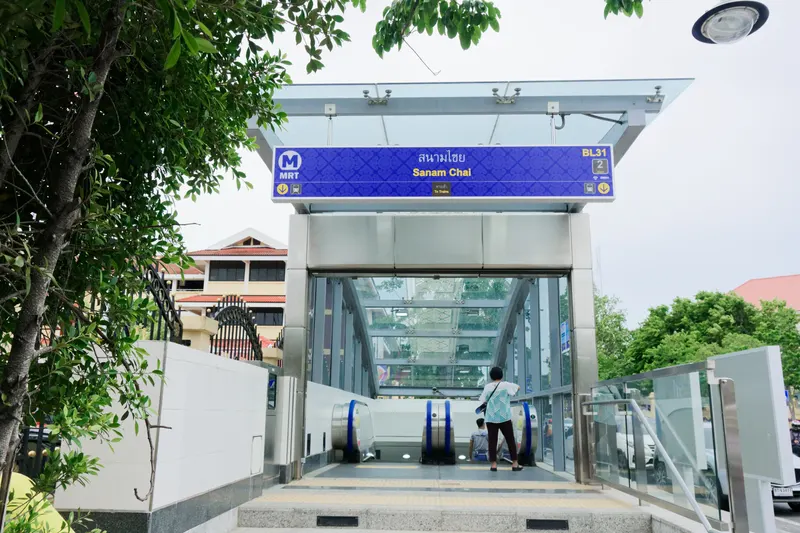
The easiest entrance is the MRT Blue Line. Wat Mangkon station drops you in the middle of the action, while Hua Lamphong puts you beside Wat Traimit at the neighborhood's gateway arch. From the river, Ratchawong pier connects you to the orange-flag Chao Phraya boats. Whichever way you arrive, this is one of the few corners of the old city the subway reaches directly, which makes it an easy evening add-on from almost anywhere on the line.
- Getting there: MRT Wat Mangkon (central) or Hua Lamphong (gateway); Ratchawong pier from the river boats
- Best window: late afternoon for markets and temples, 7–10pm for the street-food peak
- Wear closed-toe shoes and bring cash; most carts and shops do not take cards
- Cool months (Nov–Feb) make the crowded night market far more pleasant than the hot season
Watch out
Confirm per-kilo seafood prices before ordering, and leave by MRT or a metered taxi rather than a flat-rate tuk-tuk
Book ahead
No bookings for street stalls; cash is essential, as most carts and shops don't take cards
Eating your way through Yaowarat
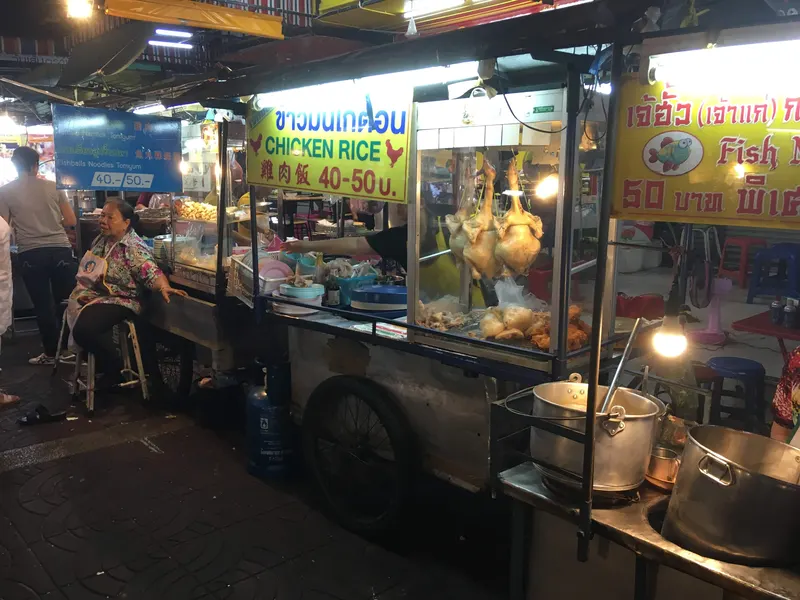
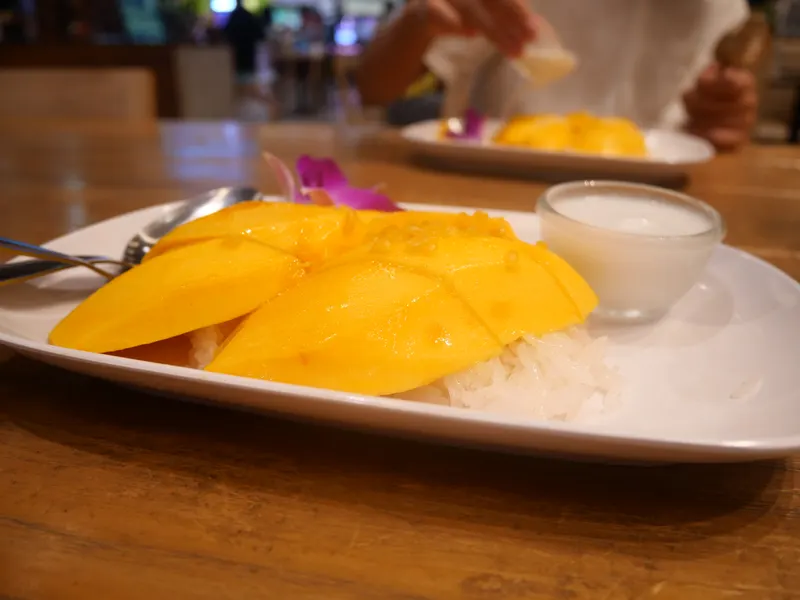
This is the reason most people come, and it lives up to the hype. The seafood grills on Soi Texas (officially Phadungdao) are the postcard image — charcoal smoke, snapping prawns and crab fried in curry powder — but prices climb fast if you are not paying attention, so confirm the per-kilo price before you order. They are touristy but genuinely good. The deeper rewards are quieter: hunt down a bowl of guay jub, the peppery rolled-noodle soup with crispy pork belly, or kuay tiew kua gai, charred wok-fried noodles with chicken and egg. Toasted bread with custard, ginkgo and bird's-nest desserts, pomegranate juice and fresh-pressed orange line the side streets.
Eat in waves: graze a few carts, sit for one proper dish, then keep moving. For something calmer than the food crush, duck into one of the new-wave cocktail bars hidden in restored shophouses along Soi Nana, or pair an early seafood dinner with a drink there. Come hungry, accept that the best dishes rarely have an English menu, and let pointing and smiling do the ordering. The food peaks roughly 7 to 10pm; weeknights give you the same energy with a little more room to breathe than the heaving weekends.
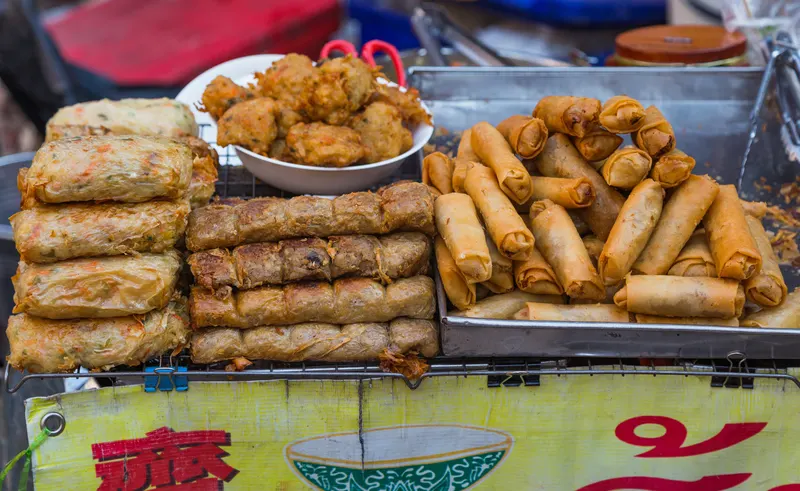
- Soi Texas seafood — grilled prawns and curry crab; check per-kilo pricing first
- Guay jub — peppery rolled-noodle soup with crispy pork, the local comfort dish
- Kuay tiew kua gai — smoky wok-fried noodles with chicken and egg
- Sweets and Soi Nana cocktail bars in restored shophouses for a calmer end
Temples, gold and markets
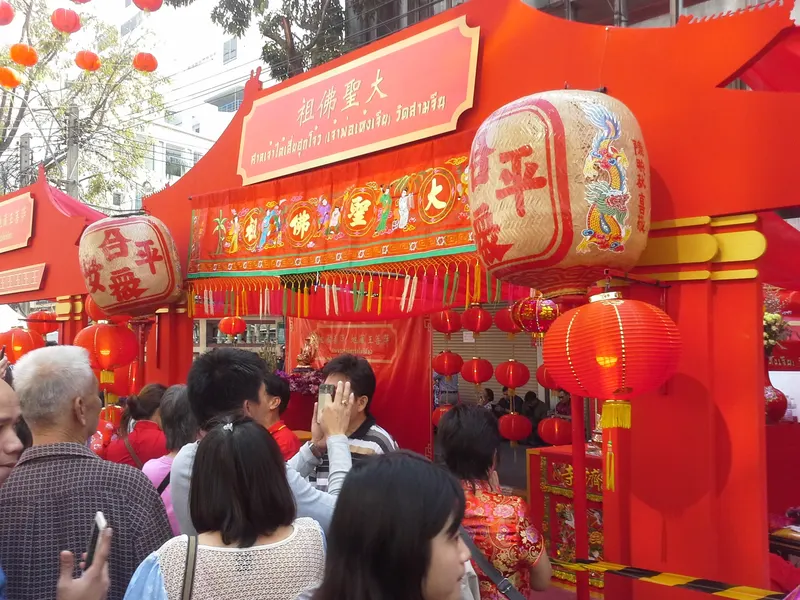
Between the food, Chinatown rewards slow looking. Wat Traimit, at the eastern gateway near Hua Lamphong, holds the Golden Buddha — more than five tons of solid gold rediscovered by accident when a plaster image cracked open during a move; it is small but extraordinary, and the museum below tells the migration story of the Chinese community that built this district. A few blocks deeper, Wat Mangkon Kamalawat is the spiritual centre of Chinese Bangkok, thick with incense, paper offerings and gilt dragons, and it goes electric during the Vegetarian Festival in the ninth lunar month and again at Chinese New Year. Both are active places of worship, so cover your shoulders and knees and step quietly.
For markets, Sampeng Lane is a claustrophobic wholesale tunnel of beads, ribbons and dried goods, busiest in the morning, while the old market trades fresh produce and Chinese ingredients from before dawn. You are not really here to buy — you are here to watch a centuries-old commercial machine still running at full speed. These daytime sights pair naturally with an early arrival: see the temples and the wholesale lanes in daylight, then stay as the food stalls take over the streets after dark.
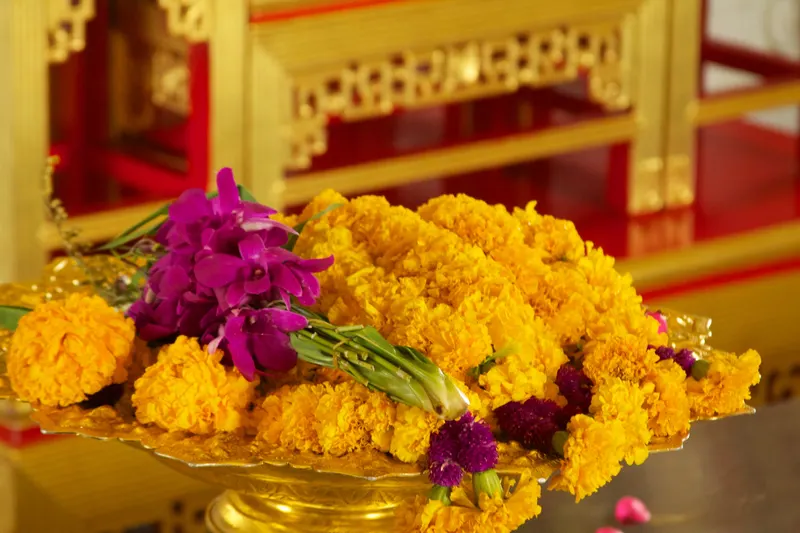
- Wat Traimit — the solid-gold Buddha and a migration museum, near Hua Lamphong
- Wat Mangkon Kamalawat — incense-heavy Chinese temple, spectacular during the Vegetarian Festival and Chinese New Year
- Sampeng Lane — wholesale alley of beads, ribbons and dried goods, busiest in the morning
- Temple etiquette: shoulders and knees covered, shoes off where signed, no loud talk
How to do it well
Time your visit. Arrive in the late afternoon to catch the markets and temples in daylight, then stay as the food stalls take over the streets after dark — the dinner scene peaks around 7 to 10pm. Weekends are heaving; a weeknight gives you the same energy with more room to breathe. If you only have a couple of hours, walk Yaowarat end to end, dipping into the brightest side sois as you go, starting near the Chinatown Gate at Odeon Circle and drifting west.
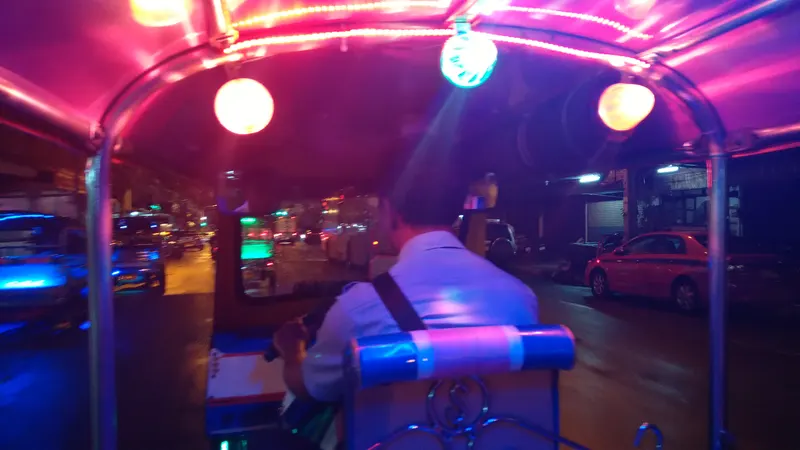
Come prepared. The lanes are narrow, the ground is often wet, and the heat lingers long after sunset, so closed shoes and light clothing pay off; the cool months make the crowded streets far more bearable than the hot season. Carry small bills, keep your bag in front of you in the crush, and confirm per-kilo prices at the seafood grills before you order. Chinatown is one of Bangkok's safest areas to wander late — busy and well-lit — but the usual city sense applies: watch your pockets in tight crowds and leave by the MRT or a metered taxi rather than a tuk-tuk quoting a flat fare. Pair it with Rattanakosin's temples by day, or walk over from Talat Noi and the Creative District for a full old-city loop.
- Go late afternoon into evening; weeknights beat weekends for breathing room
- Cash, closed shoes and a front-facing bag in the crowds
- Confirm per-kilo seafood prices before ordering
- Leave by MRT or a metered taxi rather than a flat-rate tuk-tuk