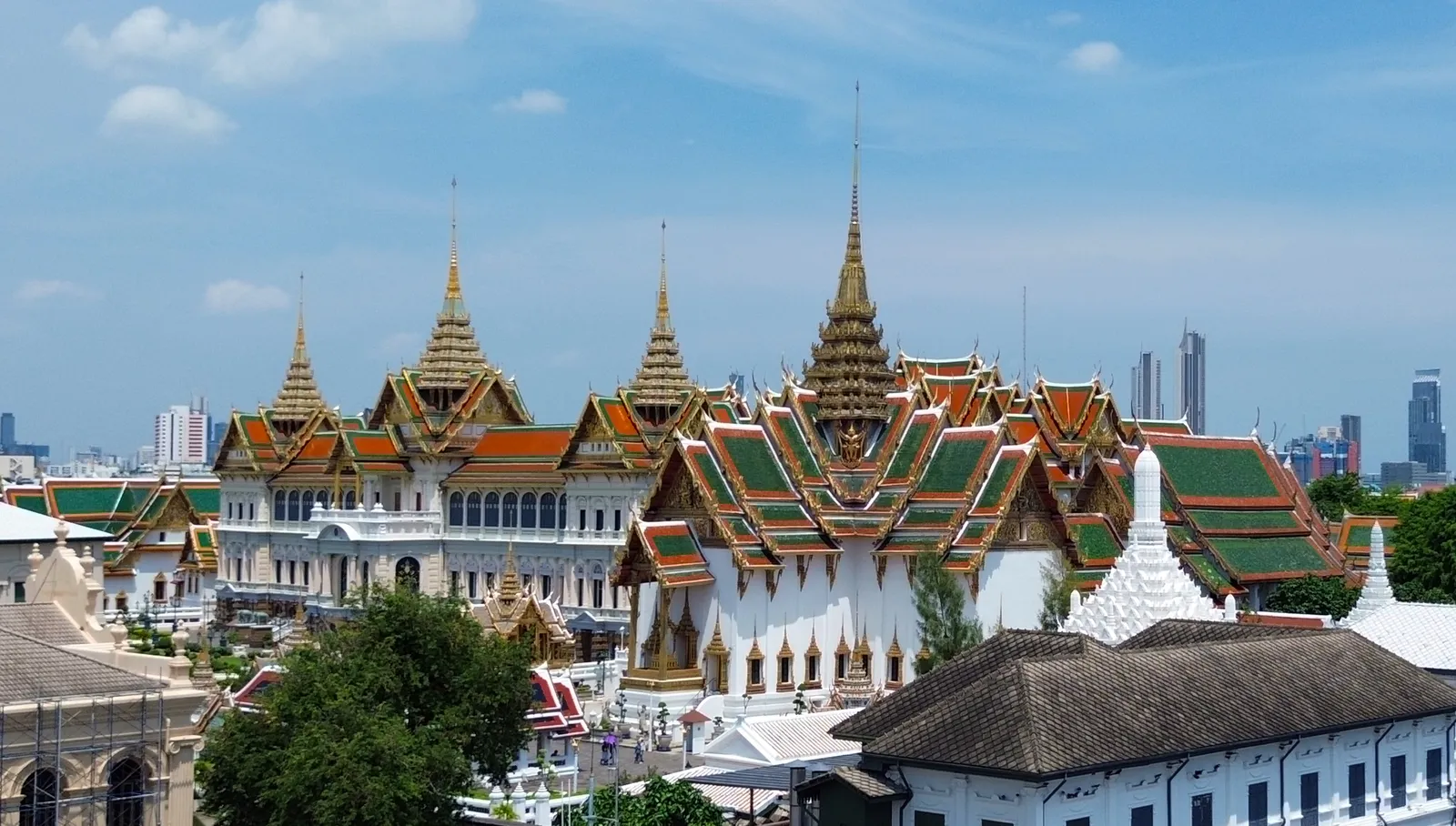
- Time needed
- Express and cross-river boats run through the daytime…
- Nearest
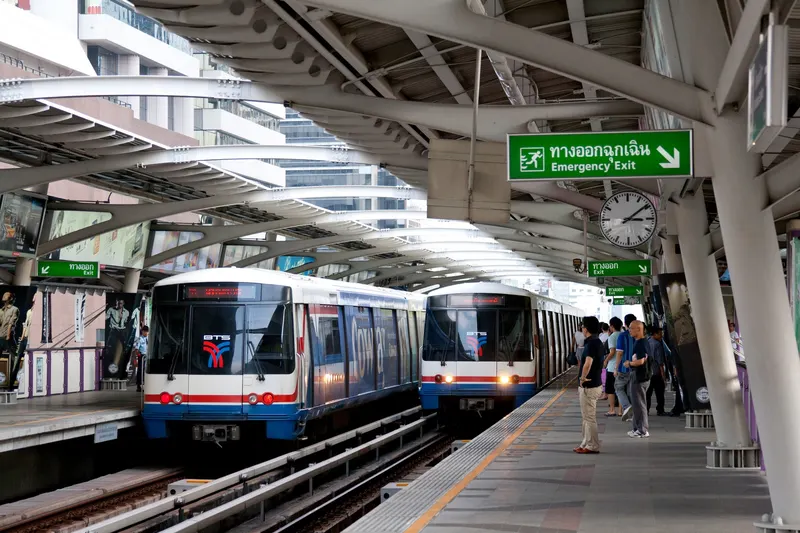
- Sathorn / Central Pier links to BTS Saphan Taksin
- Price
- The orange-flag express boat is a few baht per hop
- Best for
- Reaching the Old City temples
The river is your spine — read the map this way
Bangkok sprawls, but it reads far more easily once you treat the Chao Phraya as the spine of the whole city. The historic Old City (Rattanakosin) and Chinatown sit on the east bank; the leafier, more residential Thonburi lies across the water on the west. Crucially, the old island has no Skytrain and no subway running through its heart, so the boats are not a novelty here — they are how you actually reach the Grand Palace, Wat Pho, Wat Arun and the riverside temples without surrendering an afternoon to traffic. East and inland, the modern city runs along the BTS and MRT; the trick on any Bangkok day is to match your mode to where you are going, river for the historic west, rails for the modern east, and avoid crossing between them by taxi at rush hour.
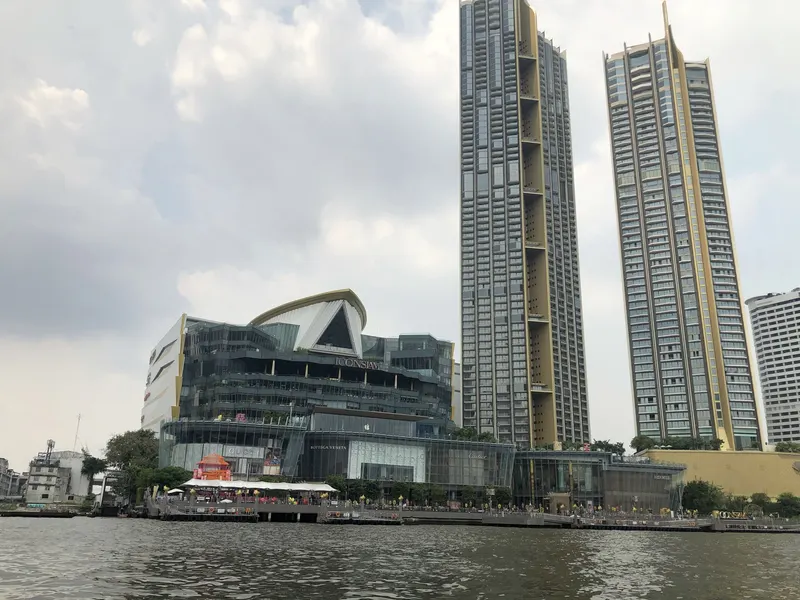
The river is also where Bangkok keeps some of its best experiences side by side: grande-dame and design hotels line the banks, the vast ICONSIAM mall puts a floating-market food hall under one air-conditioned roof, rooftop bars stack the skyline above the water, and after dark the dinner cruises glide past floodlit temples. You can build an entire, almost traffic-free day around the Chao Phraya — temples in the cool morning, a river-mall lunch in the heat, a sunset from the deck — and it will be both cheaper and more beautiful than the same day spent in cars.
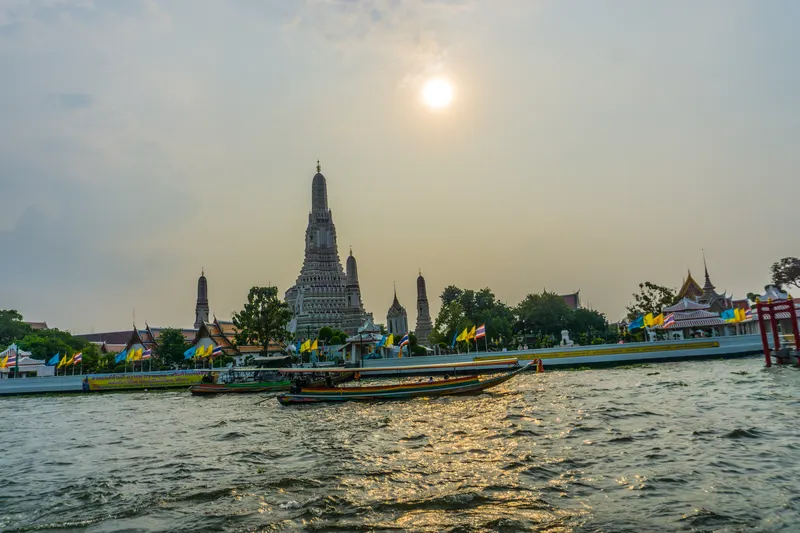
- East bank: Rattanakosin (Old City) and Chinatown — temples and street food.
- West bank: Thonburi — Wat Arun, canals and a slower, greener Bangkok.
- No train reaches the old island — the boats are the real transport here.
- Hotels, ICONSIAM, rooftops and dinner cruises all line the same water.

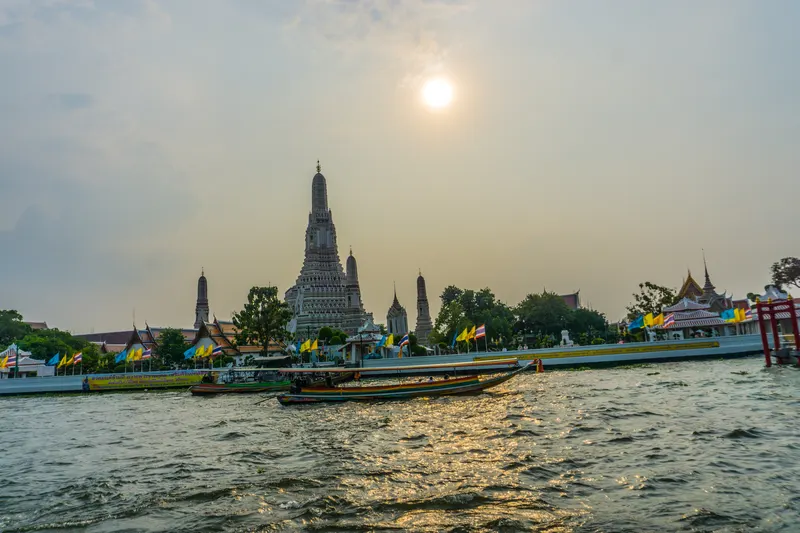
Which boat is which
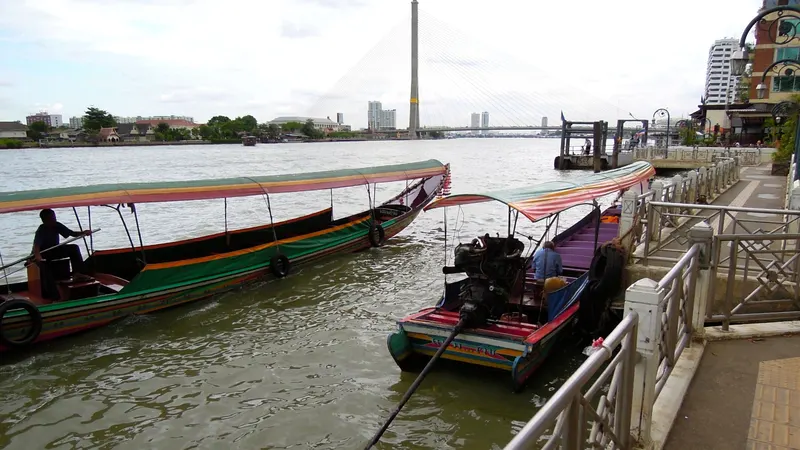
Three kinds of boat matter to a visitor, and knowing them apart saves money and confusion. The workhorse is the Chao Phraya Express Boat, a cheap local commuter service that runs up and down the main channel stopping at the major piers; the flag flying at the stern tells you which stops it makes, with the orange flag being the simplest, most frequent all-day line that hits the headline piers. You pay a few baht per hop, either to a conductor on board or at a pier booth, and you board fast and crowded — this is a bus on water, not a cruise.
If decoding flag colors feels like work, the blue-flag tourist boat runs a hop-on, hop-off service along the same headline piers with English commentary and a day-pass ticket; it costs more than the express boat but takes the guesswork out and is unhurried by design. And then there are the tiny cross-river ferries — separate little boats that simply shuttle straight across the water, most usefully from Tha Tien pier to Wat Arun, for only a few baht and a couple of minutes. Those three between them cover almost everything a visitor needs.
A few honest notes. The express boat connects to the BTS at Sathorn (Central Pier) below Saphan Taksin station, which is where most people join the river. The boats run during daylight and start thinning out by early evening, so plan the water for the day and switch to Grab or the train after dark. Some piers close or move during construction or high water, so treat any single connection as something to confirm rather than assume. Many riverside hotels run their own shuttles, while ICONSIAM's connection is paid; check the current route, fare and final sailing before relying on either.
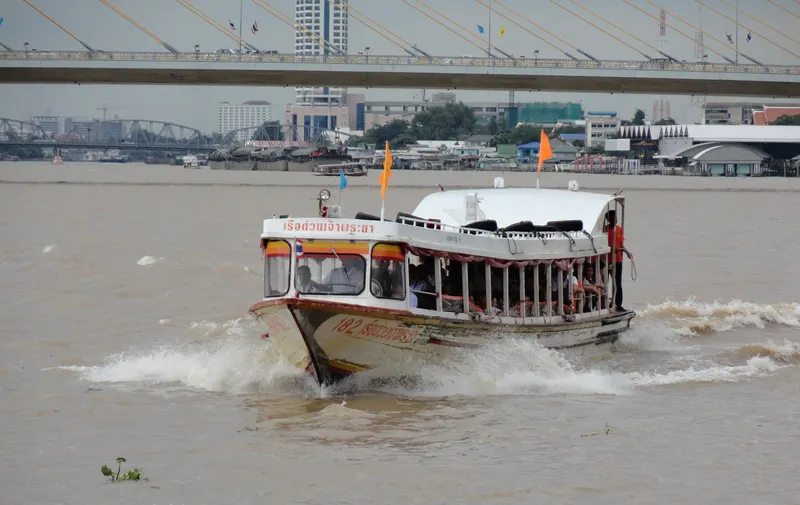
- Express boat (orange flag): cheap, fast, frequent — the all-day workhorse to the temple piers.
- Tourist boat (blue flag): hop-on-hop-off with commentary and a day pass — easier, pricier.
- Cross-river ferries: a few baht straight across — the way to Wat Arun from Tha Tien.
- Free hotel and ICONSIAM shuttle boats run from Sathorn / Central Pier.
Build a river day — temples, ICONSIAM and sunset
The classic river day starts on the water in the cool of the morning. Ride the express boat to Tha Chang for the Grand Palace or Tha Tien for Wat Pho, do your temple-walking before the heat builds, then hop the cross-river ferry to Wat Arun. When the midday sun wins, retreat indoors: ride downriver to ICONSIAM and let the river-mall's floating-market food hall and air conditioning carry you through the hottest hours, or settle into a riverside café with the breeze and a view back toward the spires.
Save the river for last, too. The Chao Phraya at sunset is the city's most reliable romantic anchor — book a window table or a dinner cruise about an hour before dusk and watch the light go gold over the water and the temples. A cruise turns the same skyline you walked all morning into a slow, floodlit, moving postcard, and it is the gentlest, most heat-free way to end a Bangkok day. If you would rather stay on your feet, the riverside walking paths and piers around the Old City are lovely at dawn and dusk, before and after the day's heat.
For couples, the river is the single best thread to build a day around — water and height, morning boats and evening rooftops. For first-timers, it is simply the cheapest, most beautiful way to see the city's headline sights without fighting traffic. Either way, lean on the boats while the sun is up, and let the river do the sightseeing for you.

Chao Phraya River FAQ
Which boat should I take to the Grand Palace and Wat Pho? The orange-flag express boat to Tha Chang (for the palace) or Tha Tien (for Wat Pho) is cheapest and fastest; the blue-flag tourist boat is easier if you want commentary and a day pass. From either temple, the cross-river ferry from Tha Tien is how you reach Wat Arun for a few baht.
How do I get onto the river from the BTS? Ride to Saphan Taksin and walk down to Sathorn (Central Pier), where the express boat, the tourist boat, and many free hotel and ICONSIAM shuttle boats all depart.
Do the boats run at night? The express and cross-river boats run by day and thin out by early evening, so ride the river while the sun is up and switch to Grab or the train after dark. The exception is the dinner cruises and private long-tails, which are built for the night. Confirm fares and timetables with the operators, as flags, piers and schedules change.
Where these are
Map pins
Map data © OpenStreetMap contributors · Tiles © OpenFreeMap