- Time needed
- 60–90 minutes
- Best time
- At opening
- Nearest
- Chao Phraya Express to Tha Tien pier
- Price
- 300 THB for foreigners (2026)
What you're actually looking at
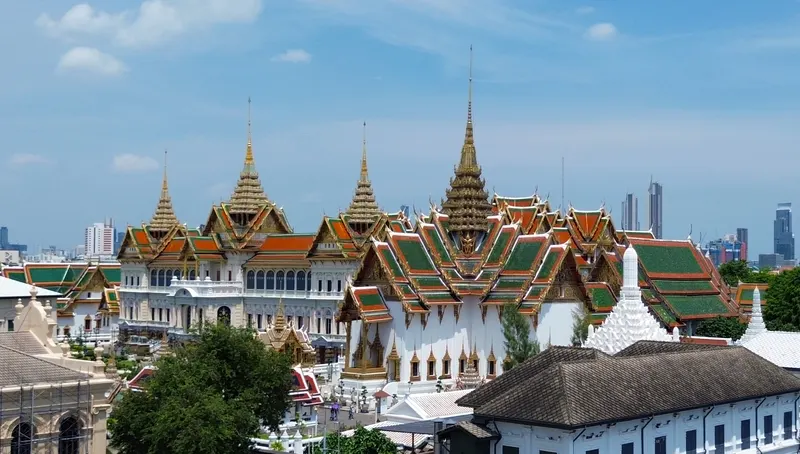
Wat Pho's official name is Wat Phra Chetuphon, and it predates Bangkok itself as a capital. King Rama I rebuilt it as one of the new city's first great temples, and later kings kept adding to it, which is why the grounds feel less like a single building and more like a small walled town of golden roofs, chedis and shaded courtyards. It is the calmest and, for many visitors, the most rewarding of the headline temples — and a kinder place to end a temple morning than the formal, crowded palace next door.
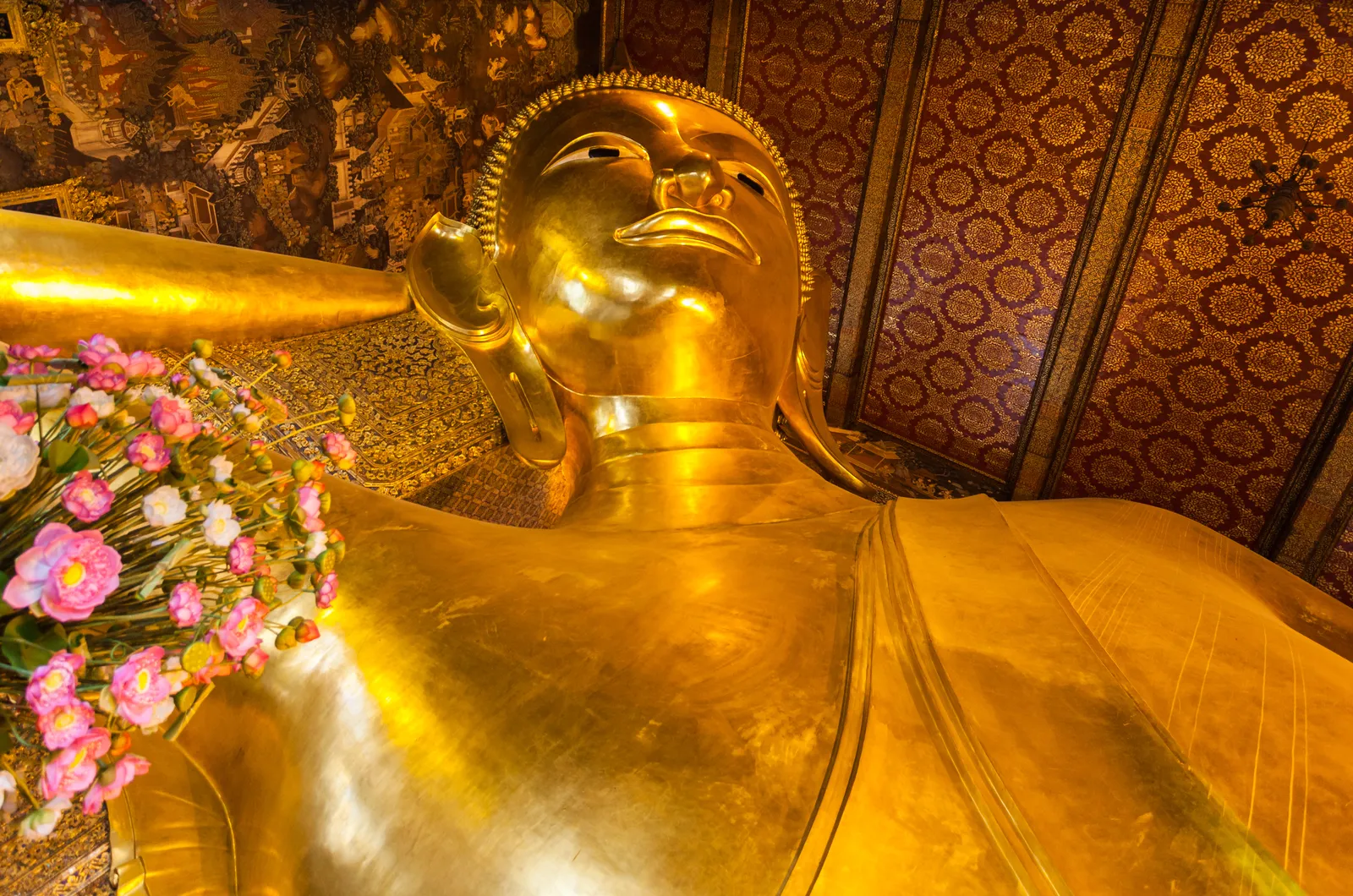
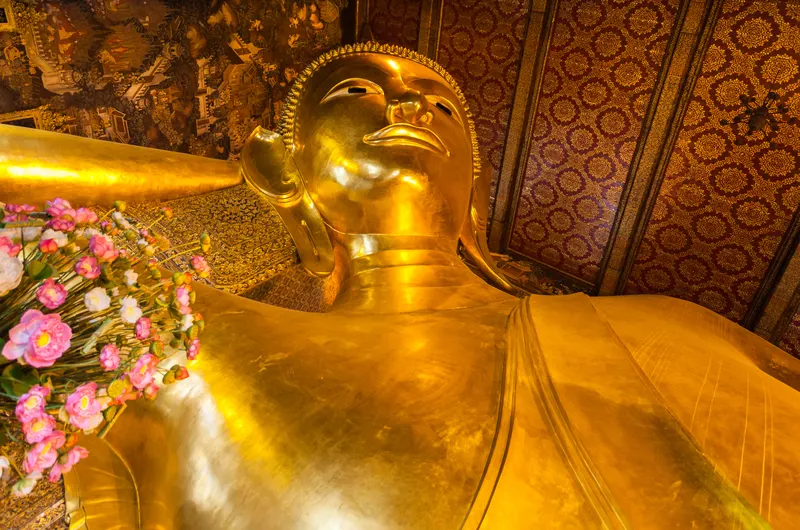
The headline sight is the Reclining Buddha, housed in its own long hall. At 46 metres end to end it barely fits the building, so you walk its full length from the serene gilded face to the enormous feet inlaid with 108 auspicious symbols in mother-of-pearl. Along the back wall sit 108 bronze bowls; dropping a coin in each is a small merit-making ritual that fills the hall with a soundtrack of soft chiming.
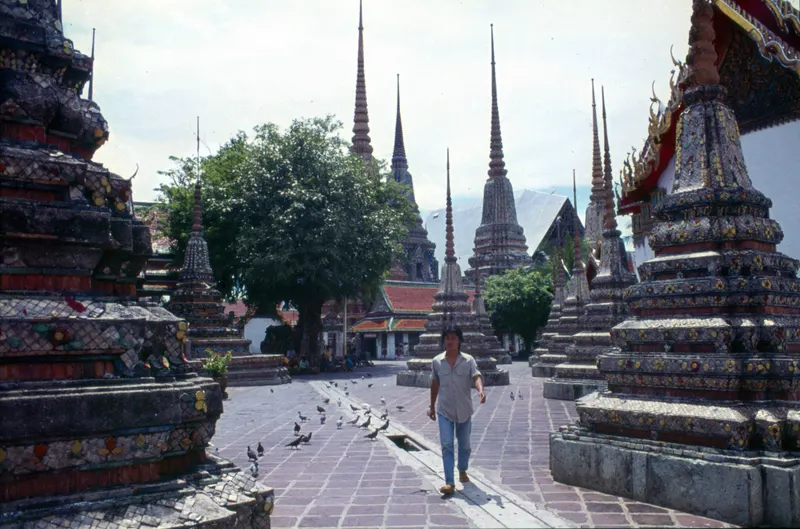
Do not rush straight out afterward. The wider compound holds four tall, tiled royal chedis honoring the first kings of the Chakri dynasty, dozens of smaller ones, long galleries lined with seated Buddha images, and stone giants that arrived as ship ballast from China. Most day-trippers walk right past all of it on their way to the exit.
- The Reclining Buddha in its dedicated hall — the inlaid feet and the 108 bronze bowls.
- Four tall, tiled royal chedis honoring the first Chakri kings.
- The ordination hall (bot) with its layered roof and guardian stone giants.
- Shaded galleries of Buddha images circling the inner courtyard.
Watch out
As at the Grand Palace next door, ignore touts claiming the temple is 'closed' or pushing a cheap tuk-tuk tour — the gate is open
Dress code
Shoulders and knees covered; shoes off before entering the halls — bring a scarf as a cover-up
Find your bearings
Map pins
Map data © OpenStreetMap contributors · Tiles © OpenFreeMap
Thai massage at the source
Wat Pho is considered the birthplace of traditional Thai medicine and massage, and its school is the most respected in the country. Dotted around the courtyards you will find inscribed stone tablets and statues illustrating yoga-like postures and the body's energy lines, originally created as a public reference long before printed textbooks. They are free to inspect, and they are a quiet highlight most visitors miss.
You can have a massage right on the grounds at the temple's pavilion — it is firmer and more stretch-heavy than a spa rubdown, so say if you want lighter pressure, and it is the perfect reward for legs tired from a morning of temple-walking. If you fall for it, the school runs short courses for travelers; even an afternoon class sends you home with a genuinely useful skill. We cover the prices, queues and timing in the dedicated massage guide.
Note that the massage is paid for separately from temple admission, and the on-site pavilion can build a queue at peak times, so it is worth planning where massage fits in your day.
Getting there, getting in and when to go
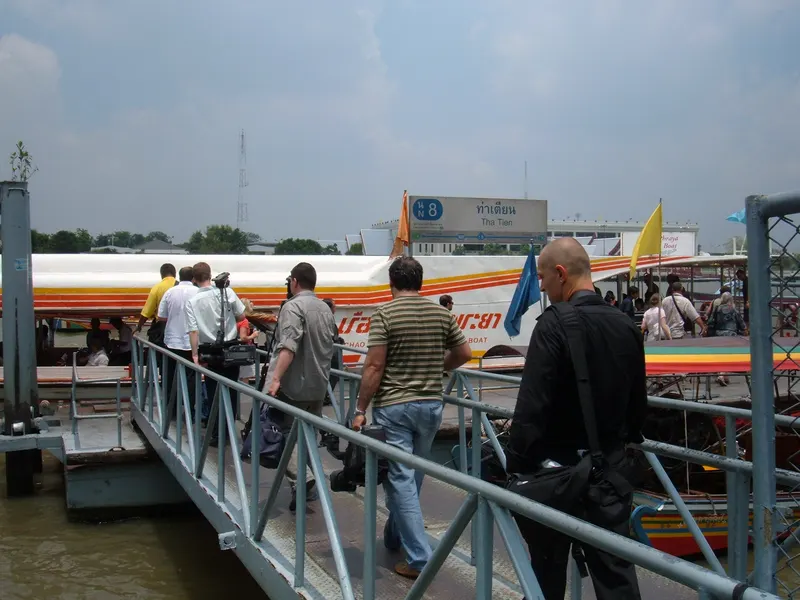
The romantic way to arrive is by water: take the Chao Phraya Express boat to Tha Tien pier, then walk a couple of blocks inland past the market stalls to the temple's riverside entrance. From the BTS, ride to Saphan Taksin and connect to the express boat there, or take the MRT Blue Line to Sanam Chai and walk. Admission is modest and usually includes a small bottle of water, welcome in the heat. Dress code is enforced at the main halls — shoulders and knees covered, shoes off before you step inside — so bring a light scarf that doubles as cover-up and sun shade.
Come early. The first hour after opening is golden: soft light on the gilded chedis, room to breathe by the Reclining Buddha, and temperatures you can stand. By late morning the compound bakes and tour groups thicken, especially in the cool season from November to February when the city is busiest. In the hot months of March to May treat shade as a strategy and keep that water close; in the rainy season an afternoon downpour can briefly empty the courtyards, which is its own kind of magic if you have an umbrella.
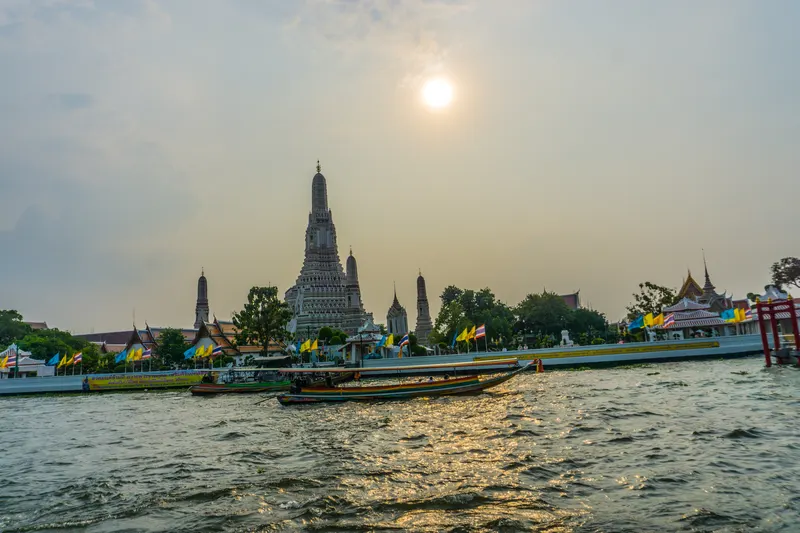
Give yourself sixty to ninety minutes, longer if you add a massage. The best move is to pair Wat Pho with the Grand Palace next door in the morning, then walk to Tha Tien and hop the few-baht cross-river ferry to Wat Arun, watching the light change over the river. It is one of the great half-days in Bangkok, and an easy, unhurried one.
- Arrive at opening for cool air and uncrowded halls.
- Express boat to Tha Tien pier, then a short walk inland; cross-river ferry to Wat Arun from the same pier.
- Budget 60–90 minutes, more if you stop for a massage.
- Cover shoulders and knees; remove shoes before entering the halls.
Wat Pho FAQ
Is Wat Pho the same as the Grand Palace? No — they are separate temples a short walk apart in Rattanakosin, each with its own entrance and ticket. Wat Pho is calmer, cheaper and stays open longer.
How long do I need? Sixty to ninety minutes for the temple, plus extra if you have a massage on the grounds.
Can I get a massage there, and do I need to book? Yes, there is a massage pavilion on the grounds; you generally turn up rather than book, but it can queue at peak times — see the dedicated massage guide. What should I wear? Shoulders and knees covered, with slip-on shoes since you remove them inside the halls.
Sources
- Wat Pho official site ↗
Confirms the 300 THB foreigner ticket; check the day's opening hours and any hall closures.
- Wat Pho plan-your-visit ↗
Visit planning and the official massage school on the grounds.