- Dates
- Lunar New Year's Day is 6 February 2027
- Getting there
- Take the MRT Blue Line to Wat Mangkon
- Price
- Free to wander Yaowarat
- Best for
- Food-lovers and atmosphere-seekers who want lanterns
Chinatown at full volume
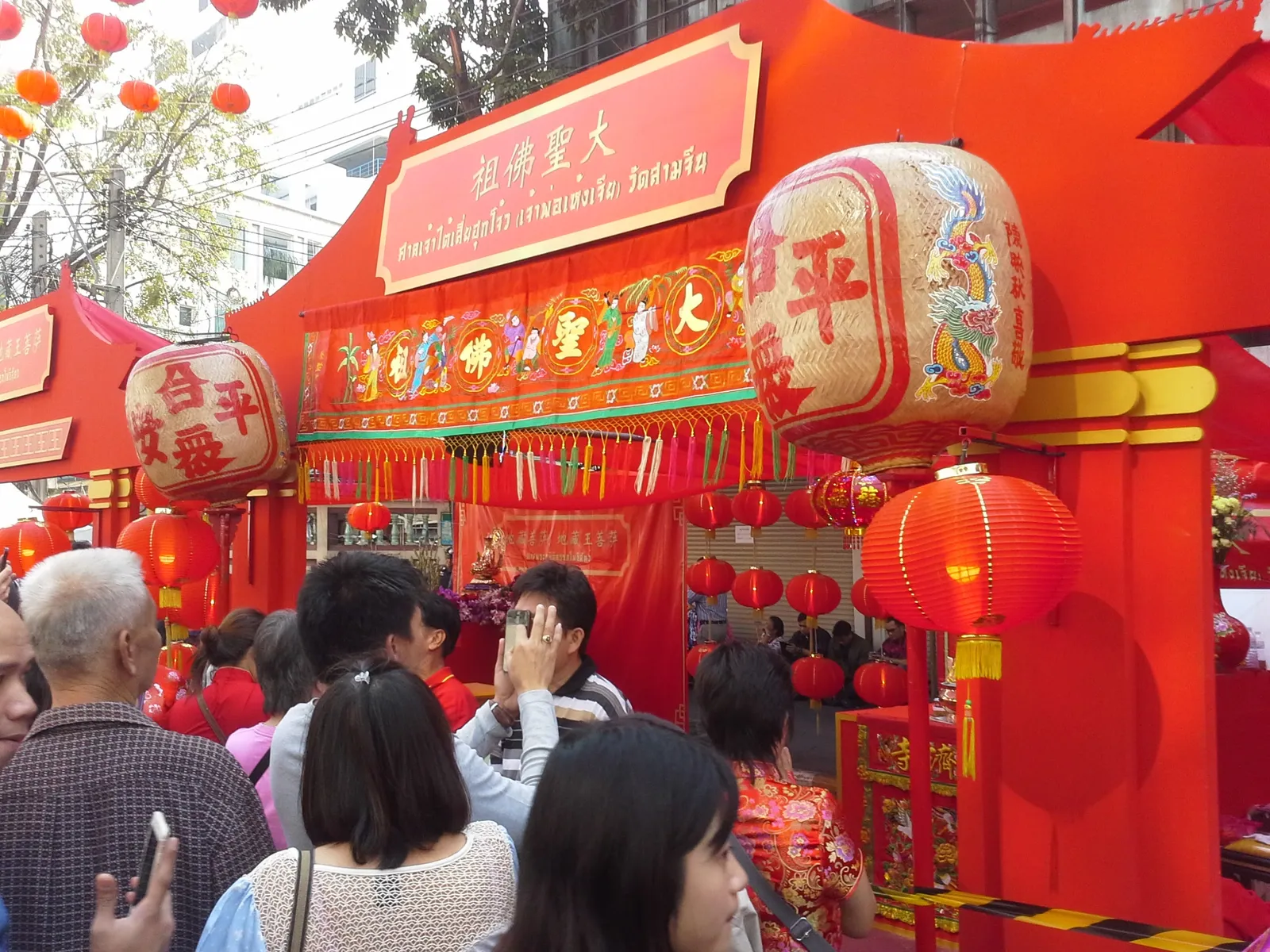
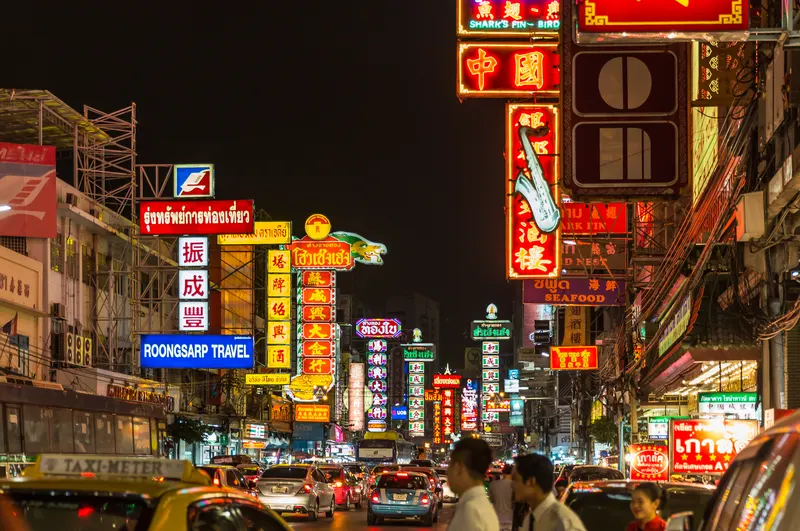
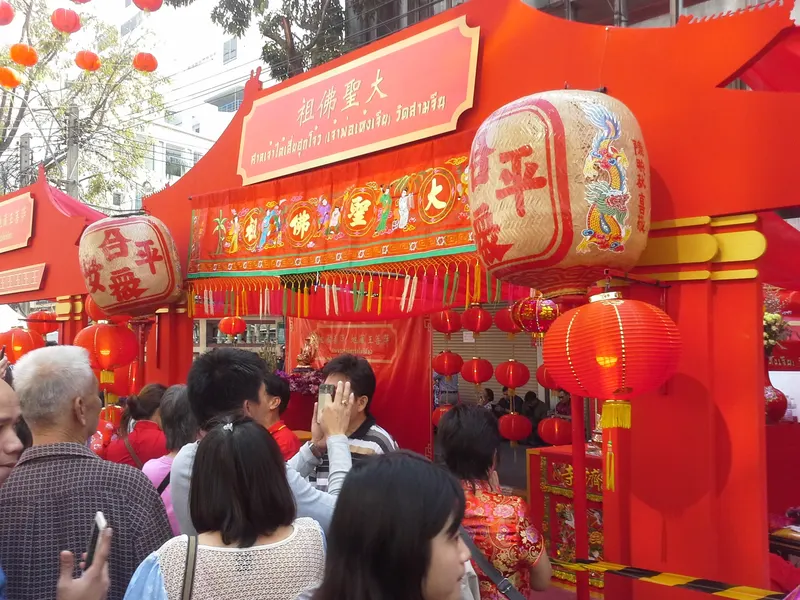
Around late January or early February each year — the date moves with the lunar calendar — Chinese New Year transforms Yaowarat, Bangkok's Chinatown, into one of the most atmospheric places in the city. Red lanterns string the length of Yaowarat Road, lion and dragon dances weave through the crowds to drums and cymbals, and the street food that makes the district famous goes into overdrive. Bangkok has one of the largest ethnic-Chinese populations of any city outside China, and the celebration here is heartfelt as well as spectacular: families gather, debts are settled, homes are swept, and red envelopes change hands.
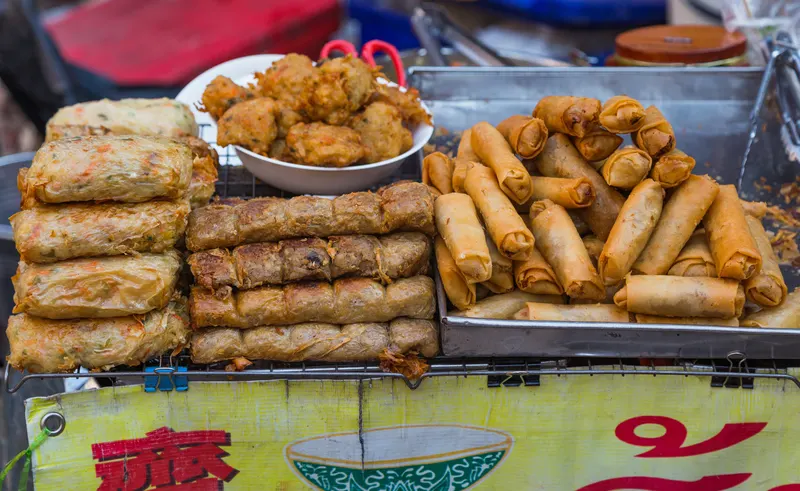
For visitors, the headline is simply the night-time energy. Yaowarat is the city's best street-food strip on any evening, and during Chinese New Year it becomes a wall of grilled seafood, noodle woks, dim sum, roasted chestnuts and dessert carts, threaded with performance and colour. It is loud, joyful and very photogenic — and very, very crowded. The main nights draw enormous numbers, and the road can slow to a shuffle, so set your expectations for a dense, immersive crush rather than a leisurely stroll.
The festival usually runs across several days, with a build-up beforehand and continued energy after, so you don't have to be there on the single peak night to enjoy it. Coming a day or two off the main date, or arriving in the early evening before the crowds thicken, gets you most of the atmosphere with more room to breathe and shorter food queues.
- Red lanterns the length of Yaowarat Road, plus lion and dragon dances.
- Street food in overdrive — grilled seafood, noodles, dim sum, roasted chestnuts, sweets.
- Falls on a different date each year, usually late January or February (lunar calendar).
- Runs across several days — you don't have to be there on the single peak night.
Watch out
Yaowarat gets shoulder-to-shoulder on the main nights; mind your belongings, expect surge taxi pricing and use the MRT
Check this year's dates
Chinese New Year dates change every year — confirm this year's dates and the Yaowarat programme with TAT and the Bangkok authorities.
Shrines, temples and the cultural side
Alongside the food and lanterns, Chinese New Year is a deeply observed religious occasion, and Chinatown's temples and shrines are at its center. Wat Mangkon Kamalawat, the great Chinese-style temple on Charoen Krung, fills with worshippers lighting incense, making offerings and praying for a prosperous year; the air thickens with smoke and the courtyards overflow. Nearby Wat Traimit, home to the world's largest solid-gold Buddha, draws crowds too, and the smaller clan shrines tucked through the lanes each have their own quiet ceremonies.
Visiting respectfully is part of the experience. Dress modestly — covered shoulders and knees — keep your voice down inside the halls, and follow the lead of worshippers around offerings and incense. The shrines are working places of worship before they are sights, and Chinese New Year is one of their most important moments of the year. If you want the cultural depth of the festival rather than just the street party, the temples are where you'll find it.
- Wat Mangkon Kamalawat — the great Chinese temple, packed with New Year worshippers.
- Wat Traimit — the Golden Buddha temple, on the MRT line at Hua Lamphong.
- Smaller clan shrines through the lanes hold their own quiet ceremonies.
- Dress modestly and follow worshippers' lead around incense and offerings.
Crowds, transport and where to stay
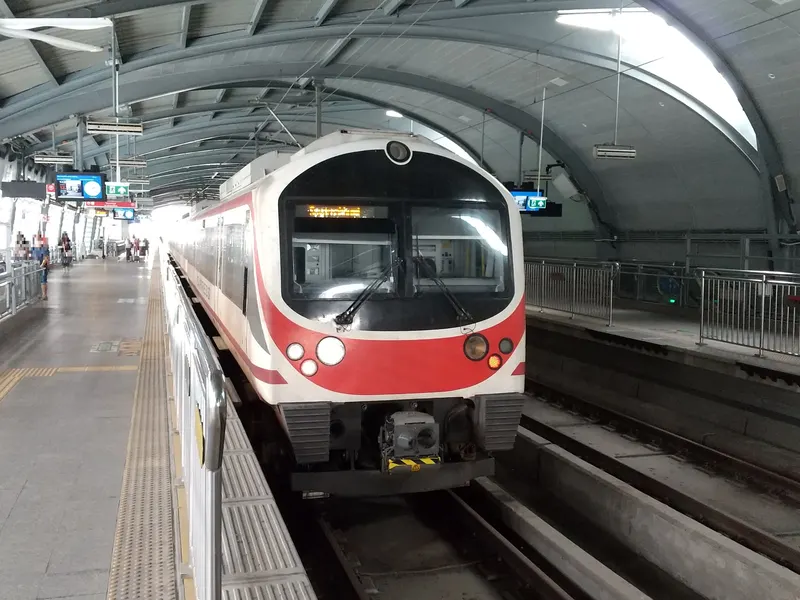
The crowds are the one thing to plan around. On the peak nights, Yaowarat is shoulder-to-shoulder and the surrounding roads gridlock, so do not try to arrive by taxi or Grab — you'll sit in traffic and pay surge prices. The fix is the MRT Blue Line: ride it to Wat Mangkon station, which sits right in the heart of Chinatown, and you skip the whole jam. From there it's all on foot. Keep your phone and wallet secure in the crush, go early in the evening for the food, and have a plan for getting out before everyone leaves at once.
For where to stay, you have two sensible strategies. Base in or right beside Chinatown — increasingly easy now the MRT serves it — for the atmosphere on your doorstep, accepting that the area is dense and noisy during the festival. Or stay in a transit-easy central area like Silom or Siam and ride the MRT in for the evening, returning to a calmer base. Either way, book ahead: Chinese New Year overlaps Bangkok's peak cool-season demand, and central hotels fill and price up well in advance. Beyond Chinatown, the big malls run their own Chinese New Year decorations, lion dances and events — a cooler, calmer, air-conditioned way to enjoy the festival if the Yaowarat crush isn't for you.
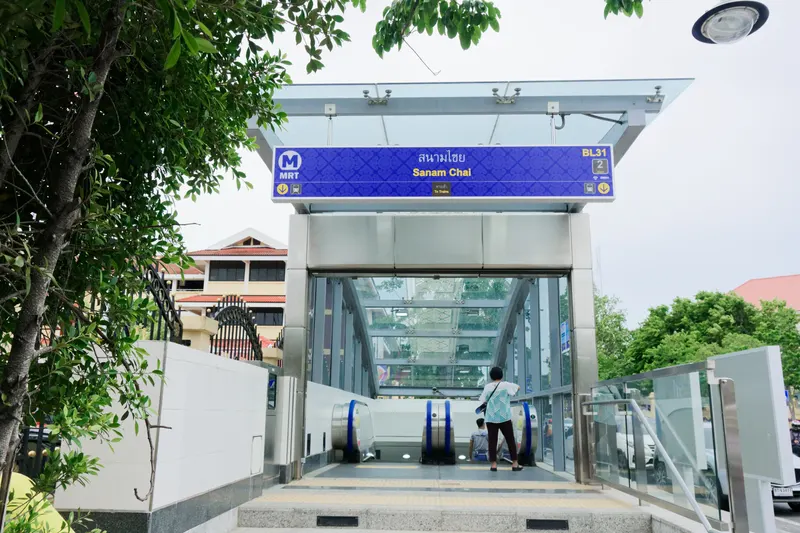
- Use the MRT to Wat Mangkon — never arrive by taxi on the peak nights.
- Go early evening for the food; have an exit plan before the post-peak rush.
- Stay in Chinatown for atmosphere, or a transit-easy central area and ride in.
- Malls run their own decorations and lion dances — a cooler, calmer alternative.

Chinese New Year FAQ
When is Chinese New Year in Bangkok? It follows the lunar calendar and falls on a different date each year, usually late January or sometimes February. Confirm the current year's dates before you plan, and note the celebration runs across several days.
Where's the best place to experience it? Yaowarat (Chinatown) is the heart of it — lanterns, lion dances and street food — best reached by MRT to Wat Mangkon. For the cultural side, the temples; for a calmer version, the big malls run their own events.
How crowded does it get? Very. The main nights draw enormous numbers and Yaowarat slows to a shuffle. Go early in the evening or a night off the peak, use the MRT, and mind your belongings in the crush.
Sources
- Tourism Authority of Thailand (TAT) ↗
Confirm this year's Chinese New Year dates and the Yaowarat programme.
- TAT Newsroom — Chinese New Year 2026 in Bangkok ↗
Official 2026 programme: Yaowarat Road decorations and the main Bangkok celebration dates.
- BEM MRT — fares & contactless ↗
Ride the MRT Blue Line to Wat Mangkon, in the heart of Yaowarat, to skip the festival traffic.