- Time needed
- 45 minutes to an hour for an unhurried visit
- Best time
- Up close in the morning
- Nearest
- Cross-river ferry from Tha Tien pier beside Wat Pho
- Price
- A modest non-Thai gate fee for the temple grounds
Why Wat Arun is worth the crossing
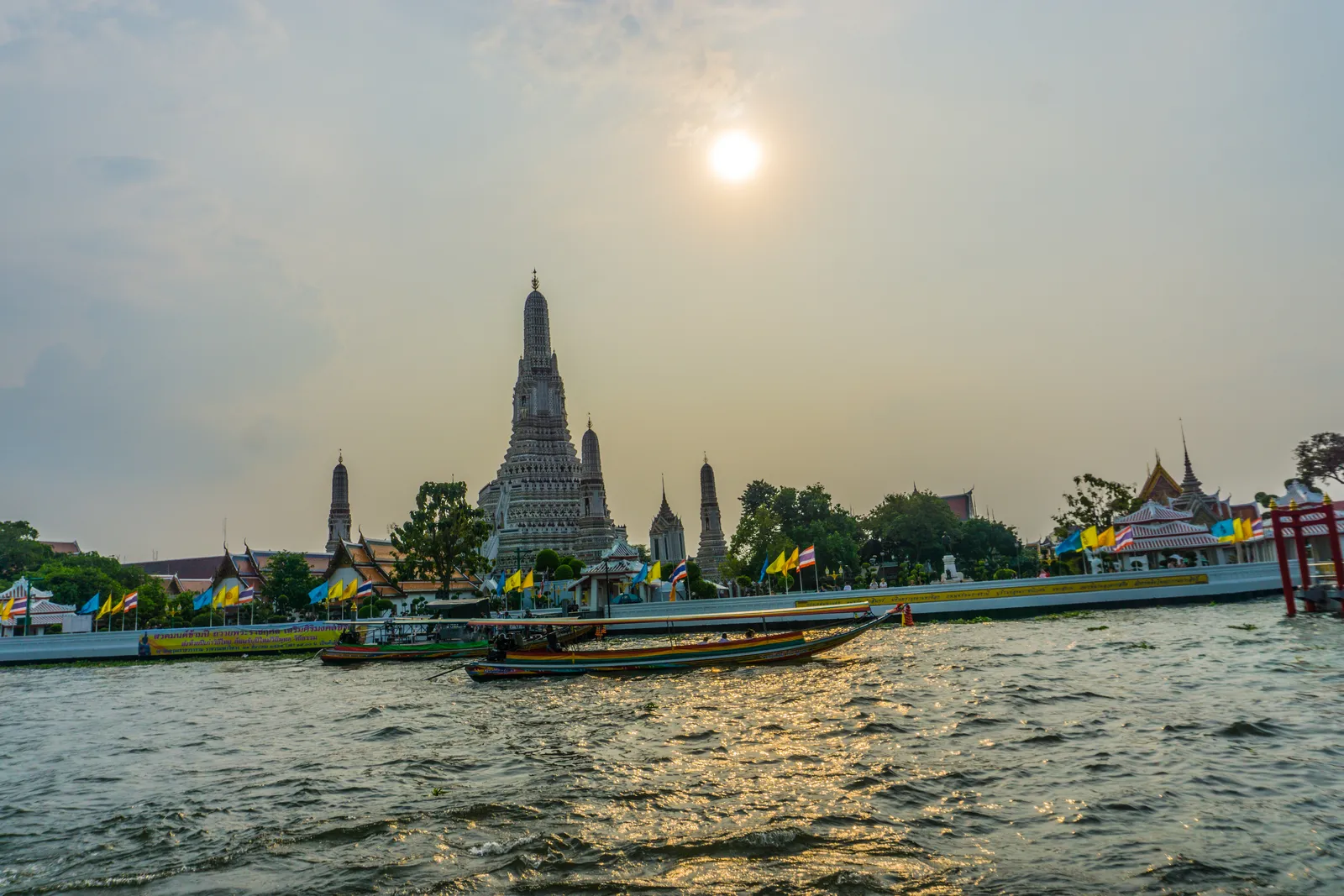
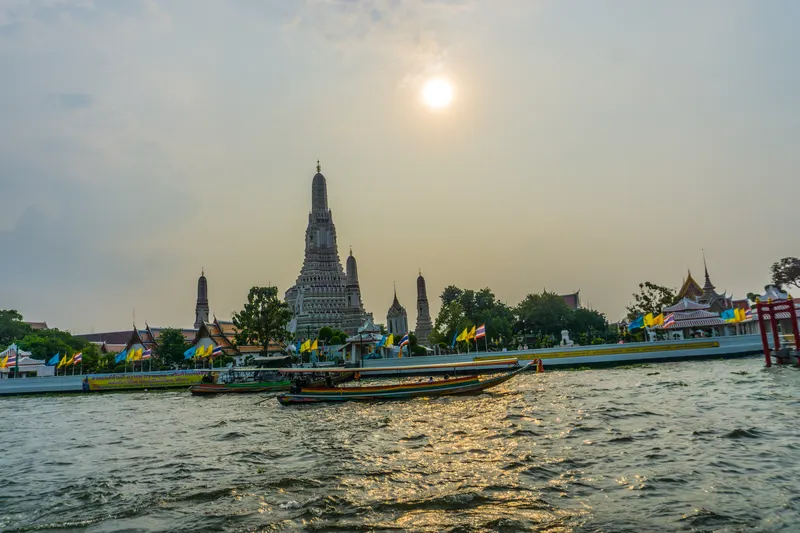
Wat Arun — Wat Arun Ratchawararam, the Temple of Dawn — is one of those rare Bangkok sights that lives up to its postcard. The towering central prang is a Khmer-style corn-cob spire, but the surface tells the real story: thousands of pieces of broken Chinese porcelain and painted ceramic, originally ballast from trading ships, pressed into flower patterns and pinned together into a shimmering skin. Up close it reads as texture and color; from across the river it reads as a single glowing silhouette.
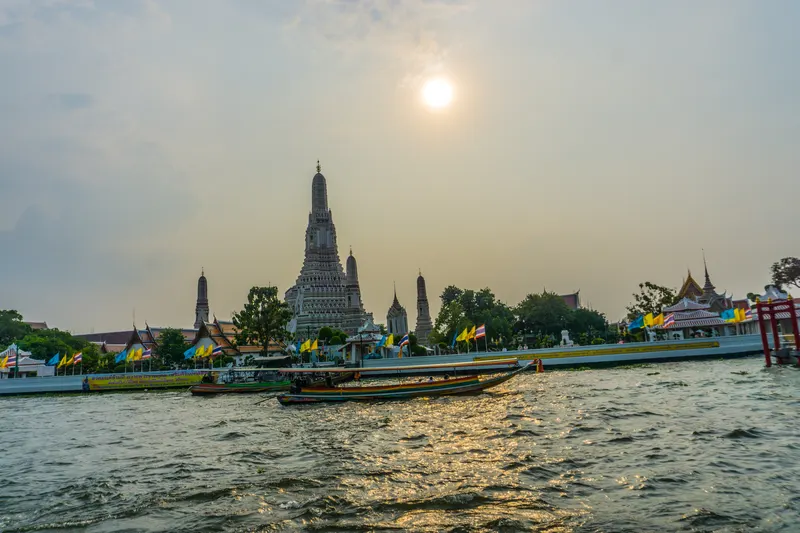
Despite the name, dawn is not actually the best light here — the prang faces east, so it is backlit at sunrise. The magic moment is the opposite: late afternoon and sunset, watched from the Bangkok side, when the low sun warms the porcelain and the temple is floodlit as the sky goes indigo. Plan to see it twice if you can — up close in the morning, then from afar at golden hour, which we cover in detail in the sunset guide.
The temple sits in Thonburi, the quieter west bank that was Bangkok's capital before Rattanakosin. Pair it with the Old City temples across the water and you have one of the city's great half-days.
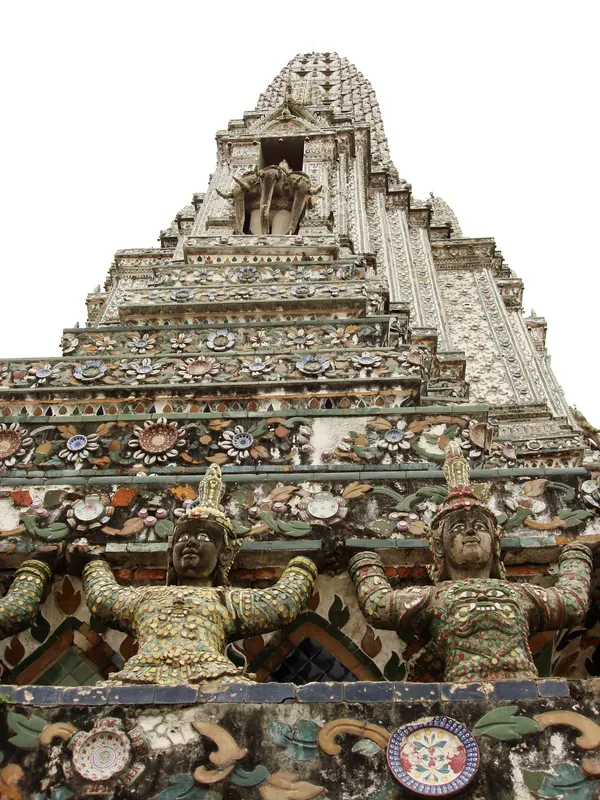
- Central prang: roughly 70 metres of porcelain mosaic you can climb partway up.
- Four smaller satellite prangs and guardian figures surround the base.
- Best photographed from the Bangkok-side riverbank at sunset.
- Quietest on weekday mornings, just after opening.
Dress code
Shoulders and knees covered; sarongs are lent at the entrance for a deposit if you arrive underdressed
Find your bearings
Map pins
Map data © OpenStreetMap contributors · Tiles © OpenFreeMap
Getting there and crossing the river
The easy way is from the Old City. Take a Chao Phraya Express boat, or the MRT Blue Line to Sanam Chai, walk to Wat Pho, then continue to Tha Tien pier. From there the dedicated cross-river ferry shuttles you to the Wat Arun landing in about two minutes for a few baht — buy the ticket at the pier kiosk and step onto the next boat. Coming straight from elsewhere, a Grab to the Thonburi side will drop you at the temple's land entrance, and river boats also stop nearby.
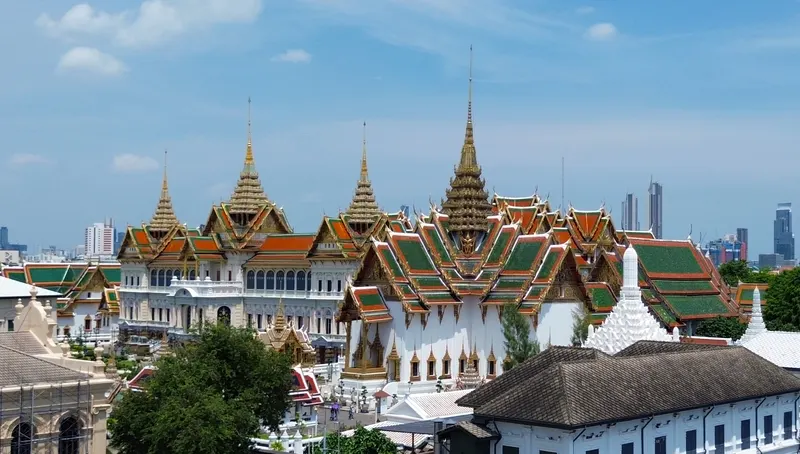
Most visitors, though, arrive on foot from Wat Pho and the Grand Palace, since all three sit within a short stretch of the river — which is exactly why the heat-smart way to plan the day is palace and Wat Pho first thing, then the ferry across to Wat Arun. Give yourself time to wander the riverside terrace before or after; there are cafes and viewpoints on both banks where you can sit with the temple in front of you.
Carry small baht notes — you will want them for the ferry and for the sarong deposit if you arrive underdressed.
- Express boat or MRT Sanam Chai to Wat Pho, then Tha Tien pier for the cross-river ferry.
- The ferry takes about two minutes and costs a few baht each way.
- A Grab to the Thonburi side drops you at the land entrance.
- Bring small notes for the ferry and any sarong deposit.
Climbing the prang and visiting respectfully
Two steep tiled staircases lead up the front of the central prang to a terrace partway up. The steps are narrow and the pitch is genuinely sharp, so take them slowly and use the handrail — and skip the climb in flip-flops or after rain, when the tiles turn slick. From the terrace you get an eye-level view of the porcelain flowers and a clean look across the river toward Wat Pho and the Old City. Down at the base, look for the rows of Chinese stone guardians brought over as ballast, and the band of kinnari that appear to hold up the upper levels.
This is an active temple, so dress respectfully: shoulders and knees covered for everyone. If you turn up in a tank top or short shorts, sarongs are available to borrow at the entrance for a small deposit. Remove your shoes before entering any of the prayer halls, keep your voice down, and never point your feet at a Buddha image or climb on the structures for photos. The ordination hall (ubosot) away from the main prang is a quieter, often-skipped corner worth a few minutes.
Timing-wise, the hot season (March to May) makes the open riverside terrace brutal by midday, so go early. In the rainy season an afternoon downpour can pass through quickly, and the cool season (November to February) is the sweet spot for both the climb and a comfortable sunset wait on the far bank. Allow about forty-five minutes to an hour for an unhurried visit, more if you sit by the river afterward.
- Climb partway up the prang for porcelain detail and a river view — slowly, and never on wet tiles.
- Cover shoulders and knees; borrow a sarong at the entrance if needed.
- Remove shoes before entering prayer halls and keep quiet inside.
- Go early in the hot season; the cool season is ideal for the climb and sunset.
Wat Arun FAQ
How do I get to Wat Arun? Cross by the few-baht ferry from Tha Tien pier beside Wat Pho; it takes about two minutes. You can also reach the Thonburi side by Grab.
Can I climb the prang? Yes, partway, via two steep tiled staircases to a terrace — take them slowly, hold the rail, and avoid the climb after rain.
When is the best light? See it up close in the morning, then watch it floodlit from the east bank at sunset; the prang is backlit at sunrise despite the temple's name. What do I wear? Shoulders and knees covered; sarongs are lent at the gate for a deposit.
Sources
- Wat Arun official information ↗
Confirm the current gate fee, opening hours and ferry operation.