
- Time needed
- A half day at a gentle pace
- Best time
- Start at first light
- Getting there
- Begin near a Chao Phraya pier (Tha Chang or Tha Tien)…
- Price
- Free to walk
Why walk the Old City, and when
Rattanakosin, the old royal island ringed by the Chao Phraya and a pair of dug canals, is the one part of Bangkok that genuinely rewards walking. The big sights — the Grand Palace, Wat Pho, Wat Arun across the water, the Giant Swing and Wat Suthat — sit close enough together that a taxi between them is slower and sillier than your own feet, and there is no Skytrain out here to tempt you onto wheels anyway. On foot you catch the things the tour buses skip: a whitewashed city gate, a lane of amulet sellers, a canal lined with old shophouses, a coffee shop that has been pulling the same drip since before the war.
The catch is the heat. This walk is almost entirely outdoors, across shadeless courtyards and sun-struck pavements, so the single most important decision you make is when to start. Set out at or before opening — the first hour buys you cool air, soft gold light on the temple spires, room to breathe inside the halls, and pavements you can actually stand on. By late morning the Old City bakes, and the smart move is to be finishing, not starting. In the cool season from roughly November to February the whole thing is a pleasure; in the hot months of March to May treat shade as a strategy and keep water on you the entire time.
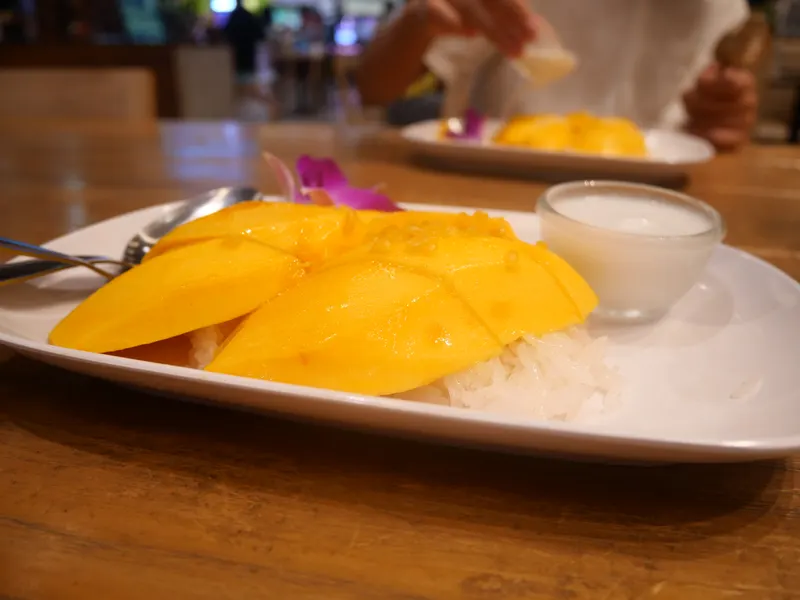
Treat the temples as working religious sites, not photo stops. Cover your shoulders and knees, wear shoes you can slip off at the halls, and carry a light scarf as an all-purpose cover-up and sun shade. Carry small cash too — for modest gate fees, the flower-market vendors, the mango sticky rice carts and the few-baht boat that brings you in and out.
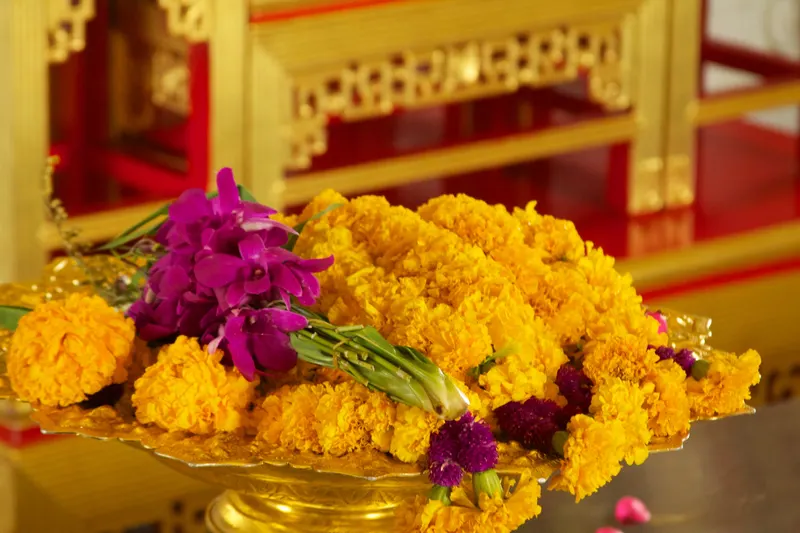
- Start at or before opening; the route is shadeless and bakes by late morning.
- Cool season (Nov–Feb) and early hours are far kinder than a hot-month afternoon.
- Cover shoulders and knees for the temples; slip-on shoes save fuss at the halls.
- Carry small cash and water; there is no Skytrain out here, so plan around the river.
The route, step by step
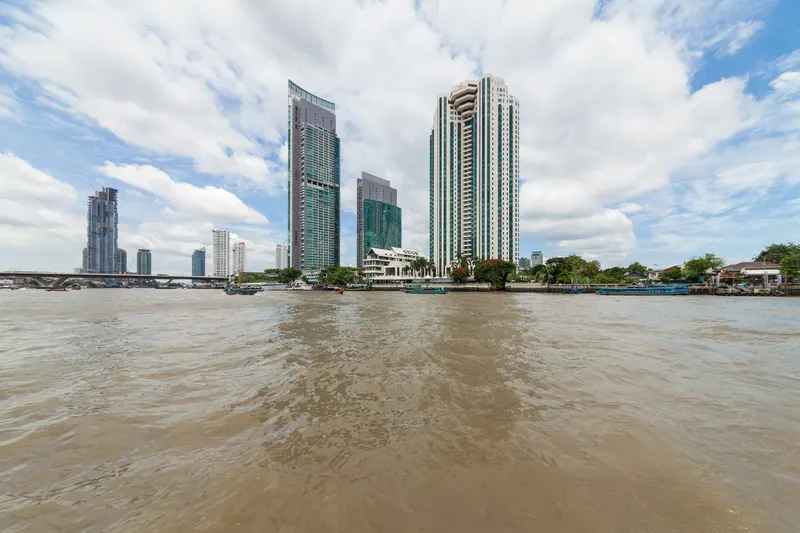
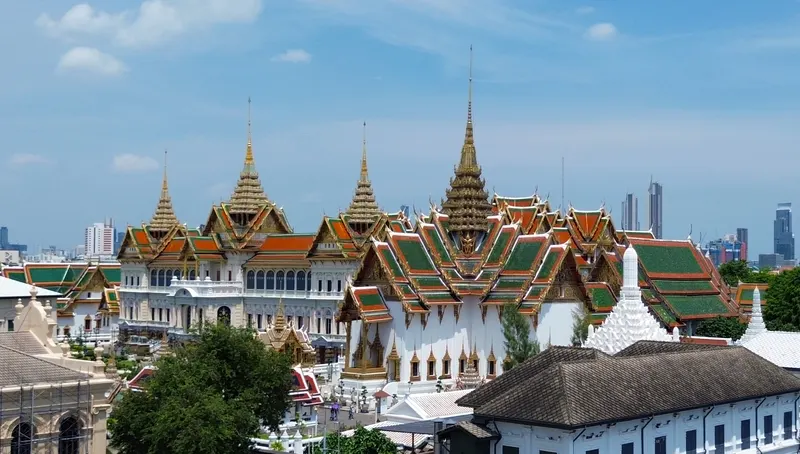
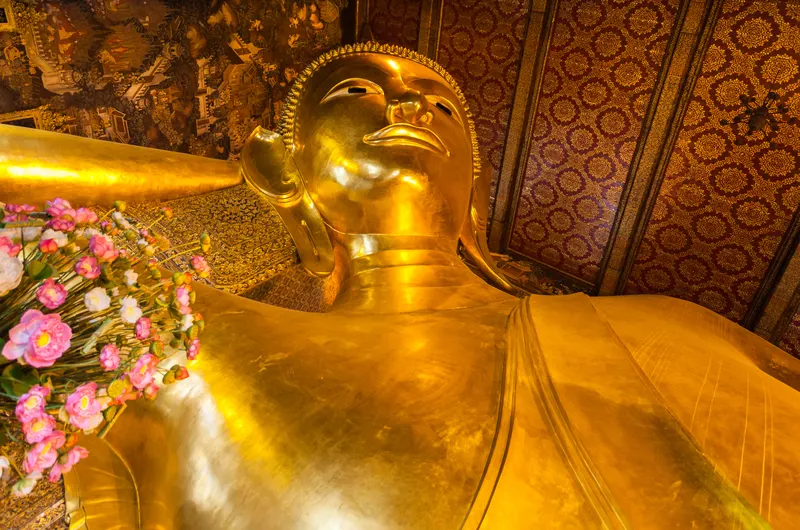
Arrive on the water. The orange-flag Chao Phraya Express boat to Tha Chang or Tha Tien pier, or the MRT Blue Line to Sanam Chai, drops you straight into the heart of the island without a taxi. Start at the Grand Palace and Wat Phra Kaew while it is coolest and least crowded — this is the strictest, busiest, hottest sight, so doing it first is the whole logic of the day. From the palace walls walk a few minutes south to Wat Pho for the giant Reclining Buddha and a forest of tiled chedis; it is the calmest of the headline temples and a kinder place to linger.
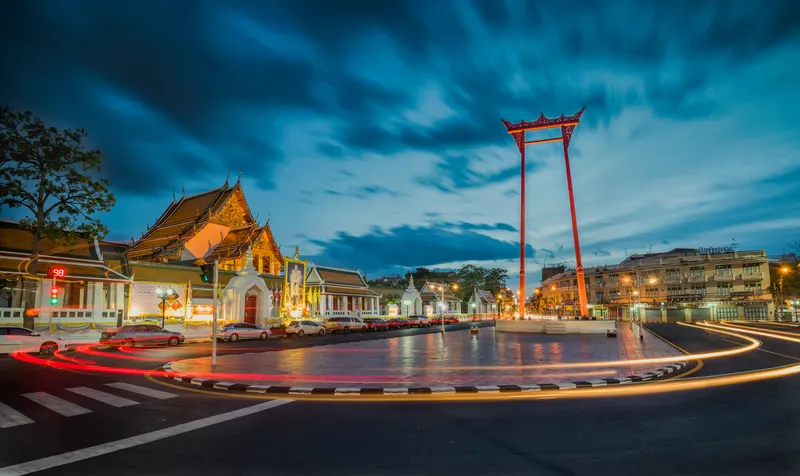
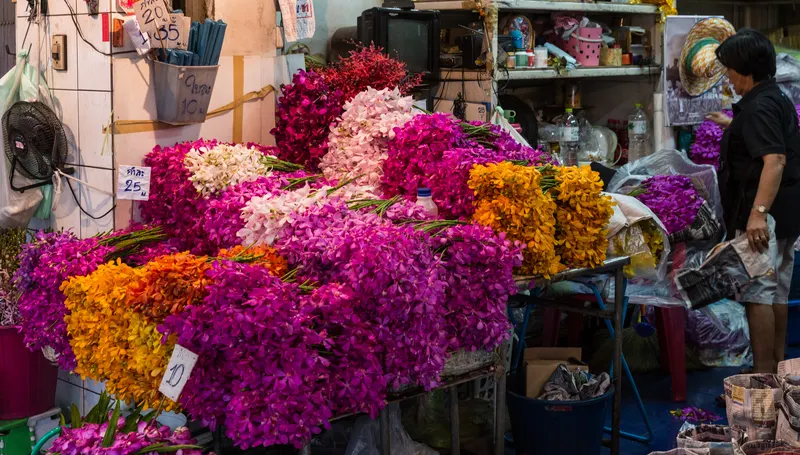
From Wat Pho the route bends inland away from the river. Head north and east toward the Giant Swing, the towering red teak frame that stands in front of Wat Suthat, one of the city's most serene and underrated temples — its tall viharn and quiet murals are a world away from the palace crowds. Cut down toward the canal and the Pak Khlong Talat flower market, a fragrant, photogenic sprawl that runs day and night near the river's edge; it is at its most magical in the cool early hours and again after dark when the overnight blooms arrive.
Thread back toward the river through the old gates and lanes — past amulet stalls, brass shops and time-worn shophouses — and finish where you started, at a pier. From Tha Tien you can hop the few-baht cross-river ferry to Wat Arun for the porcelain prang, or simply ride the express boat back upriver as the temple spires slide past. The exact order is yours to bend; the fixed points are temples-first-while-cool and river-bookended so you never need a taxi.
- 1. Arrive by boat at Tha Chang or Tha Tien (or MRT Sanam Chai).
- 2. Grand Palace & Wat Phra Kaew at opening — strictest and hottest, so do it first.
- 3. Wat Pho for the Reclining Buddha and the tiled chedis, a short walk south.
- 4. The Giant Swing and Wat Suthat — tall, serene and refreshingly uncrowded.
- 5. Pak Khlong Talat flower market by the canal — fragrant and photogenic.
- 6. Loop back through the gates and lanes to a pier; ferry to Wat Arun or ride the boat home.
Eating, resting and the heat-and-rain plan
Half the pleasure of walking the Old City is grazing as you go. The lanes around Tha Chang and Maharaj pier are stacked with amulet stalls and mango sticky rice carts; old Chinese-Thai coffee shops near the flower market pull thick, sweet drip coffee; and the canal edges hide noodle stalls and shaded riverside cafés with skyline views back toward the temples. Build at least one proper sit-down break into the route — somewhere air-conditioned or breezy — and treat it as a heat valve, not a luxury.
Keep a rain plan in your back pocket. In the wet season from roughly June to October an afternoon downpour can sweep through in under an hour, and the Old City offers good cover: duck into a café, a riverside restaurant or a nearby museum and wait it out with a coffee. Museum Siam, near MRT Sanam Chai, is the natural indoor anchor on this side of town if the sky opens or the heat wins — it is interactive, air-conditioned and a thoughtful counterweight to a morning of temples.
When your legs are done, the river carries you home effortlessly. Ride the express boat up to Phra Athit for the Khao San area, down to Saphan Taksin for the BTS, or across to Wat Arun for one last temple at the golden end of the day. If you would rather end with your feet up, a Thai massage near Wat Pho is the classic reward, or carry the day into the evening with a Chao Phraya dinner cruise gliding past everything you just walked.
Where these are
Map pins
Map data © OpenStreetMap contributors · Tiles © OpenFreeMap
Sources
- Grand Palace official visitor information ↗
Confirm current hours and any royal-ceremony closures before you set out.