- Time needed
- An hour or two at the market itself
- Getting there
- Roughly 70 km southwest in Samut Songkhram (about 1.5…
- Price
- The market is free to browse
- Best for
- Photographers
What makes Maeklong worth the drive
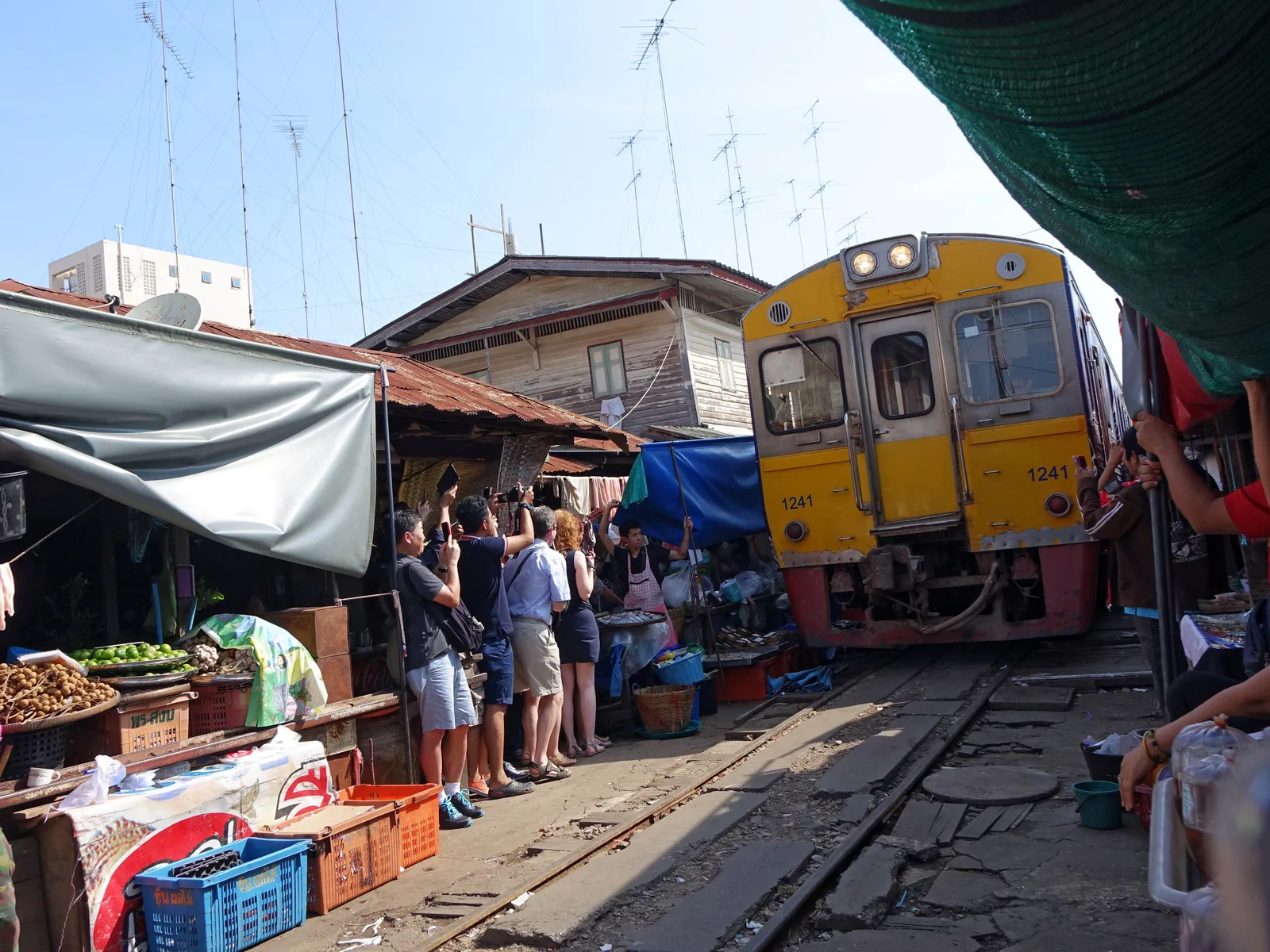
The Maeklong Railway Market is built directly on top of an active train line in Samut Songkhram province, the small riverside town the line is named for. Stalls of mangosteen, chilies, fish and flowers spill over the rails themselves, and several times a day a horn sounds and the whole market performs its now-famous trick: awnings retract, baskets slide back, and the train inches through with inches to spare before everything snaps back into place as if nothing happened.
What sells the moment is that it is genuinely a working market, not a staged show. The vendors who pull back their canopies are the same people selling you dried squid and fresh galangal, and the train carries real passengers down the Mae Klong line. That mix of low theatre and everyday commerce is exactly what makes the trip out worthwhile — it is short, surreal, and unmistakably real. Locals call it Talat Rom Hup, roughly the 'umbrella pull-down market', and the spectacle lasts only a minute or two each time the train comes through.
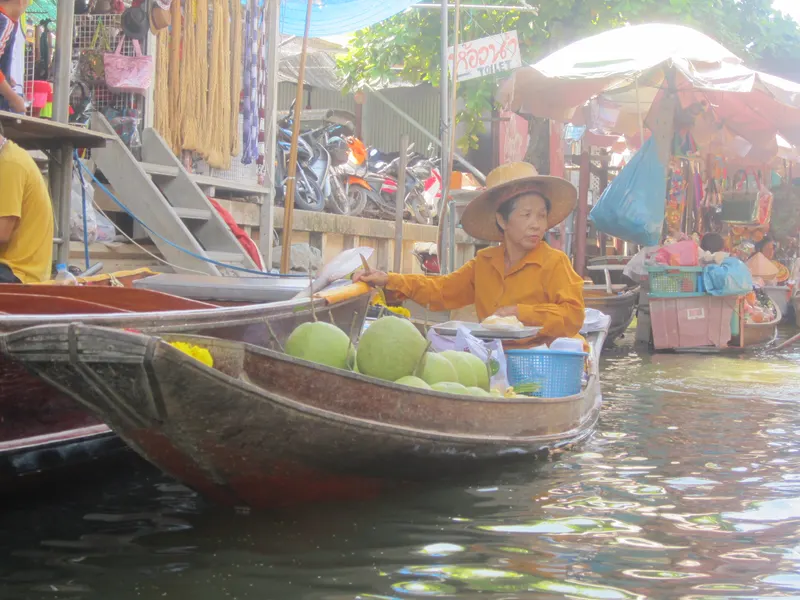
Because the show is brief, the smart way to think about Maeklong is as one stop on a wider loop rather than a destination in its own right. It pairs naturally with the canal markets southwest of the city, and most travelers fold it into a single morning out with a floating market. That keeps the long-ish drive from feeling lopsided against a two-minute payoff.
- Location: Samut Songkhram, around 70 km southwest of central Bangkok.
- Local name: Talat Rom Hup, the 'umbrella pull-down market'.
- The train passes a handful of scheduled times daily; each show lasts only a couple of minutes.
- Combine with Damnoen Saduak for a full half-day in the countryside.
Watch out
Keep bags, feet and tripods clear of the rails when the horn sounds, and stand exactly where the vendors stand — they have the timing down to the second
Book ahead
Combo tours sell out in peak season — book ahead; trackside stalls are cash-only with little change for big notes
Find your bearings
Map pins
Map data © OpenStreetMap contributors · Tiles © OpenFreeMap
How to get there from Bangkok
The simplest option is a half-day tour that bundles Maeklong with Damnoen Saduak, handling the driving and the timing so you arrive in sync with a scheduled train. For most first-timers this is the path of least resistance: someone else owns the logistics, and you turn up exactly when the awnings come down. If you would rather go independently, minivans run from the Southern (Sai Tai Mai) side of the city toward Samut Songkhram, and a private car or Grab keeps things flexible if you are a couple or small group.
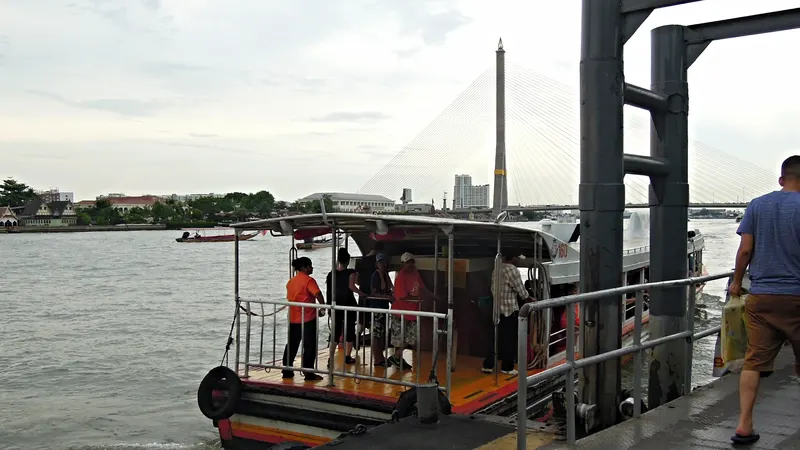
There is also a slow, scenic train route for purists. Take the line from Wongwian Yai in Thonburi, cross the river at the Tha Chalom ferry, and pick up the Mae Klong line into the market itself. It takes most of the morning, but it lets you ride the very tracks the market sits on — a quietly memorable way in if the journey is part of the appeal for you rather than something to minimize.
Whichever way you go, build in a buffer for Bangkok traffic on the way out and for the timing of the train once you arrive. Leaving the city early pays off twice — cooler air at the market and a head start on the tour buses. If you are weighing this against the other escapes, the day-trips hub lays out which trips reward a tour and which are easy to do on your own.
- Easiest: a guided half-day combining Maeklong and Damnoen Saduak.
- Independent: minivan from the Southern Bus Terminal area toward Samut Songkhram.
- Flexible: private car or Grab, roughly 1.5 hours each way.
- Scenic: the Wongwian Yai train via the Tha Chalom ferry for railway fans.
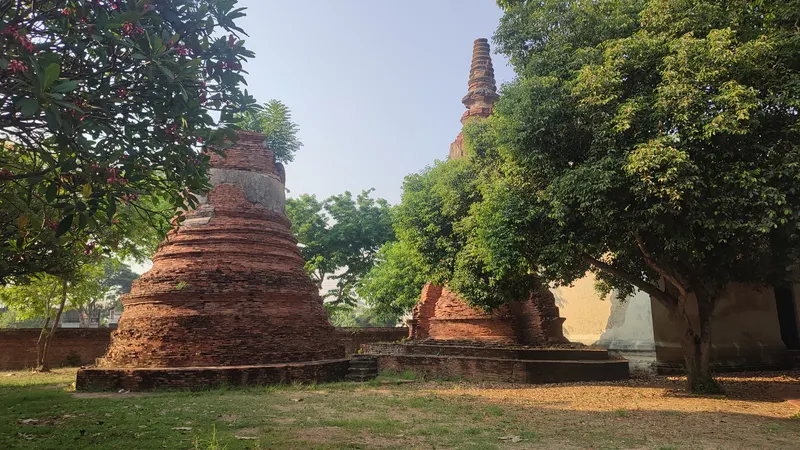
Timing the train and standing safely
The whole reason to come is the moment the train passes, so the timetable drives your plan rather than the other way around. Arriving early lets you wander the market in relative calm, claim a spot near the tracks and watch the awnings go down without fighting for a view. Crowds swell once the tour buses land mid-morning, so the first pass of the day is usually the most photogenic and the least frantic.
Weather shapes the experience more than you might expect. The dry, hot months from March through May make standing trackside genuinely sweaty, while the cool season from roughly November to February is the comfortable sweet spot. In the rainy months from about June to October the show still goes on, but pack a light layer for sudden afternoon downpours and accept that the light can turn flat.
When the horn sounds, safety is simple: stand exactly where the vendors stand. Keep bags, feet and tripods clear of the rails, follow their cues, and resist the urge to lean in for a closer shot. They do this several times a day and know precisely where the safe line is — the train clears the canopies by inches, not feet.
- Come early to beat the heat and the tour buses; the first pass is calmest.
- Cool season (Nov–Feb) is the most comfortable time to stand trackside.
- Keep bags, feet and tripods clear of the rails when the horn sounds.
- Watch what the vendors do — they know exactly where the safe line is.
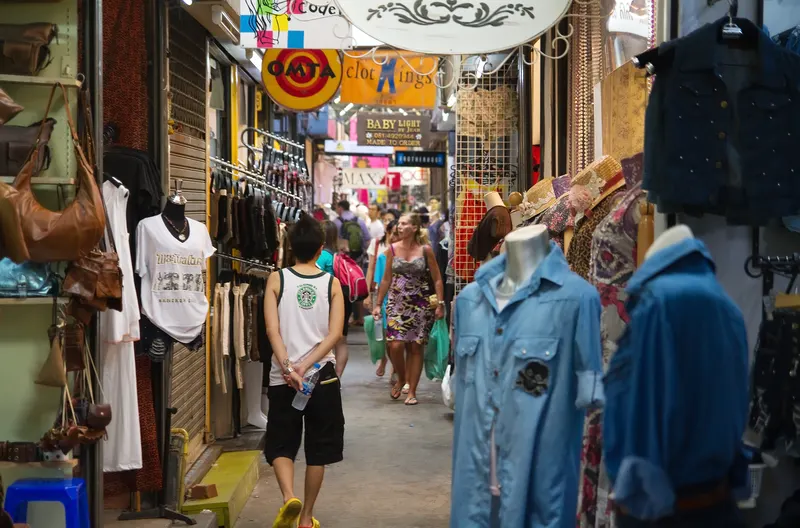
What to eat and bring home
Samut Songkhram is fishing and fruit country, so the market leans toward what the region does best: fresh and dried seafood, salted fish, mangosteen and lychee in season, palm sugar and trays of sticky-sweet snacks. Graze as you walk and let the vendors hand you slices to try — this is a place to eat your way along rather than sit down for a formal lunch.
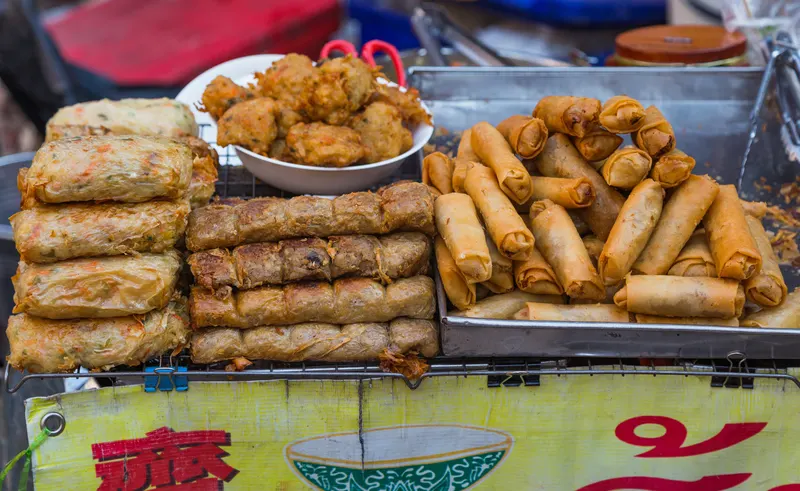
It is also an easy spot to pick up edible souvenirs that survive the ride back to the city: dried shrimp, crispy fish and bags of fruit. Carry small baht notes, because the trackside stalls are cash-only and rarely have change for large bills. If the seafood whets your appetite, save room for a proper meal back in town, where Bangkok's seafood houses and street kitchens do the catch justice.
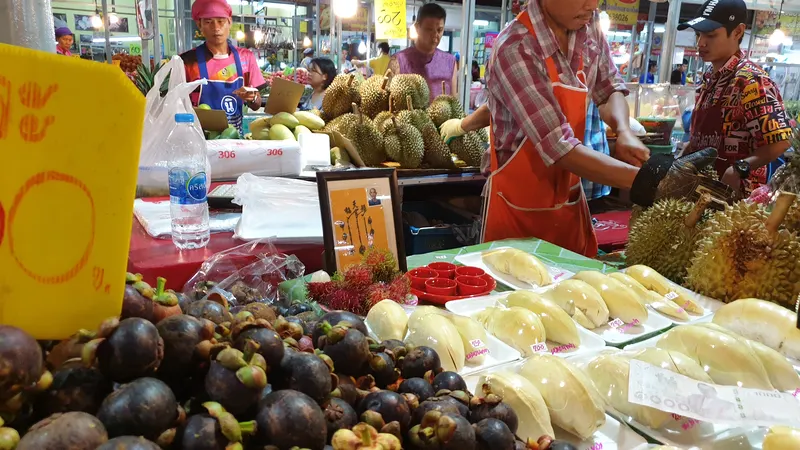
- Regional specialties: fresh and dried seafood, salted fish, seasonal mangosteen and lychee.
- Good edible souvenirs: dried shrimp, crispy fish, palm sugar, bagged fruit.
- Bring small baht notes; stalls are cash-only with little change.
- Snack as you go rather than planning a sit-down lunch here.
Sources
- State Railway of Thailand (official) ↗
Operator of the Mae Klong line that runs through the market; check the current timetable.
- Tourism Authority of Thailand — Mae Klong Railway Market ↗
TAT's official listing for the trackside market in Samut Songkhram.