- Time needed
- A long full day if you start early
- Best time
- Cool season (Nov–Feb) is the sweet spot
- Getting there
- About 130 km west (roughly 2.5–3 hours each way by ro…
- Price
- Modest: a tour
Why Kanchanaburi is worth the long drive
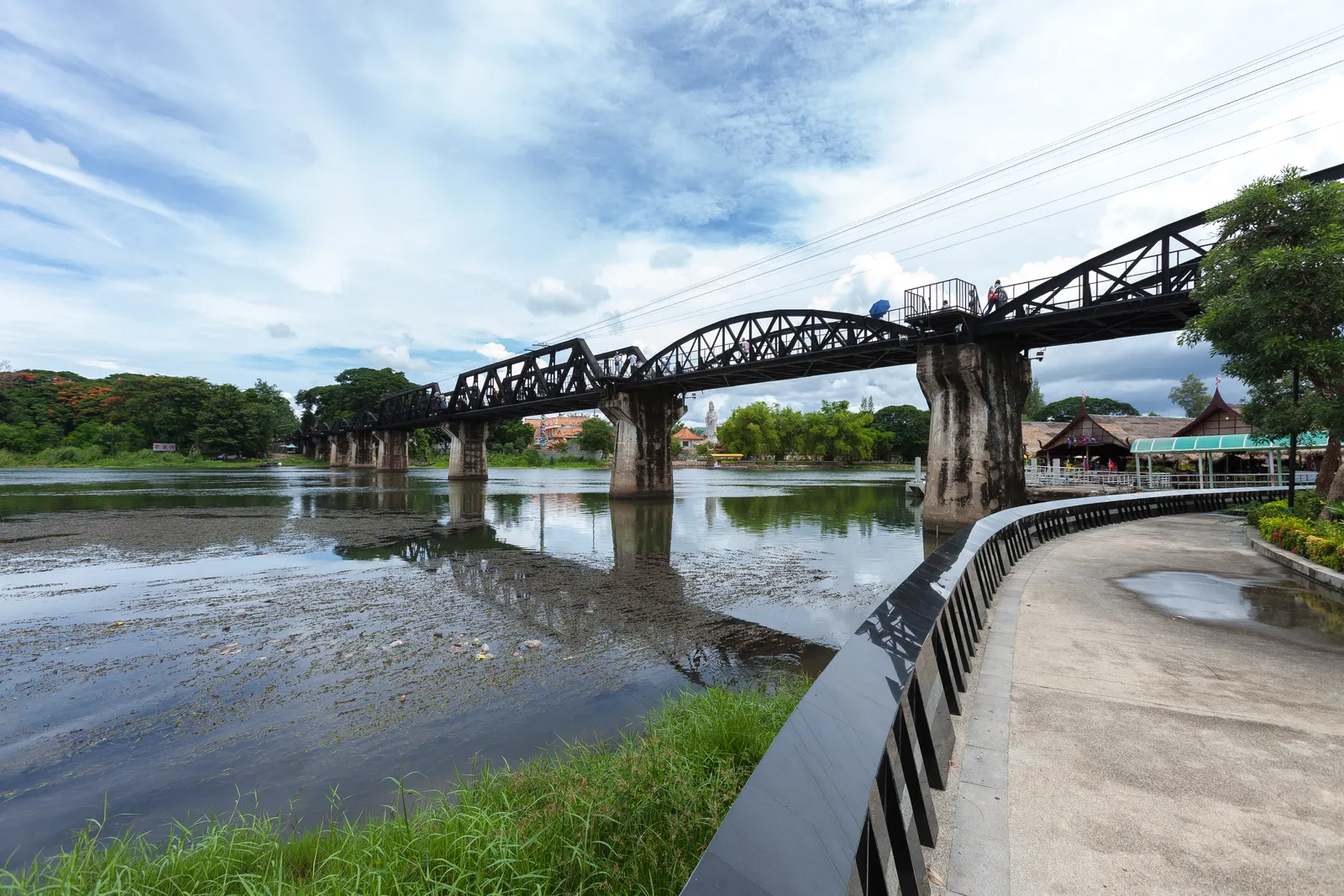
Kanchanaburi sits about 130 km west of Bangkok, near the Myanmar border, in a landscape of limestone hills and converging rivers that feels a world away from the city's heat and concrete. The town is best known for the Bridge over the River Kwai and the Death Railway, built under brutal conditions by Allied prisoners of war and conscripted Asian laborers during the Second World War. It is sobering, beautifully kept and far quieter than Bangkok's temple crowds — a place of remembrance as much as a sight.
Unlike Ayutthaya, this is a half-history, half-nature trip, and the distance means it earns its place only if you commit to an early start. The reward is real: a moving morning at the cemeteries and museum, then an afternoon on the river with the hills as a backdrop. The core sights cluster within a few kilometers along the river, so once you arrive the visiting itself is compact — it is the journey, not the sightseeing, that makes the day long.
If your time in Thailand is short, weigh Kanchanaburi honestly against the closer options. Ayutthaya and the floating markets are easier returns, and neither asks for five-plus hours on the road. But neither offers Kanchanaburi's particular mix of memorial gravity and river scenery, and for many travelers that combination is worth the drive — especially if you can give it an overnight rather than a sprint.
- Distance: ~130 km / 2.5–3 hours each way by road from central Bangkok.
- Core sights cluster within a few kilometers along the river, so visiting is compact.
- Best paired with a guided tour if you do not want to drive or juggle trains.
- Dress respectfully at the cemeteries and museums; this is a place of remembrance.
Watch out
The bridge carries live trains — only cross when it is clear and step into the safety bays as a train approaches
Book ahead
Book guided tours ahead in peak season; buy the scenic Death Railway train ticket at the station on the day
Find your bearings
Map pins
Map data © OpenStreetMap contributors · Tiles © OpenFreeMap
Getting there from Bangkok
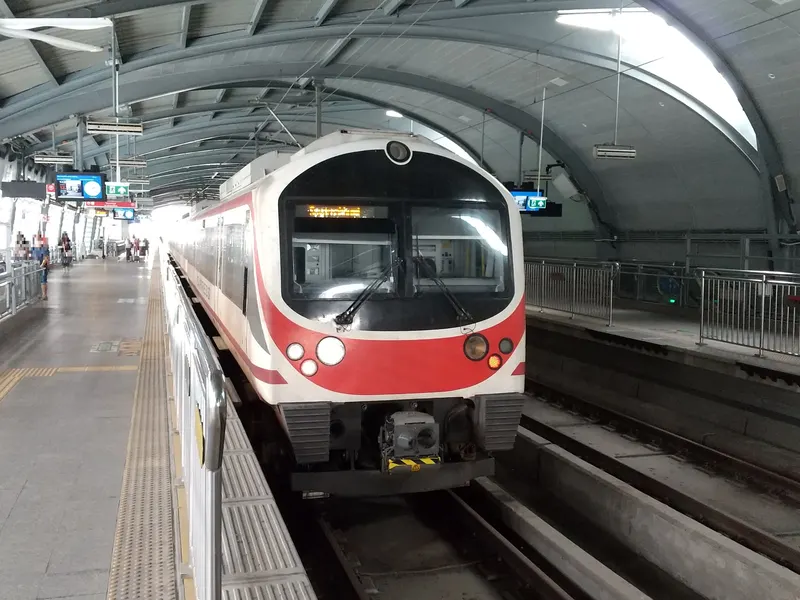
The simplest option for most visitors is a guided day tour, which handles the long transfer, the train ride and lunch in one package and removes the early-morning logistics. If you prefer independence, you can drive — roughly three hours via Highway 4 and Route 323 — or take a public bus or minivan from the Southern Bus Terminal (Sai Tai Mai), which run frequently and take around two and a half hours. Self-driving is the most flexible choice if you want to push on to Erawan or Hellfire Pass, but it is a long day at the wheel.
There is also a slow, atmospheric long-distance train from Bangkok's Thonburi side, but it is too long for a comfortable same-day return on its own. The better move is to drive or bus to Kanchanaburi and then board the Death Railway train for the short, scenic leg over the viaduct — buy that ticket at the station on the day. That gives you the railway experience without committing the entire day to the rails.
Whichever way you go, leave central Bangkok early. A late start eats the whole trip, and you will be racing the afternoon traffic back into the city. Know your last comfortable departure from Kanchanaburi and treat it as a hard deadline, because the long return is exactly where a Kanchanaburi day goes wrong if you let it run late.
- Tour: easiest; door-to-door pickup, the train ride and lunch in one package.
- Minivan/bus from Sai Tai Mai (Southern Bus Terminal): cheapest, around 2.5 hours.
- Self-drive via Highways 4 and 323: most flexible for adding Erawan, but a long day.
- Ride the scenic Death Railway leg from Kanchanaburi over the viaduct; buy on the day.
The history: bridge, museum and cemeteries
Start with the Thailand-Burma Railway Centre, a well-curated museum that explains how and why the railway was built and what the prisoners endured. It frames everything you see afterward, so visit it first rather than last. Directly opposite lies the Kanchanaburi War Cemetery, where thousands of Allied prisoners are buried in rows of immaculate green lawn; it is moving, quiet and free, and worth lingering in rather than treating as a quick stop.
From there, the Bridge over the River Kwai is a short hop. You can walk across the black iron spans on the same tracks still used by the railway, stepping into the safety bays when a train approaches — this is a working line, not a museum piece, so cross only when it is clear. The bridge is busiest mid-morning with tour groups, so going early or late gives you the calmer, more reflective version of the experience.
Throughout, treat this as the emotional heart of the trip rather than a photo stop. Cover your shoulders and knees out of respect at the cemeteries, keep your voice down, and give yourself unhurried time. A smaller riverside museum, the JEATH War Museum, makes a worthwhile supplement if you have the hours, but the railway centre and cemetery are the essential pairing.
- Thailand-Burma Railway Centre: the context you need; visit it first.
- Kanchanaburi War Cemetery: beautifully maintained, free, deeply moving.
- Bridge over the River Kwai: walk the spans, but mind the live trains.
- JEATH War Museum: a smaller riverside supplement if time allows.
Scenery, the overnight case and a smart day plan
After the history, lean into the landscape. The standout is the Death Railway train ride from Kanchanaburi out toward Nam Tok, which crosses the wooden Wampo Viaduct, where the line clings to a cliff above the River Kwai Noi. It is a short, slow, unforgettable stretch and the highlight of many day tours — the moment when the trip stops being about the past and starts being about the place. Back in town, the river is lined with floating restaurants and raft cafés where you can eat grilled fish with the current sliding past, a calm way to decompress after a heavy morning.
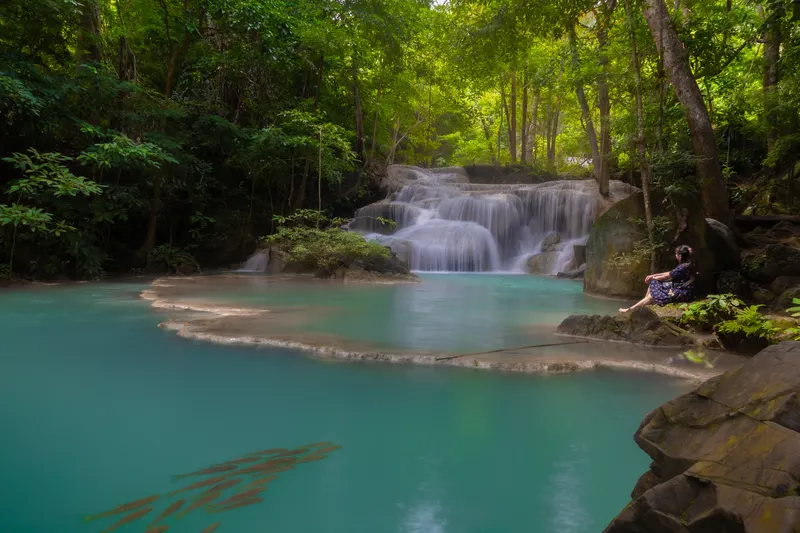
This is where the overnight case becomes clear. Erawan National Park's emerald, multi-tiered waterfalls — turquoise pools you can actually swim in — and the somber Hellfire Pass memorial are genuinely spectacular, but both sit well beyond town and are hard to bolt onto a same-day return to Bangkok. Trying to cram them into one day means a punishing schedule and a tense, late drive home. If you can spare a night, staying over transforms Kanchanaburi from a rushed marathon into a proper two-act trip: history and the bridge on day one, waterfalls and the river on day two.
If you only have the single day, keep the plan tight and honest: the railway centre, the cemetery, the bridge and the viaduct train make a complete, well-paced trip on their own — don't try to add the falls. Aim to leave Kanchanaburi by mid-afternoon to dodge Bangkok's evening traffic, drink plenty of water on the exposed bridge and terrace, and accept that the falls will keep for a return visit. Cool-season afternoons are ideal; in the rainy season the hills are at their greenest but storms can roll in fast.
- Ride the train over the Wampo Viaduct — the single most scenic moment of the day.
- Lunch riverside at a floating restaurant or raft café.
- Erawan Falls and Hellfire Pass are better as an overnight than a day add-on.
- Single day: do the bridge, museum, cemetery and viaduct train, and leave by mid-afternoon.
Sources
- State Railway of Thailand (official) ↗
Operator of the Bangkok–Kanchanaburi–Nam Tok Death Railway service; check current times.
- Tourism Authority of Thailand — Kanchanaburi ↗
TAT's official attraction listing for the Death Railway and its sights.
- CWGC — Kanchanaburi War Cemetery ↗
Commonwealth War Graves Commission details for the cemetery, which is open and free to visit.
- Thailand–Burma Railway Centre (official) ↗
Official museum site with opening hours and admission for the railway centre.