
- Dates
- 2027: 13–15 April (national public holidays)
- Getting there
- Bangkok has not announced its 2027 water zones yet
- Price
- Free to join on the street
- Best for
- Travelers who want the world's biggest water fight
What Songkran actually is
Songkran is the Thai New Year, celebrated nationwide around 13–15 April, and it is the single most joyful — and wettest — week to be in Bangkok. What began as a gentle ritual of pouring scented water over Buddha images and trickling it onto the hands of elders to ask their blessing has grown into a days-long, citywide water fight in which super-soakers, hoses and buckets are all fair game on the open street. For a few days the city's normal rules dissolve: strangers douse strangers, pickup trucks cruise with barrels of water in the back, and a smear of cool white chalk paste on the cheek is a greeting rather than a prank.
The two faces of Songkran sit side by side, and it pays to understand both. There is the spiritual side — temple visits, washing Buddha statues, building small sand stupas, and paying respect to family and monks — and there is the street side, the exuberant soaking that has made the festival famous worldwide. You can lean into either. Spend a morning at a quiet old-city temple watching families pour water reverently over the images, then step out at midday into the controlled chaos of a water zone. Both are the real Songkran.
Practically, Songkran is also a national holiday, so many shops and family-run restaurants close for a few days while a large share of Bangkok travels upcountry to be with family. That exodus has a happy side effect for visitors: away from the water zones, traffic eases and the temples and malls can feel calmer than usual. The trade-off is that you should book accommodation early, expect higher festival-week rates, and embrace the chaos rather than trying to plan around it.
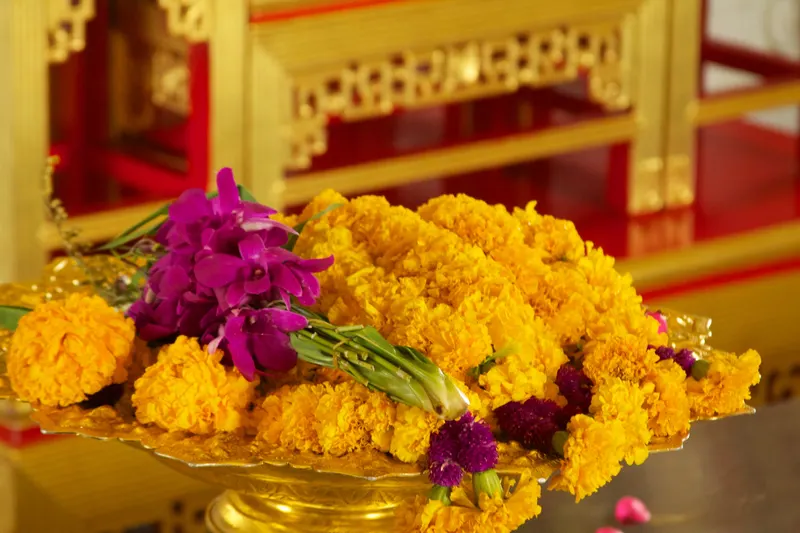
- Official dates fall around 13–15 April, with celebrations often spilling a day either side.
- Temple side: washing Buddha images, sand stupas, blessings for elders and monks.
- Street side: water guns, hoses, buckets and white chalk paste — total, joyful soaking.
- A national holiday: many shops and restaurants close as locals travel home.
Watch out
Phones, cameras and cash get wrecked — seal everything in a waterproof pouch, expect surge taxi pricing, and watch your footing on slippery roads
Check this year's dates
Confirm this year's official Songkran dates, road closures and any water-zone changes with the Tourism Authority of Thailand before you plan.
Where the water flows: the main zones
Bangkok's Songkran is concentrated in a handful of zones, and choosing the right one shapes your whole experience. Silom is the headline battle: the long road is typically closed to traffic for the festival and becomes a kilometres-long, shoulder-to-shoulder water fight, easy to reach because the BTS runs straight overhead at Sala Daeng and Chong Nonsi. Khao San Road and the surrounding Banglamphu lanes are the backpacker epicenter — younger, louder, foam-and-music heavy, and within walking distance of the old-city temples. RCA and a few other spots host their own ticketed or club-led parties.
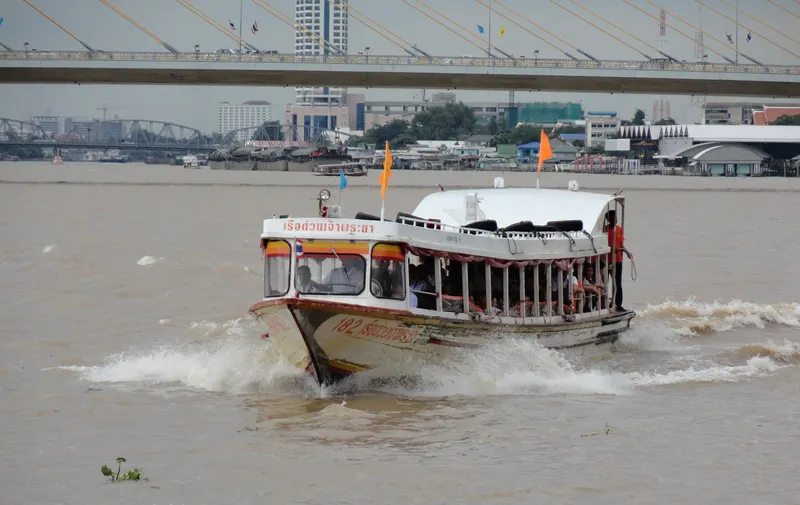
If the full-contact soaking isn't your thing, the old city around Rattanakosin and Wisut Kasat keeps Songkran's traditional heart. Here you'll find the temple rituals, the gentler family splashing, and culturally framed events rather than a wall-to-wall water war. Many travelers do both across the festival: a reverent temple morning, a riverside lunch, and one big water-zone afternoon. The river itself is a fine vantage and a relief, and a boat or a riverside hotel terrace lets you watch the energy without being permanently drenched.
Wherever you go, dress to get wet from head to toe: quick-dry clothes, sandals with grip, and absolutely nothing you would mind losing or ruining. Leave the good camera at the hotel, and assume that anything in an open pocket is going to get a soaking. Roads turn slick and crowds get dense, so move slowly, mind your footing, and keep an eye on children.
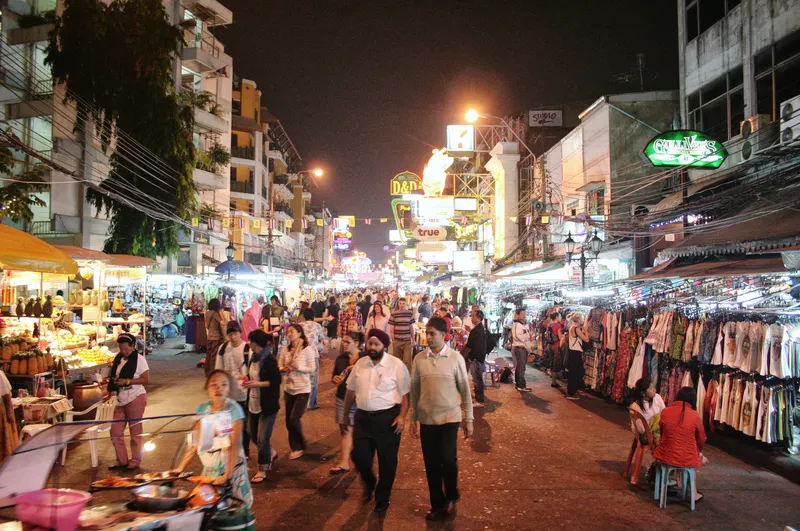
- Silom — the headline zone; road typically closed, BTS overhead, vast and intense.
- Khao San & Banglamphu — the backpacker epicenter; loud, foam-heavy, near old-city temples.
- Old city (Rattanakosin) — the traditional, temple-focused, gentler side of Songkran.
- River piers & terraces — a way to watch the energy and cool off without the full battle.
 Where to stay for Songkran
Best hotel areas for the water zones, temples and pool downtime.
 Silom
SilomThe headline water-fight street, on the BTS at Sala Daeng and Chong Nonsi.
Khao SanThe backpacker Songkran epicenter, near the old-city temples.
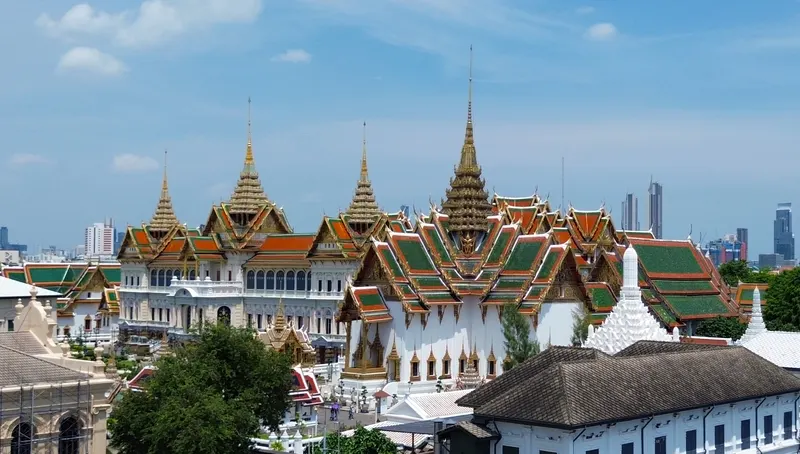 The river
A breezy vantage and a cool-off route between water zones.
Staying safe, dry where it counts, and getting around
Phone protection is the single most important piece of Songkran planning. Buy a waterproof phone pouch on a lanyard — they sell everywhere for a few baht in the run-up — and seal your phone, cash and cards inside it. Treat anything not in a sealed bag as fair game for the water. Cameras and electronics are best left at the hotel; the festival is genuinely indiscriminate, and water damage from a direct super-soaker hit is no joke.
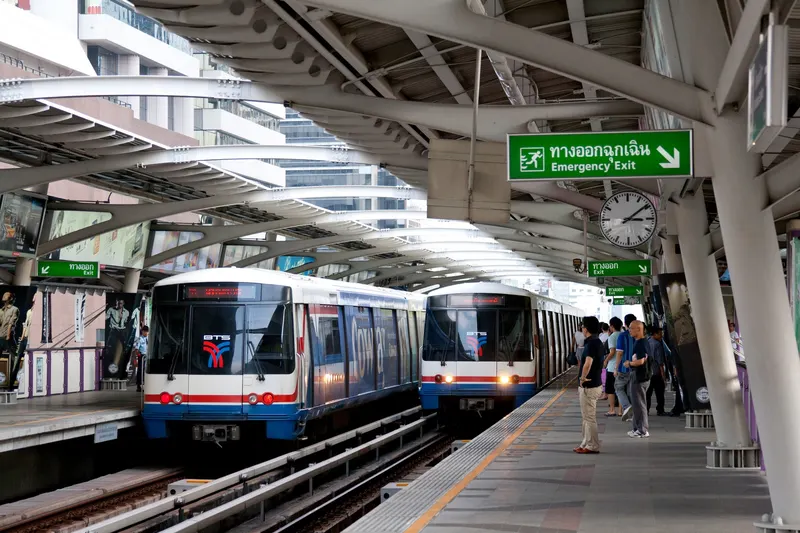
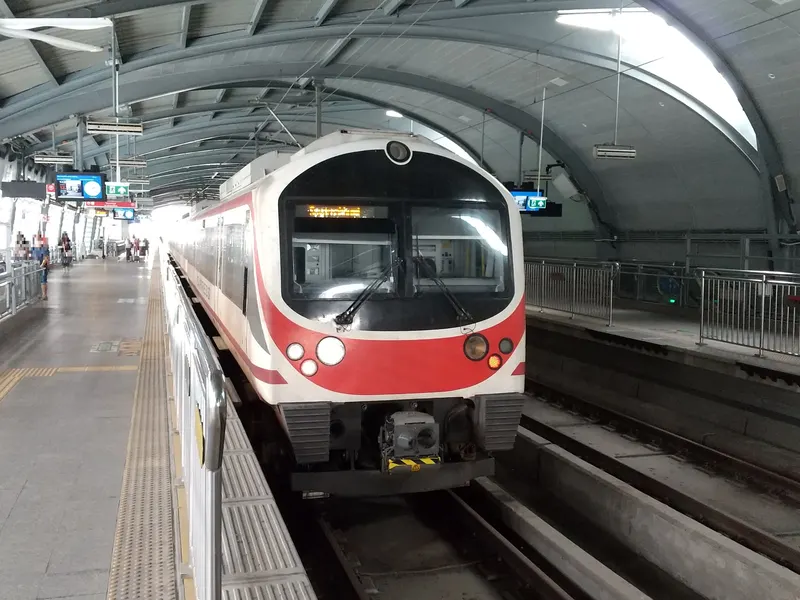
Transport flips during Songkran. Roads in and around the water zones close or clog, taxis and Grab cars get scarce and surge in price, and you should simply not rely on them near Silom or Khao San. The BTS Skytrain and MRT subway keep running and become the only sane way to move across the city — though stations near water zones get crowded, so build in extra time. The river boats are another good option, both as transport and as a cool, dry vantage point.
A few common-sense rules keep the day fun rather than fraught. Drink water — it is the hottest month and the crowds and excitement dehydrate you fast. Watch your footing on slick roads. Be gentle around monks, the elderly, and anyone clearly not playing. And go easy with the alcohol-and-water-and-traffic combination, which is the festival's real risk. Respect the cultural core of Songkran even while you enjoy the chaos: it is a New Year blessing first and a water fight second.
- Seal phone, cash and cards in a waterproof pouch; leave cameras and electronics behind.
- Use the BTS and MRT — taxis and Grab are scarce, slow and surge-priced near the zones.
- Hydrate constantly; it's Bangkok's hottest month and the crowds intensify the heat.
- Respect monks, elders and non-players; the festival is a blessing, not a free-for-all.

Songkran FAQ
When exactly is Songkran? The official public holiday runs roughly 13–15 April every year, though water play often spills a day either side and some areas run festivities for longer. Confirm the current year's dates and any extra holiday days with the Tourism Authority of Thailand.
Can I avoid getting wet? In a designated water zone like Silom or Khao San during the day, no — assume you will be soaked. Away from the zones, in the early morning, inside malls and at temples observing the rituals, you can stay dry. If you need to be presentable, travel before late morning and stick to indoor, air-conditioned routes.
Is Songkran family-friendly? Yes, with care. Children love it, but crowds are dense, roads are slick and the full-contact zones can be overwhelming for little ones — the gentler old-city and riverside celebrations suit families better. Is it safe? It's overwhelmingly good-natured; the real risks are slips, dehydration, surge-priced transport and the alcohol-water-traffic mix, all of which sensible planning handles.
Sources
- Tourism Authority of Thailand (TAT) ↗
Confirm this year's official Songkran dates, zones and any road closures.
- TAT Newsroom — Songkran 2026 nationwide ↗
Official TAT confirmation of the 2026 Songkran dates and the Silom and Siam Square water zones.
- TAT Newsroom — Maha Songkran World Water Festival 2026 ↗
The headline Bangkok Songkran event ran 11–15 April 2026 at Benchakitti Park; free to attend.