
- Getting there
- Set up Grab (and ideally Bolt) with a payment card an…
- Price
- Metered taxis are cheap when the meter runs
- Best for
- Last-mile hops
Grab vs Bolt: which app to open first
Grab is the default for most visitors and the safer bet when you absolutely need a car to show up. It has the deepest fleet, the strongest airport presence, English-friendly support, and a super-app that also handles food and groceries. If you only install one ride app, make it Grab. Bolt is the value play: for an identical trip it frequently quotes a little less, which adds up over a week of short hops, but its supply thins out at odd hours, in sudden storms and out in quieter districts.
The winning move is simple — keep both on your phone, enter the same pickup and destination in each, and take whichever quotes cheaper and faster right now. Both show an upfront fare before you confirm, which is the single biggest reason to use them over a flagged-down street taxi. Set them up with a payment card and a data SIM before you land, because number verification and driver calls all need a working connection.
Both apps also offer a motorbike option, which is the fastest way to slice through standstill traffic for one lightly-laden person. For groups or anyone with a suitcase, request a regular car rather than a bike, and consider the larger-vehicle category so your bags actually fit.
- Need a reliable car (airport, late night, with luggage): Grab.
- Watching the budget on short daytime trips: Bolt, with Grab as backup.
- Install and register both on Wi-Fi before you arrive, linked to a card.
- Traveling with bags: pick a car category that fits, not a compact or a bike.
Watch out
Refuse a flat-fare quote and insist on the meter (or use an app); never accept a cheap tuk-tuk 'tour' that detours to gem or tailor shops
Metered taxis, tolls and how surge works
Bangkok's metered taxis — the bright pink, green, orange and blue cars everywhere on the streets — are genuinely cheap when the meter is running, and short central hops stay modest. The one rule that matters: if a driver refuses the meter and quotes a flat fare instead, just decline and flag the next one, because the next will usually use it. Keep small bills, since change for a large note is a common point of friction. Insisting on the meter (or simply using an app fare) sidesteps almost every taxi annoyance.
Two extra costs catch first-timers out. The first is expressway tolls: Bangkok's elevated tollways cut through brutal surface traffic, and both taxis and apps will ask whether to take them. Say yes when you are in a hurry and budget a small amount in tolls on top of the fare — it is usually worth it. The second is dynamic pricing in the apps: during the morning and late-afternoon rush, and the moment rain starts, prices climb and cars get scarce at exactly the time you want to leave.
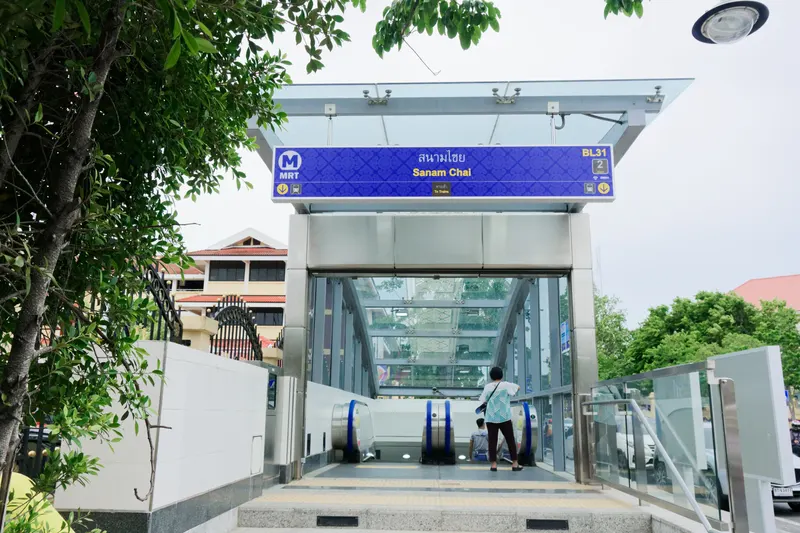
Treat any fare figure as a ballpark, not a promise, and always trust the live quote in the app or the meter on the dash. For a route that lines up with a train line, the BTS or MRT will beat any car in traffic, so check whether your trip is a quick rail hop before you ever open a ride app.
- Insist on the meter or use an app fare; refuse flat-fare quotes.
- Accept the expressway toll to skip the worst gridlock — it's a small add-on.
- Avoid booking the instant a downpour hits; prices spike and supply drops.
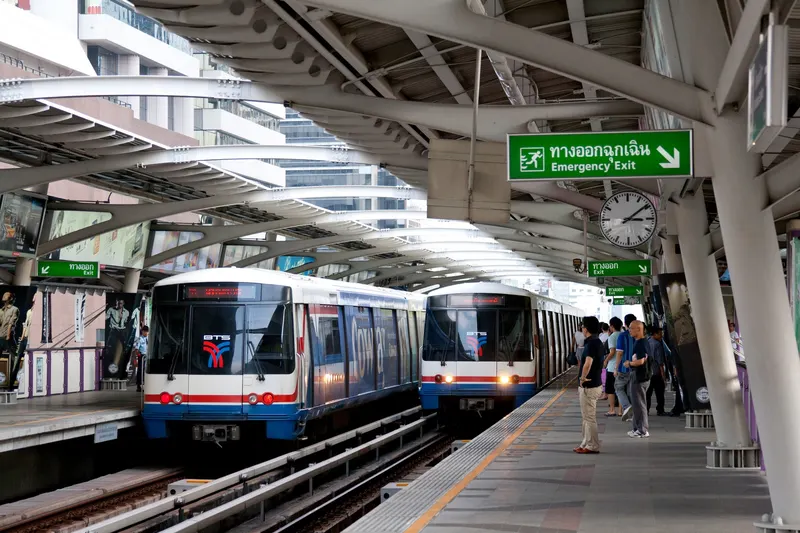
- On a BTS/MRT corridor, the train beats any car in traffic — check first.
Tuk-tuks, motorbike taxis and staying safe
Tuk-tuks are part of the Bangkok experience, but they are a novelty ride, not a transport strategy. You negotiate the price up front, they are rarely cheaper than a metered taxi, and they are exposed to the heat and fumes. Crucially, the cheap tuk-tuk 'tour' is the classic vehicle for the gem-shop scam: a suspiciously low fare that detours to tailors and gem shops where the driver earns commission. Take one once for the fun of it, agree the price first, and decline any unsolicited 'special tour' offer.
Motorbike taxis are the genuinely useful local hack. The orange-vested riders stationed at the mouth of every long soi will zip a single passenger down a side street far faster than a car can manage, for a small fixed fare. Take the helmet, hold on, keep your bag in front of you, and skip the bike if you are nervous, heavily laden or it is pouring with rain.
Ride apps are one of the safest, lowest-stress ways to move around, precisely because the fare is fixed in advance, the route is tracked, and the driver and plate are recorded. Check that the licence plate and driver name match the app before you get in, share your trip when heading out solo at night, and keep payment and tracking inside the app rather than going off-app for a 'deal'. At the airport, never accept a tout offering a flat-rate 'taxi' outside the official desk or the app.
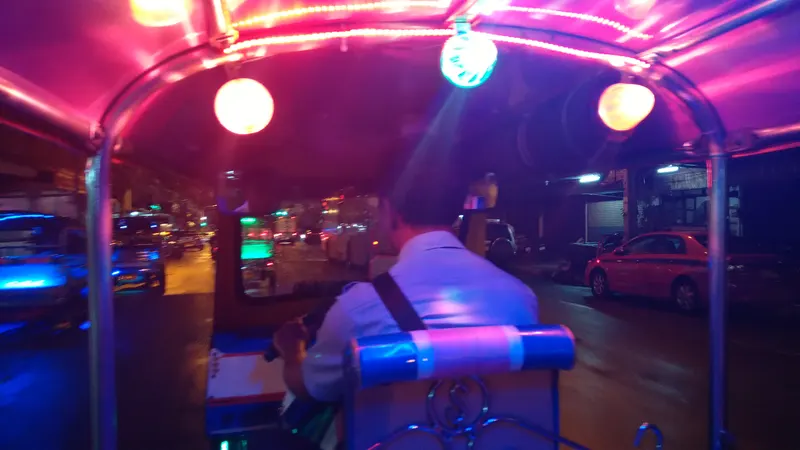
- Tuk-tuks: agree the price first, ride once for fun, never accept a 'tour' with shopping stops.
- Motorbike taxis (orange vests): fast last-leg hack, light luggage only, take the helmet.
- Match the plate and driver name to the app before getting in.
- Ignore airport touts pushing flat-rate rides outside the apps or the official taxi desk.

Taxis & Grab FAQ
Should I use Grab or a street taxi? Use Grab (or Bolt) when you want certainty — a fixed, upfront fare, a tracked route and no haggling. A metered taxi is fine and cheap if the meter is running; just refuse any flat-fare quote.
Do I tip taxi and Grab drivers? Tipping is optional and modest in Bangkok. Rounding a metered fare up to the next note is normal and appreciated; in-app payment handles the rest.
Are tuk-tuks a rip-off? Not exactly — they are just rarely cheaper than a taxi and are the usual vehicle for the gem-shop 'tour' scam. Ride one once for the novelty, agree the price first, and ignore any too-cheap 'tour' offer.
What about expressway tolls? Both taxis and apps may use the elevated tollways to skip surface traffic. Tolls are paid in cash in a taxi (the apps add them automatically) and are usually worth it when you are in a hurry.
When is a train better than a car? Almost any time your route follows a BTS or MRT line, and especially during the rush hours and monsoon downpours, when cars stall and app prices surge. Check the rail map before you open a ride app.
Sources
- Suvarnabhumi Airport — transport guide ↗
Official airport page on the metered-taxi desk and transport options.
- Tourism Authority of Thailand ↗
Official tourism body — transport guidance and the Tourist Police hotline (1155).