
- Time needed
- Songkran is a national holiday celebrated over roughl…
- Getting there
- Stay on the BTS or MRT so you can dodge the road clos…
- Price
- The festival itself is free to join on the street
- Best for
- Travelers who want the festival energy
What Songkran is, and how to plan around it
Songkran is the Thai New Year, celebrated over roughly three days in mid-April, and it is the single most joyful week to be in Bangkok. What began as a gentle ritual — pouring scented water over Buddha images and over the hands of elders to mark the new year — has grown into a city-wide, days-long water fight, with super-soakers, hoses and buckets all fair game on the street. It is also, conveniently, the hottest stretch of the Bangkok year, so the soaking is genuinely welcome rather than a hardship.
Plan around two facts before anything else. First, the exact dates move year to year and are a public holiday, so confirm them and book your hotel early — rooms around the festival sell out and rates climb. Second, Songkran reshapes the city for a few days: many shops and family-run restaurants close as half of Bangkok travels home upcountry, whole streets shut to traffic for the water fights, and the rhythm of a normal sightseeing day goes out the window. Lean into that rather than fighting it, and you will have one of the best trips of your life.
This itinerary gives you a flexible scaffold rather than a rigid script: a respectful, traditional morning, the water fight through the heat of the day, and a dry, calmer evening — repeated across the festival, with a quieter recovery option built in.
- Songkran runs over roughly three days in mid-April — a national holiday, so confirm the dates and book ahead.
- Expect street closures, packed water zones and many small businesses shut for the holiday.
- It coincides with peak heat, so the water is a relief, but hydration and sun protection still matter.
- Decide early how wet you want to get — the festival has both a rowdy and a gentle side.

Watch out
In the soaking-wet crush, keep valuables sealed away and watch for pickpockets, overpriced fixed-fare taxis and aggressive water-gun pressure; the chalk paste and ice water are part of the fun, but you can always step out of a zone
Choose your zone: rowdy water fight or traditional new year
The most important decision is where you stand during the festival, because Songkran has two very different faces. The rowdiest, wettest, most relentless water fights center on Silom Road — closed to traffic and lined with stalls — along with Khao San Road and the bars around RCA. These are non-stop, all-ages-but-chaotic, and you will be drenched within seconds of arriving. They are a blast if that is what you came for, and a mistake if it is not.
For the gentler, older side of the holiday, head to the temples and the lanes of Rattanakosin, the old royal island. Here the emphasis stays closer to the original meaning: pouring water respectfully over Buddha images and over elders' hands, making merit, and quieter neighborhood splashing rather than super-soaker warfare. You can absolutely do both across a multi-day trip — a temple-and-merit morning in the old city, then a soaking afternoon on Silom — which is exactly how this itinerary is built.
Wherever you stand, the chalk paste smeared on cheeks and the buckets of ice water are part of the ritual, not aggression. But you are always free to step out of a zone, and a firm smile and a step back is enough if the pressure gets too much.
- Silom Road: the biggest, most organized street water fight, traffic-free and stall-lined.
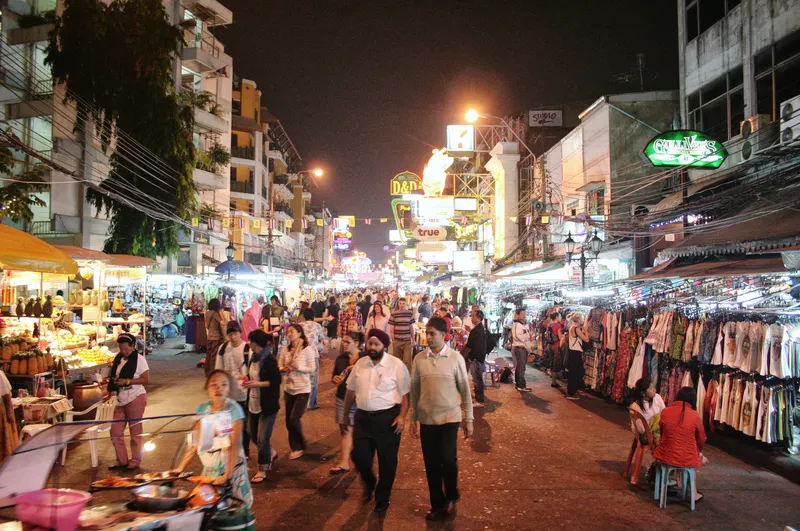
- Khao San Road: dense, backpacker-heavy, party-forward and very wet.
- RCA and the club strips: rowdier, later, more adult-oriented.
- Rattanakosin and old-city temples: the traditional, respectful, lower-intensity side.
Day 1
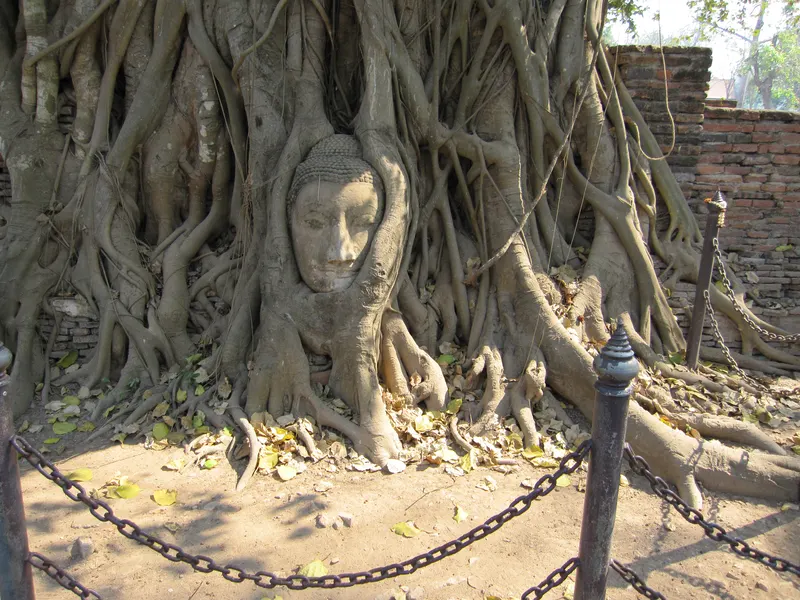
Start before the heat and the crowds build. The big temples are dramatically more pleasant at opening time, and on a Songkran morning you will see the genuinely traditional rituals: people bathing Buddha images, building small sand stupas in temple grounds, and pouring water over the hands of monks and elders. Visit one or two old-city temples respectfully, dress to cover shoulders and knees, and take part gently if invited — this is the part of the festival that gives the rest its meaning.
By late morning the water fights are warming up. Have an early lunch somewhere with air conditioning, change into clothes you do not mind ruining, seal your phone in a waterproof pouch and leave anything precious at the hotel. Then commit to one water zone for the afternoon — Silom is the most reliable for first-timers because it is closed to traffic and easy to leave via the BTS. Expect to be soaked within seconds and to stay that way; that is the whole point. When you have had enough, the Skytrain stations are your dry exit.
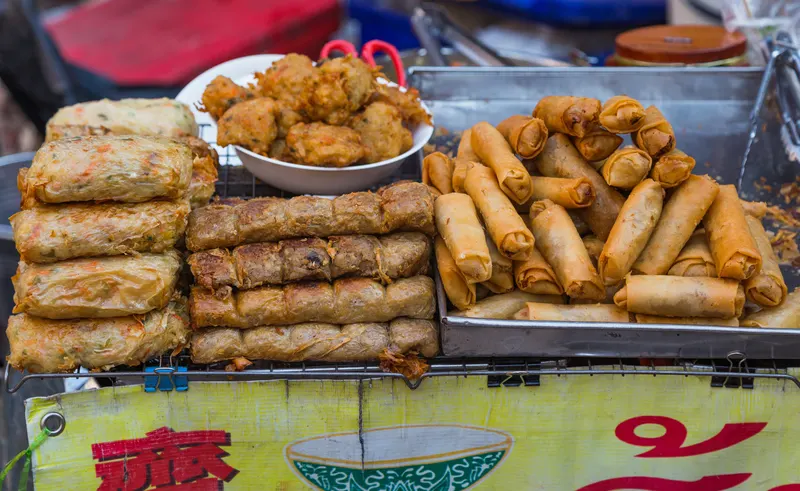
In the evening, dry off and slow down. Many restaurants are closed, so a mall food court, a hotel restaurant or an open Chinatown stall is your safest bet for dinner. The city stays festive but the water mostly stops after dark, so this is your window for a calm meal and an early night before doing it again.
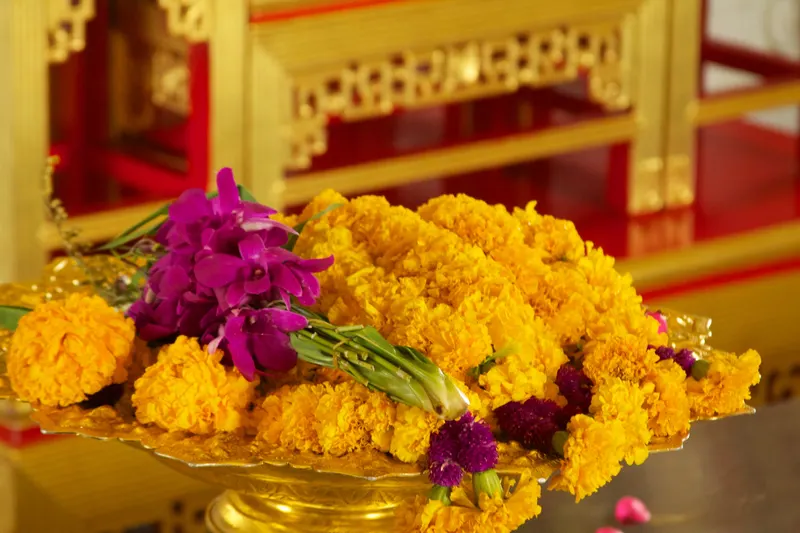
Photo: McKay Savage / Wikimedia Commons (CC BY 2.0) - 8–11am: old-city temple visit, bathing Buddha images and watching the merit rituals.
- Late morning: air-conditioned lunch, change clothes, seal your phone, leave valuables behind.
- Afternoon: commit to one water zone — Silom is the easiest to reach and leave by BTS.
- Evening: dry off and eat at a mall, hotel or open food stall, since many places are closed.
Day 2
Day two is for going all in, but the heat is the thing to respect. April routinely pushes past the high thirties Celsius, so even soaking wet you can overheat. Drink far more water than feels necessary, reapply sunscreen, wear a hat between dousings, and take genuine breaks in the shade or air conditioning every couple of hours. Convenience stores on every corner sell cold drinks, electrolyte sachets and fresh fruit — use them.
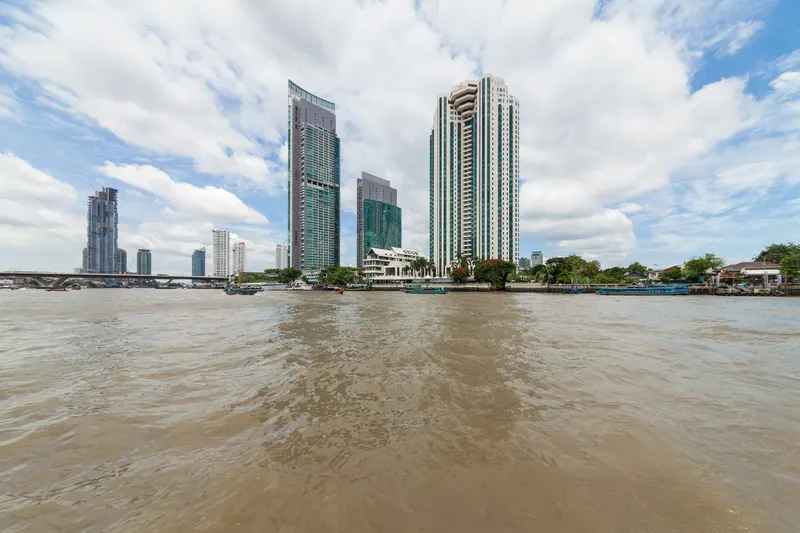
If you want variety, sample more than one zone. The river is also part of the fun: the Chao Phraya boats keep running and carry their own breeze, and the riverside temples of Thonburi catch the wind off the water. A mid-afternoon air-conditioned interlude — a mall, a museum, a long coffee — resets you for a second round in the early evening before the water tapers off.
Treat Day 2 as the climax, then let yourself wind down. This is the day to lean into the chaos rather than schedule it; the only fixed appointments worth keeping are your hydration breaks and a dry, easy dinner once you have peeled off the wet clothes.
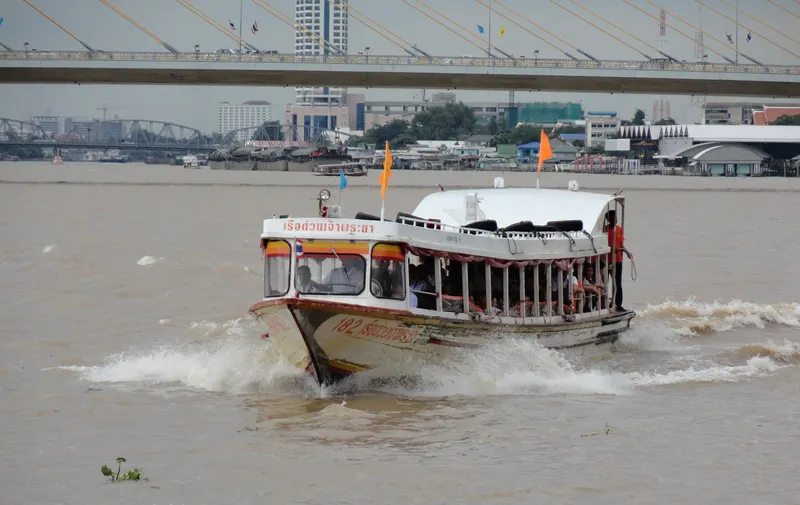
Photo: Fabio Achilli / Wikimedia Commons (CC BY 2.0) - Hydrate aggressively and reapply sunscreen — the water hides how hot it really is.
- Use the Chao Phraya boats for a breezy, festive way to move between zones.
- Bank an air-conditioned break mid-afternoon — a mall, museum or long lunch.
- Keep the day loose; the only must-dos are water, shade and a dry evening meal.
Day 3
By the third day many travelers are happily waterlogged, and the festival energy begins to ease. Use this day to recover and to see the side of Bangkok the water fights crowd out. Mid-month, with so many locals away upcountry, the city itself can feel surprisingly relaxed — lighter traffic, calmer temples and easier tables — so it is a good window for a slower museum visit, a long spa session, or a riverside afternoon.
If you still have festival appetite, the splashing usually carries on in pockets even as the official days wind down, so you can dip back into a zone for an hour without committing to a full soaking. Otherwise, treat Day 3 as your buffer: it absorbs a slow start after two big days, leaves room for any sight you skipped, and gives you a dry, photogenic finish to the trip.
Across all three days, remember the festival is built on goodwill. Be gentle with elders and monks, accept that the soaking is meant warmly, and you will find Songkran is less a thing to survive than the best possible reason to be in Bangkok in April.
- Use the quieter mid-month city for museums, spas and a riverside afternoon.
- Dip back into a water zone for an hour if you want, without committing to a soaking.
- Keep Day 3 flexible as a recovery buffer and a dry finish to the trip.
- Stay gracious — the festival runs on warmth, especially toward elders and monks.
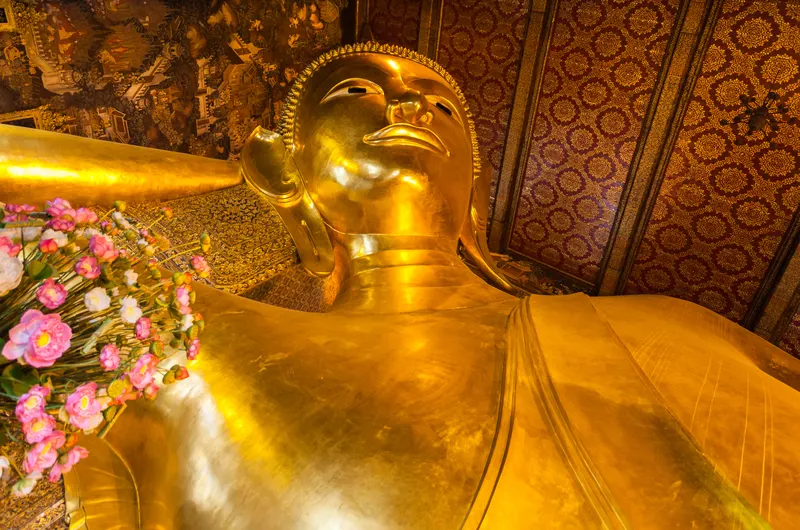
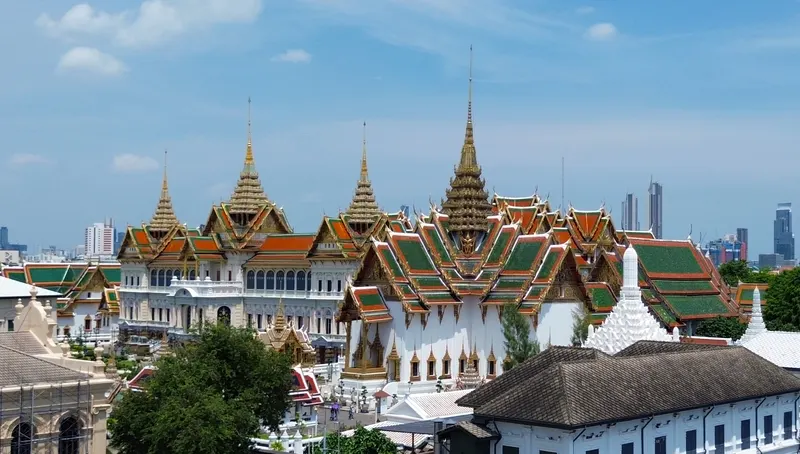
Where to stay, what to pack, and staying safe
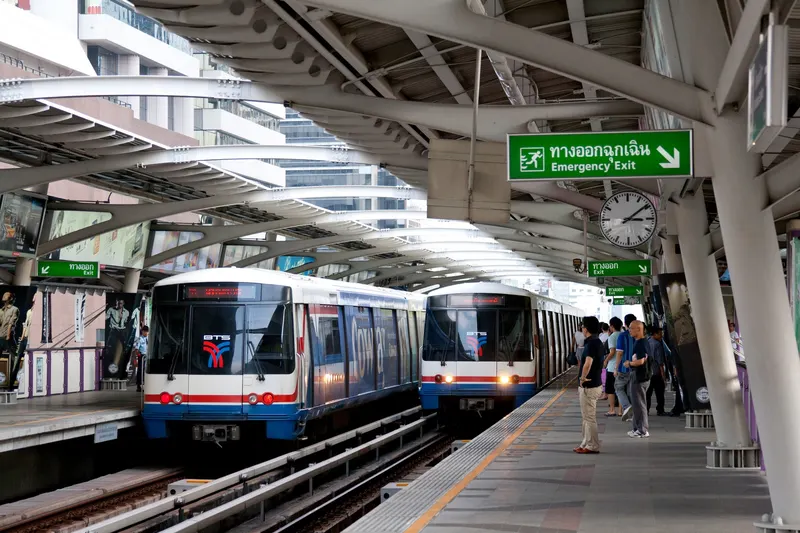
For Songkran, the hotel area matters even more than usual. Stay on the BTS or MRT so the road closures around Silom, Khao San and Ratchaprasong do not strand you — the Skytrain runs while whole streets shut to traffic, and it is your dry, reliable way across the city. Being walkable to a water zone you actually want is a bonus; being walkable to one you do not want can mean wet luggage and a noisy night. Book early, because rooms near the festival fill quickly and rates rise.
Pack to get wet. Quick-drying clothes, sandals you can sacrifice and a waterproof pouch or dry bag for your phone and a little cash are the core kit; a cheap water gun is sold on every corner if you want to join in properly. Leave passports, jewelry and anything you cannot afford to ruin in the hotel safe. Keep a light layer too — the malls and BTS are aggressively air-conditioned, and you will feel the contrast after hours in the heat.
On safety, the main risks are mundane: pickpockets in the soaking-wet crush, overpriced fixed-fare taxis when roads are closed, and the occasional slippery, alcohol-fueled scrum. Seal your valuables away, use the BTS rather than negotiating a taxi through a closed grid, and step out of any zone that feels too aggressive. The ice water and chalk paste are part of the ritual, not a threat — but you are always allowed to opt out.
- Stay on the BTS or MRT and book early — closures and demand both peak around the festival.
- Pack quick-drying clothes, sacrificial sandals and a sealed pouch; leave valuables in the safe.
- Carry a light layer for the over-air-conditioned malls and trains.
- Watch for pickpockets and inflated taxi fares; use the Skytrain and step out of rough zones.
Sources
- Tourism Authority of Thailand ↗
Confirm official Songkran dates, event zones and any festival road closures.
- TAT — Songkran 2026 nationwide ↗
Official TAT announcement confirming the 13–15 April 2026 public holiday and nationwide celebrations.
- TAT — Maha Songkran World Water Festival 2026 ↗
Bangkok's flagship five-day festival, 11–15 April 2026 at Benchakitti Park.