- Time needed
- Don Mueang is closer to the center than Suvarnabhumi…
- Getting there
- The A1 bus links to BTS Mo Chit / Mo Chit 2 (about 30…
- Best for
- Budget and low-cost-carrier arrivals heading for Mo C…
No airport train at the door — here's why that's fine
Don Mueang is Bangkok's older airport and the hub for low-cost and regional carriers, sitting north of the city. Unlike Suvarnabhumi, it has no dedicated airport express train at the terminal itself, which trips up travelers expecting an airport rail line. In practice the connections are still good: a cheap airport bus that feeds the BTS, a free shuttle to a commuter rail line, and the usual taxi and ride-hailing options.
Because it sits closer to the center than Suvarnabhumi, the temptation is to assume a taxi will be quick. The northern approach roads tell a different story — they clog badly, especially at the rush-hour peaks — so the smart move is often to combine the airport bus or the Red Line with the BTS rather than committing to a single road journey. Match the route to your hotel area and the hour, and Don Mueang is an easy airport to leave.
- DMK is the low-cost and regional hub, north of the city.
- No airport express at the terminal — bus, commuter rail, taxi or Grab instead.
- Closer to town than BKK, but the northern roads jam at peak times.
- Combining the bus or Red Line with the BTS often beats a single taxi ride.
Watch out
Use the official metered-taxi rank outside arrivals and ignore touts offering 'fixed price' rides inside the terminal
The A1–A4 buses to the BTS
The cheapest way into town is the limousine bus from outside the terminal. The A1 runs to the BTS at Mo Chit and the Chatuchak area, where you switch to the Skytrain and reach Sukhumvit, Siam, Silom and beyond; the A2 takes a longer route via more stops toward Victory Monument, another BTS connection; and the A3 and A4 head toward the Pratunam and Khao San / Old Town areas respectively. Buy your ticket from the conductor on board and keep small notes ready.
The buses are frequent and run through the day, and at rush hour the A1-to-BTS combination is often the fastest realistic way into the city, because the Skytrain leg sails over the gridlock the roads are stuck in. The trade-off is the transfer itself — you carry your bags off the bus and onto the train — so it suits travelers who are not overloaded with luggage. For a station-adjacent hotel on the Sukhumvit line, it is a genuinely good-value route.
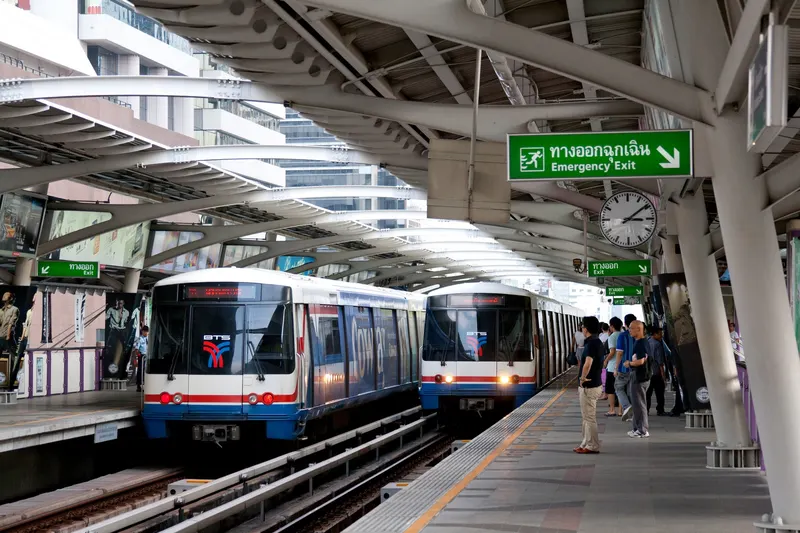
- A1: to BTS Mo Chit and Chatuchak — the most useful for the wider network.
- A2: toward Victory Monument via more stops — another BTS connection.
- A3 / A4: toward the Pratunam and Khao San / Old Town areas.
- Pay the conductor on board; have small notes ready.

SRT Red Line, taxis and Grab
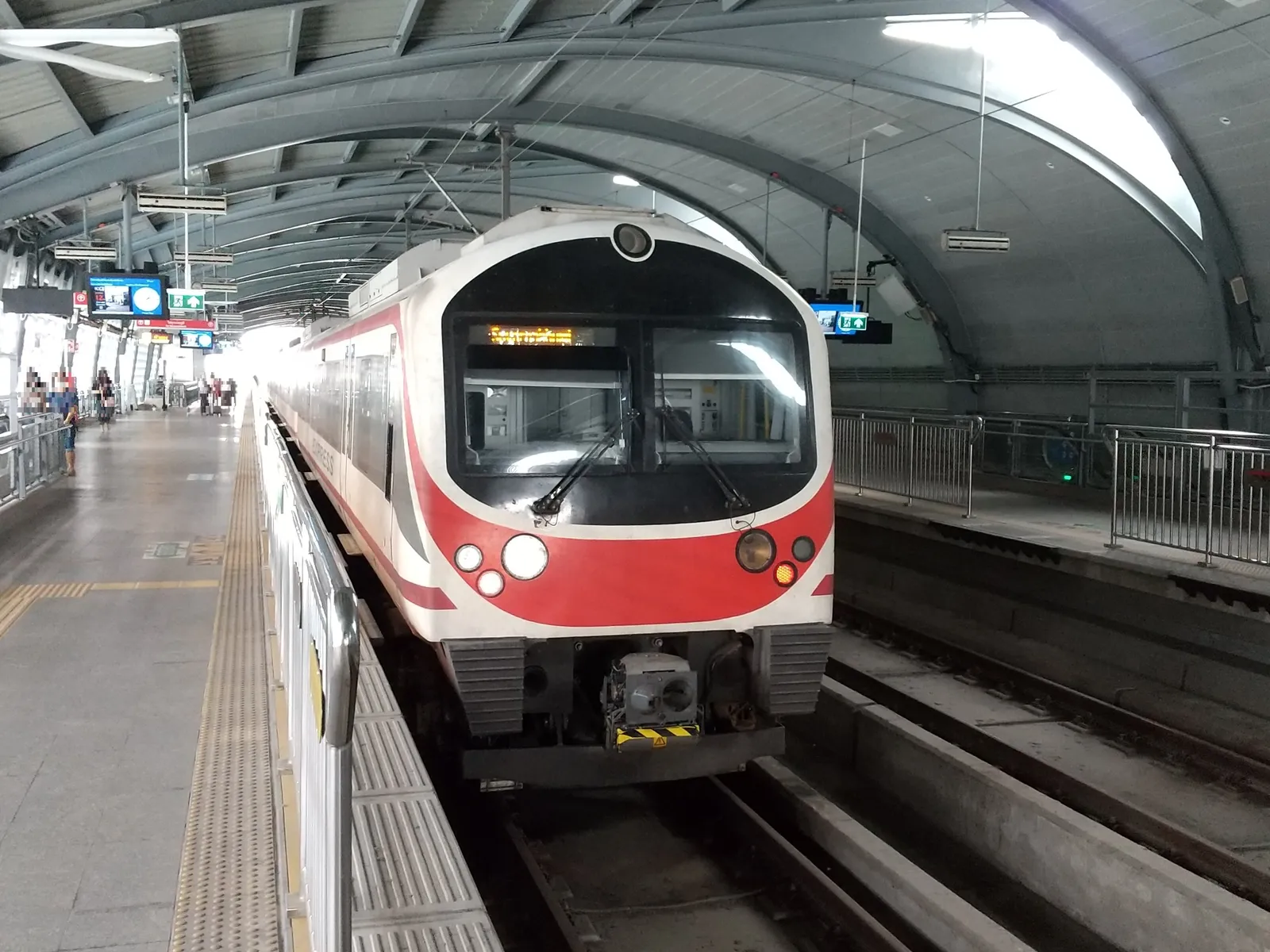
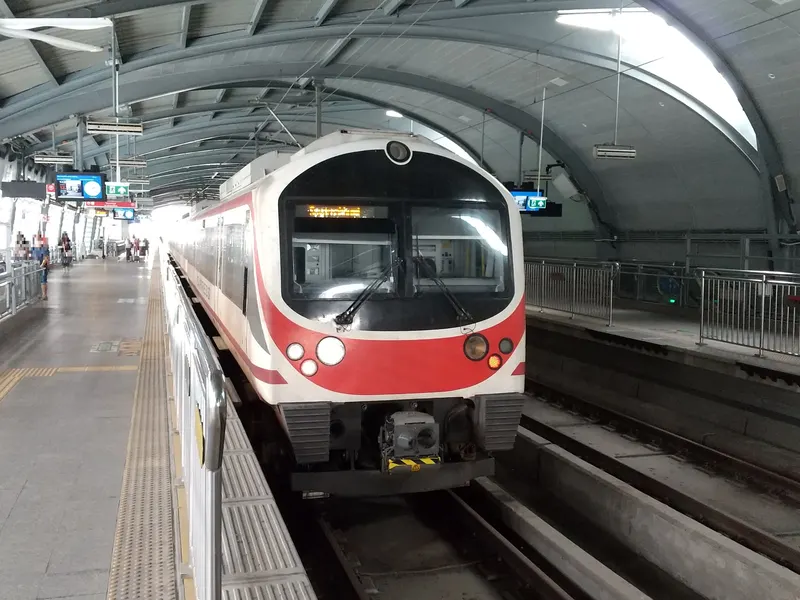
For a quieter, traffic-proof rail option, a free shuttle links Don Mueang to a nearby SRT Red Line station; the Red Line then runs into the city's main rail terminal, where you can connect onward. It is a calm alternative to the road, especially appealing in the rainy season when traffic seizes up. The transfer involves the shuttle plus the train, so again it favors travelers who are not hauling heavy bags.
For door-to-door comfort, the official metered-taxi rank is outside arrivals — take the marshal-assigned car, confirm the meter, and budget for the airport surcharge and any expressway tolls. Grab and other ride-hailing apps follow the same fixed-fare logic as elsewhere, with a designated pickup point the app will direct you to. A pre-booked private transfer is the most expensive but the most hands-off, with a driver waiting on arrival — a good call after a late-night low-cost flight or with a family in tow.

- SRT Red Line via the free airport shuttle: a quiet, traffic-proof rail route.
- Official metered taxi: meter plus the airport surcharge and tolls.
- Grab / ride-hailing: a fixed fare and a designated pickup point.
- Private transfer: priciest, but a driver waiting and zero decisions.
Routing by hotel area and the clock
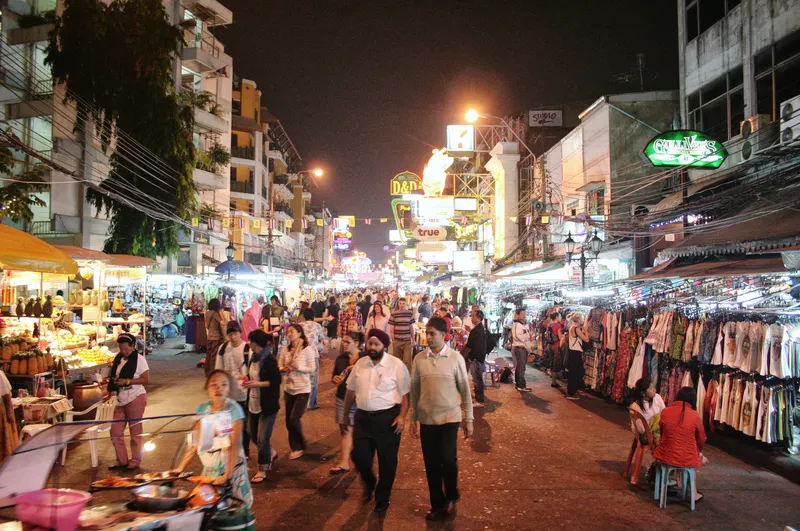
As at the other airport, your hotel area and the time of day should decide the route. For a Sukhumvit-line hotel near Mo Chit, Asok or Phrom Phong, the A1 bus to the BTS — or the Red Line plus a connection — is cheap and traffic-proof. For the Old Town, the riverside or Khao San, a taxi, a Grab or the A4 bus toward that quarter is often simpler than chaining trains, especially with bags.
Keep the rush-hour rule front of mind. The roads north of Don Mueang are among the city's worst at the morning and evening peaks, so if you land in those windows, a bus-or-rail hop onto the BTS will usually outrun a taxi by a wide margin. Sort a little cash and data before you leave the terminal, save your hotel's Thai-script address, and you can pick the right route on the spot.
- Sukhumvit / Mo Chit hotels: A1 bus to the BTS, or the Red Line plus a connection.
- Old Town, riverside, Khao San: a taxi, Grab or the A4 bus is simpler.
- Land at rush hour: choose bus-or-rail onto the BTS over a single taxi.
- Carry cash, data and your hotel's Thai-script address to pick on the spot.


Frequently asked questions
Is there a train from Don Mueang into Bangkok? Not at the terminal door, but a free shuttle connects to the SRT Red Line, which runs into the city's main rail station. The A1–A4 buses also feed the BTS network.
What is the cheapest way from Don Mueang to the city? The A1 bus to BTS Mo Chit, then the Skytrain, is the budget route. The Red Line is a cheap, quiet rail alternative.
How long does it take to reach central Bangkok? It depends heavily on traffic. Don Mueang is closer than Suvarnabhumi, but the northern roads jam at peak hours, so a rail or bus-plus-BTS combination is the most predictable choice.
Should I just take a taxi? A metered taxi or Grab is comfortable and fine off-peak or with heavy bags, but at rush hour the bus-to-BTS hop frequently beats it door to door.
Sources
- Don Mueang Airport (official) ↗
Official A1–A4 bus, shuttle and taxi information and fares for DMK.
- SRT Red Line operator (SRTET) ↗
Official commuter-rail routes and schedules for the SRT Red Line.
- State Railway of Thailand ↗
Parent rail authority for the Red Line and national rail services.