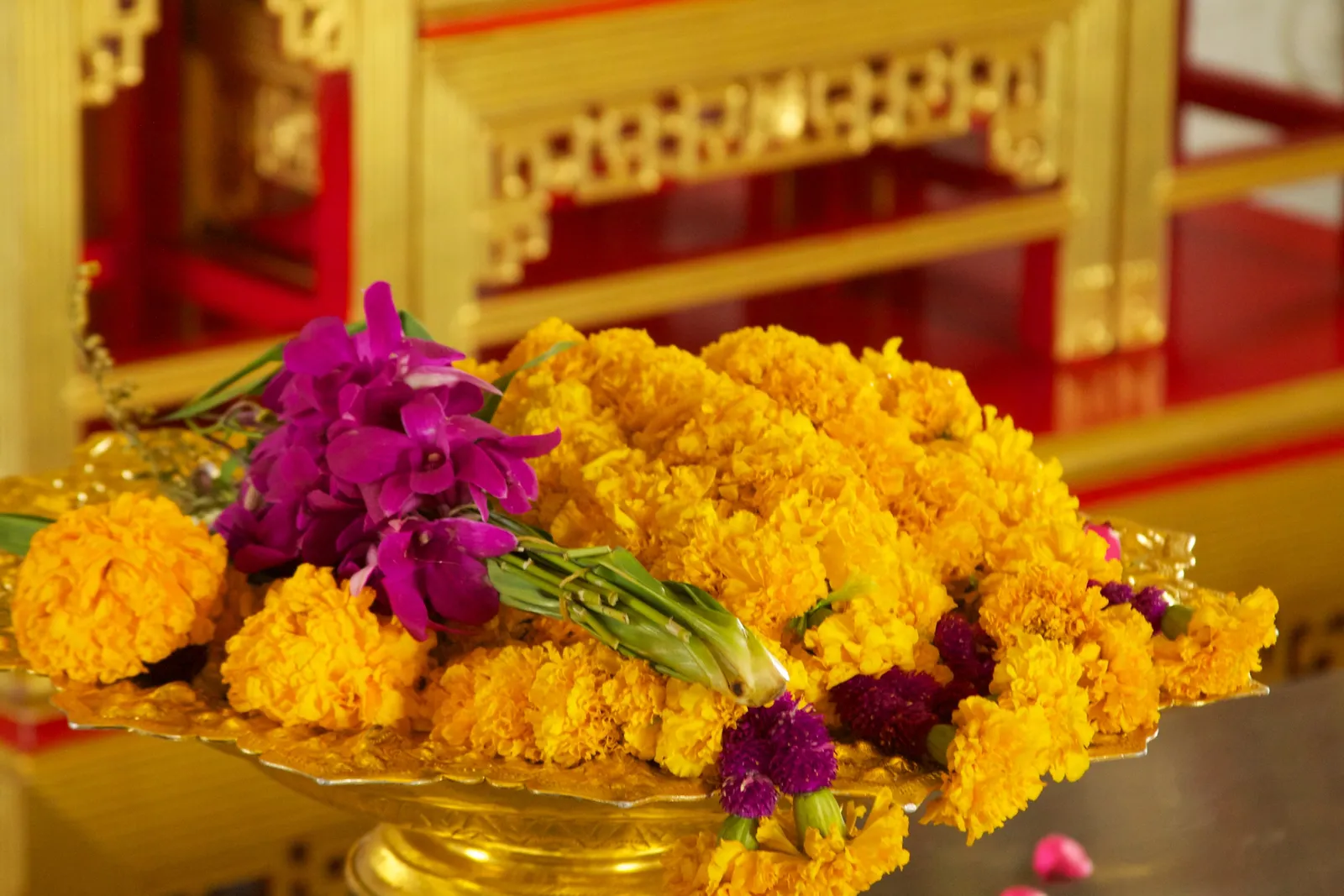
How to dress for a Bangkok temple
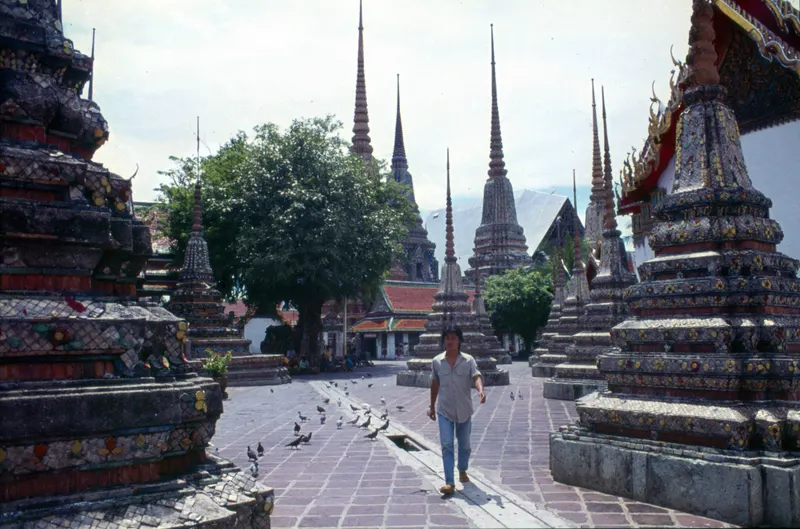
Temples in Bangkok are working religious sites, and the universal rule is simple: cover your shoulders and your knees. That means no tank tops, no bare midriffs, no see-through fabric, and shorts or skirts that fall below the knee — for both men and women. A light scarf or a thin layer in your day bag lets you cover up at the gate and shed it again in the heat, which is the single most useful thing you can carry on a temple day.
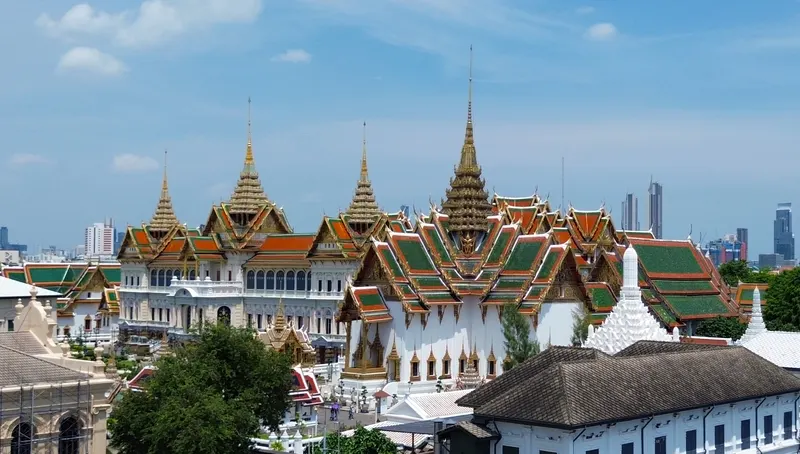
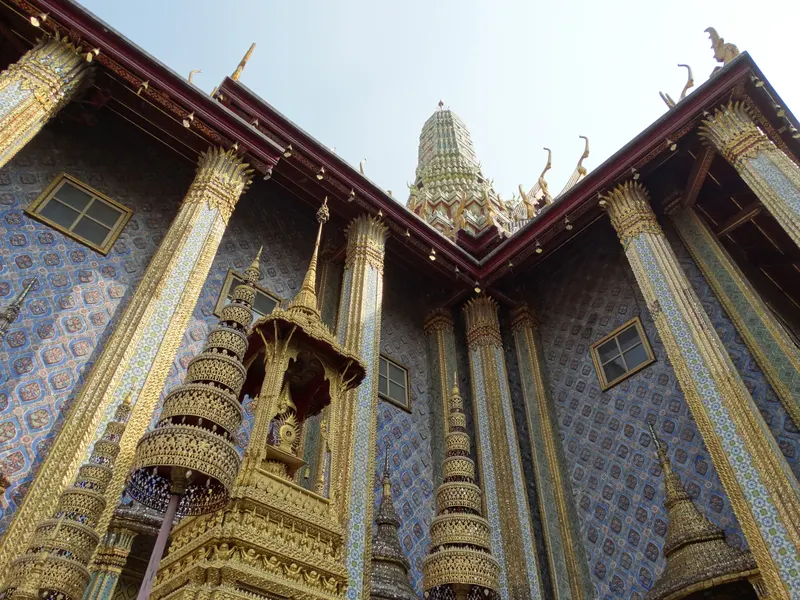
The Grand Palace is the strictest site in the city and enforces its dress code at the entrance: arrive in shorts, a vest top or anything too revealing and you will be turned away or sent to cover up. Many temples keep sarongs to borrow at the entrance for a small deposit, so you are rarely stranded, but it is far less stressful to dress correctly from the start than to queue for a wrap in the sun. Closed or slip-on shoes are smart, because you will be taking them off repeatedly.
The practical tension is that modest cover-up and Bangkok's heat pull in opposite directions. The answer is light, breathable clothing — loose cotton or linen trousers, a shirt with sleeves, a long skirt — plus a thin scarf you can add and remove. Plan the temples for the cool morning hours so you are not standing on hot stone in the midday sun, fully covered.
- Cover shoulders and knees everywhere; no see-through fabric or bare midriffs
- The Grand Palace enforces dress at the gate — get it right before you arrive
- Carry a thin scarf or layer to cover up and shed in the heat
- Wear slip-on or easy shoes — you will remove them at every hall
Dress code
Cover shoulders and knees; no see-through, no bare midriffs; the Grand Palace is the strictest
Cash & cards
Carry small baht notes for donations, offerings and any sarong-rental deposit
How to behave inside
Once you are dressed, behavior matters just as much. Remove your shoes before entering any prayer hall or ordination hall — look for the racks and the rows of shoes outside, and follow the locals. Keep your voice low, switch your phone to silent, and move calmly; these are spaces for worship and quiet reflection, not just sightseeing. If a service or a chant is underway, hang back and watch rather than walking through it.
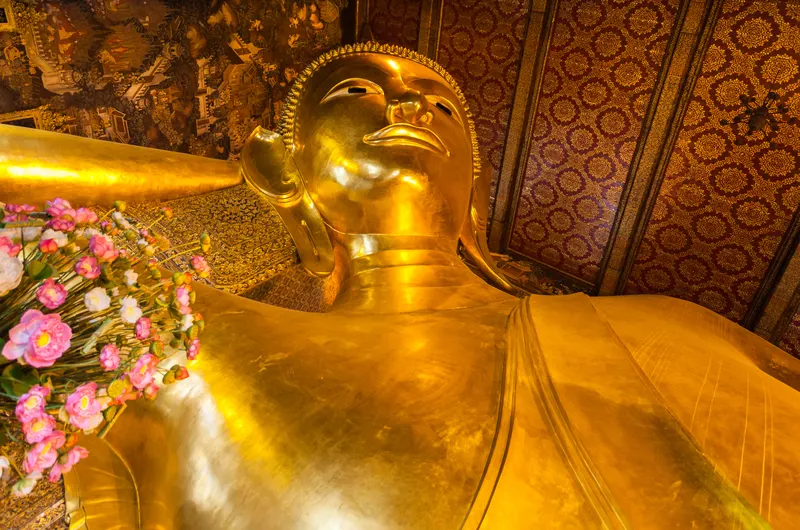
The most important rule concerns your feet, which in Thai culture are the lowest, least respectful part of the body. Never point your feet at a Buddha image, an altar or a monk — when you sit on the floor, tuck your feet behind you or to the side. By the same logic, the head is the most respected part of the body, so never touch anyone's head, and never climb on, lean against, or pose flippantly with Buddha images for photos. Treat every image, however small, as sacred.
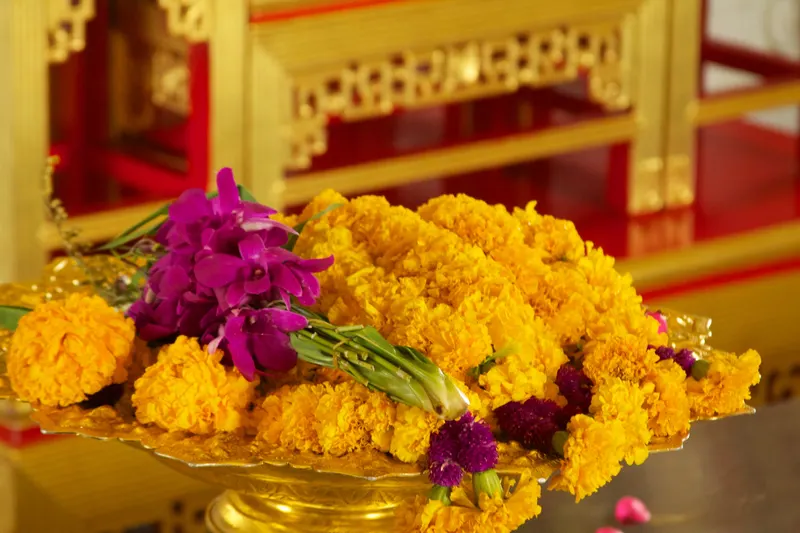
When you make merit or leave a donation, do it quietly; small baht notes are perfect. If you want to pray or light incense, watch what others do and follow at a respectful distance. A wai — palms pressed together with a small bow — is a gracious way to show respect at a shrine or to a monk, though as a visitor you are never obliged to perform rituals you do not understand.
- Remove shoes before entering any hall; follow the racks and the locals
- Never point your feet at images, altars or monks — tuck them away when seated
- Never touch anyone's head or climb on or pose disrespectfully with Buddha images
- Keep your voice low, phone silent, and step around any service in progress
Monks, photography and quick answers
Etiquette around monks has a few specific rules worth knowing. Monks are not supposed to have physical contact with women, so if you are a woman, avoid touching a monk or handing anything directly to him — place the item down for him to pick up, or pass it via a man. Give monks space on public transport and in seating, dress especially modestly around them, and ask before photographing a monk up close.
Photography is generally welcome in temple courtyards and grounds, but be thoughtful. Skip the flash indoors, do not photograph people mid-prayer or block their view, and never use a Buddha image as a prop for a silly or disrespectful pose — Thailand takes this seriously, and tourists have faced real consequences for it. Some inner halls and the Emerald Buddha at Wat Phra Kaew prohibit photography entirely, so watch for signs and staff guidance.
Two more quick answers. Yes, you can usually visit temples on Buddhist holidays, but some halls may close to visitors, so build in flexibility. And no, you do not need to be Buddhist or perform any ritual to visit — quiet, respectful observation is entirely welcome. Get the dress and the feet right, keep your voice down, and you will be a gracious guest at any temple in the city.
- Women should not touch monks or hand items to them directly — place items down or pass via a man
- No flash indoors; never pose disrespectfully with Buddha images; watch for no-photography signs
- Some halls close on Buddhist holidays — stay flexible
- You need not be Buddhist or perform rituals; respectful observation is welcome

The Grand Palace & Wat Phra Kaew
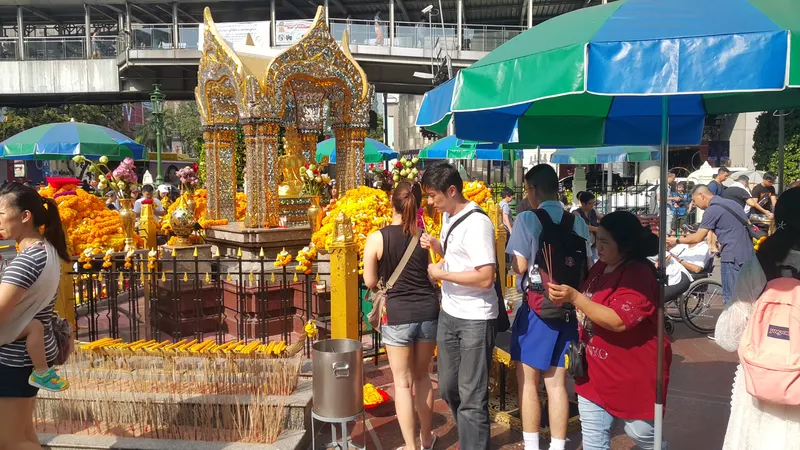
Bangkok's most iconic complex — the former royal residence and the Temple of the Emerald Buddha. Go early; strict dress code.
Map pins
Map data © OpenStreetMap contributors · Tiles © OpenFreeMap
Sources
- Tourism Authority of Thailand ↗
Official guidance on visiting Thai temples respectfully.