- Time needed
- Two minutes of planning before you leave the hotel
- Price
- Free to dress correctly
- Best for
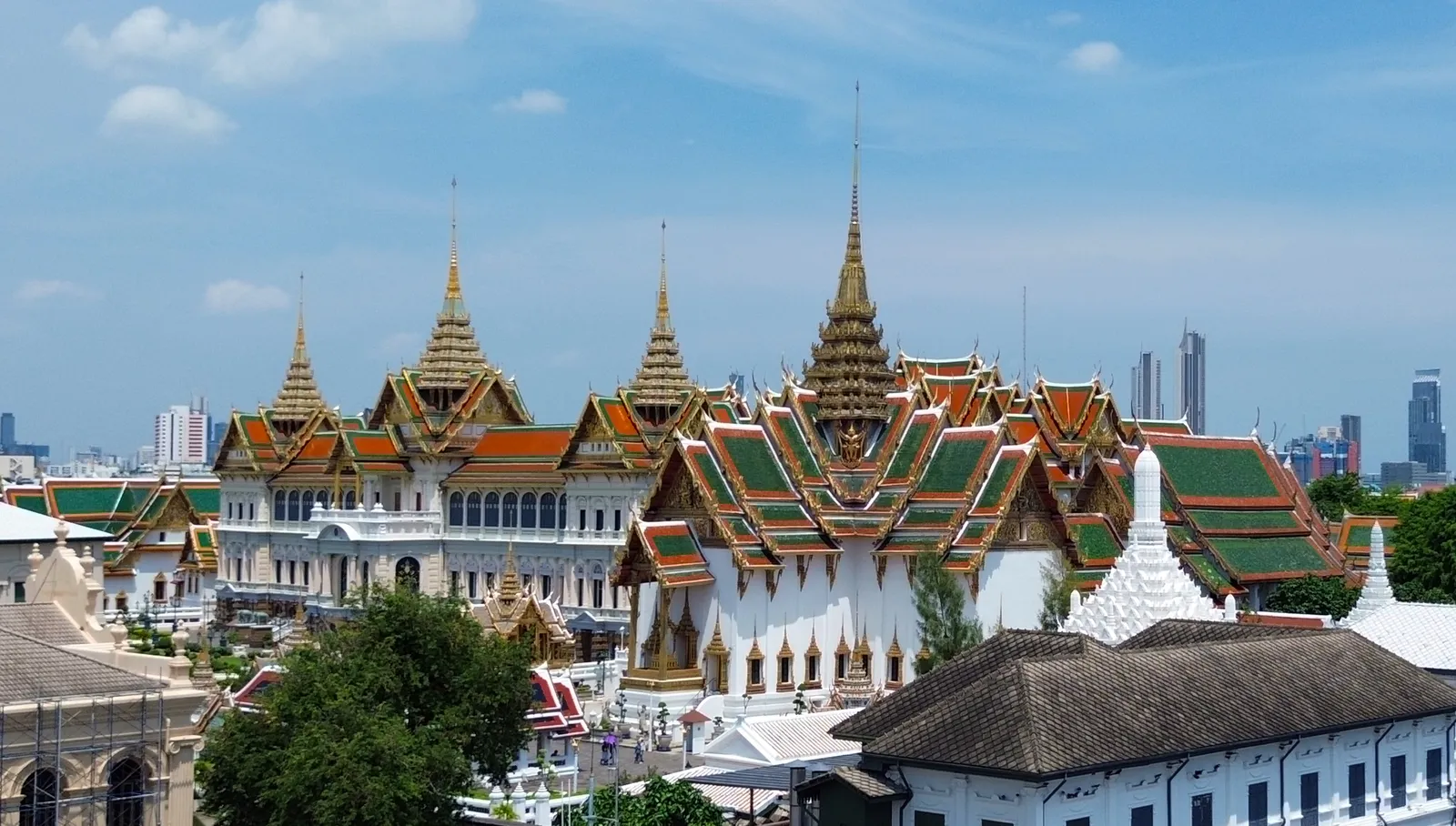
- First-timers heading to the Grand Palace
The rule, in plain terms
Across Thai temples and royal sites the dress code comes down to one principle: cover your shoulders and your knees, and dress modestly out of respect for an active religious place. It applies equally to men and women. At ordinary temples a little common sense and a cover-up will see you through; at the Grand Palace and Wat Phra Kaew it is formal, enforced and checked at the gate, so this is the site to dress for and the standard everywhere else falls comfortably below.
In practice that means a top that covers the shoulders and upper arms — no tank tops, vests or spaghetti straps — and bottoms that reach below the knee, whether long trousers, a long skirt or a dress. Leggings worn as trousers, very short shorts, and anything sheer or skin-tight will be refused at the palace. The clothing should not be ripped or torn either, so save the distressed jeans for another day.
Footwear is part of it too. You will remove your shoes before entering temple ordination halls and viharns, so slip-on shoes or sandals you can take off easily are far more practical than laces — and note that flip-flops are not accepted at some palace gates, so a closed or strapped shoe is the safer call.

- Shoulders and upper arms covered — no tank tops, vests or spaghetti straps.
- Knees covered — long trousers, a long skirt or a below-the-knee dress.
- No sheer, skin-tight, ripped or revealing clothing.
- Shoes off inside the halls; slip-ons save fuss, and avoid flip-flops at the palace.
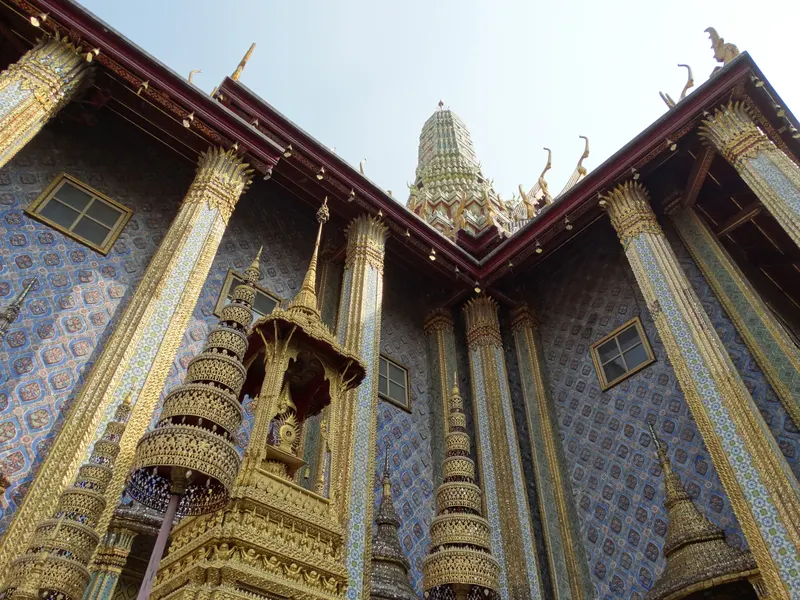
Dress code
Shoulders and knees covered for everyone; no sheer, skin-tight or ripped clothing; no flip-flops at some gates; shoes off inside the halls
Dressing for the heat without breaking the code
The instinct in Bangkok's heat is to wear as little as possible, but covering up is actually the smarter move at temples — provided you choose the fabric well. Light, loose, breathable long layers in cotton or linen cover your shoulders and knees while letting air move, and they shade you from the brutal, shadeless glare of the palace courtyards far better than bare skin. A long, floaty skirt or wide linen trousers and a loose long-sleeved top read as both respectful and heat-aware.
The single most useful item is a large, light scarf or sarong. It works as an instant shoulder cover, a knee wrap over shorts, a sun shade and a seat for the marble floor, and it packs down to nothing in a day bag. If you only dress for one site, dress for the Grand Palace and you will breeze through every temple after it. Pair the cover-up with a hat, sunglasses and water, and you have a temple-day kit that handles both the dress code and the climate.
Plan it before you leave your hotel rather than at the gate. Arriving already correctly dressed means you walk straight in; arriving underdressed means joining the loan counter queue while everyone who packed a scarf strolls past.


If you arrive underdressed, and other etiquette
All is not lost if you turn up in shorts. The Grand Palace runs a counter near the entrance that loans wraps and trousers for a small refundable deposit, returned when you hand the clothing back. It works, but the queue can be slow at peak times and the loaner garments are basic, so it is a fallback rather than a plan. Some smaller temples sell or lend cheap sarongs at the gate too, but you cannot count on it everywhere.
Dress is only one part of temple etiquette. Remove your shoes before entering the halls, keep your voice low, and do not point your feet at Buddha images or climb on structures for photos. Inside the Emerald Buddha hall at Wat Phra Kaew, photography is forbidden entirely. A calm, quiet manner and a small wai go a long way, and they matter as much as the clothing.
Bag rules are generally relaxed — a normal day bag is fine — but large luggage is not, so leave suitcases at your hotel or a left-luggage point rather than dragging them through the gate. As with all the volatile details, confirm the current palace policy before you go.
- Wraps and trousers are loaned at the palace gate for a refundable deposit — but the queue is slow.
- Remove shoes before entering halls; keep quiet and don't point your feet at Buddha images.
- No photography inside the Emerald Buddha hall.
- Leave large luggage at your hotel; a normal day bag is fine.
Dress code FAQ
Do men have to cover up too? Yes — the shoulders-and-knees rule applies equally, so no vests and no shorts above the knee for men either.
Are leggings or skinny jeans okay? Skin-tight clothing is refused at the Grand Palace; a loose layer over leggings, or simply loose trousers, is the safe choice.
Can I just rent clothes at the gate? You can at the palace, for a deposit, but the queue costs time — arriving already covered is faster and more comfortable. Do the rules apply at every temple? The shoulders-and-knees standard applies broadly; the palace is simply the strictest about enforcing it.
The Grand Palace & Wat Phra Kaew
Bangkok's most iconic complex — the former royal residence and the Temple of the Emerald Buddha. Go early; strict dress code.
Map pins
Map data © OpenStreetMap contributors · Tiles © OpenFreeMap
Sources
- Grand Palace official dress-code guidance ↗
The official list of banned clothing (sleeveless, see-through, shorts, ripped or tight trousers) before you visit.
- Grand Palace official FAQ ↗
Confirms the enforced dress code and the loaned-clothing option at the gate.