- Time needed
- Sold all day at markets and stalls
- Getting there
- Markets
- Price
- Most market and stall sweets are very cheap
- Best for
- Sweet tooths
The world of khanom: more than mango sticky rice
Thai desserts, known broadly as khanom, are far more varied than the single famous plate of mango sticky rice most visitors know. The category runs from soft steamed cakes and coconut custards to translucent jellies, layered pandan sweets, and the rich golden-egg desserts — foi thong (egg-yolk threads) and thong yip among them — with roots in Portuguese-influenced palace cooking centuries ago. Many are tiny, jewel-like and sold by the bag.
What ties them together is coconut and a love of contrast. Coconut milk and shredded coconut turn up almost everywhere, and the best Thai sweets balance their sweetness with a pinch of salt, an echo of the same sweet-salty interplay that runs through the savory cooking. They are rarely heavy or buttery in the Western sense — more often light, fragrant and refreshing.
You do not need to memorize names to enjoy them. Point at what looks good on a market tray, buy a small bag of two or three different sweets, and taste your way in. Most cost almost nothing, so a few baht buys a proper survey of the genre.
- Khanom covers steamed cakes, coconut custards, jellies, layered sweets and golden-egg desserts.
- Coconut and a sweet-salty balance run through almost all of it.
- Many sweets are tiny and jewel-like, sold by the bag for a few baht.
- No need for names — point, buy a mixed bag, and taste your way in.
Cash & cards
Small cash for stalls and markets; cards at cafés and malls
Where to find Thai desserts
A starting shortlist of standout, currently-operating spots, by area. Hours and menus change and the best places fill up, so check the latest and book ahead where it matters — we don't quote prices.
- 01
Mont Nomsod
฿฿฿Phra Nakhon · Dinso Rd, near the Giant Swing
A Bangkok institution since 1964, started as a pushcart and now famous for thick toasted bread slathered with toppings (condensed milk, coconut custard, taro, chocolate) and fresh milk drinks. The original Dinso Road shop sits near Bangkok City Hall.
- 02
Thongyoy Cafe
฿฿฿Ari · BTS Ari (Soi Ari Samphan 7)
A flower-themed Ari cafe from fashion designer Thongyoy Phaesuwan, serving traditional Thai sweets on golden plates. Known for luk chup (mung bean shaped as fruit), kleeb lamduan shortbread and khanom tom, in a heavily Instagrammable floral setting.
- 03
After You
฿฿฿Multiple branches citywide (e.g. Siam Paragon, BTS Siam)
Bangkok's best-known modern dessert chain, founded in 2007, famous for its Shibuya Honey Toast served with ice cream. Dozens of branches across the city's malls make it an easy, crowd-pleasing sweet stop.
- 04
Cher Cheeva (Cher Cheeva Thai Dessert Cafe)
฿฿฿Khlong San · ICONSIAM (riverside)
A Thai dessert cafe inside ICONSIAM serving sweets from generations-old recipes, including khanom phra pai (mung-bean-stuffed flour dumplings) and coconut ice cream with black sticky rice and mango.
- 05
Wanlamun
฿฿฿Bangkok · Thai dessert shop (originally from Chiang Mai)
A dessert shop established in 1999, gently sweet by design, known for khanom tom (coconut balls), khanom sai sai (steamed flour with coconut filling) and khanom chan (layered Thai dessert).
- 06
Baan Dok Pud
฿฿฿Lat Phrao · Lat Phrao Soi 48
A hidden garden dessert cafe deep in Lat Phrao, serving sweets on khantok trays — luk chup, jala mas (golden egg-yolk strands) and khanom piak pun (pandan pudding) — in a peaceful, leafy setting.
- 07
Khanom Wan Talad Plu (Mae Jeng)
฿฿฿Thonburi · Talad Plu (BTS Talat Phlu)
An affordable old-school sweets shop in the Talad Plu neighbourhood, with some items priced very low. Best-sellers include the gold-egg-yolk desserts thong yod and thong yip.
Cold sweets for the heat
When the afternoon heat peaks, Thai dessert culture has the perfect answers. Nam kaeng sai is the classic shaved-ice bowl: a mound of ice over a pick-and-mix of sweet toppings — grass jelly, red rubies (water chestnut in crimson tapioca), sweet beans, jackfruit, palm seeds, lotus seeds — drowned in syrup and coconut milk. It is customizable, refreshing and built for a sweltering day.
Coconut ice cream is the other essential cool-down, often served in the husk and topped with surprising savories — roasted peanuts, sticky rice, sweet corn or palm seeds. You will find it from pushcarts at markets and along tourist streets, cheap and reliably good. Chilled coconut jellies, lod chong (pandan noodles in sweet coconut), and tao suan or other warm-or-cold bean puddings round out the repertoire.
These cold sweets double as a heat strategy. Slotting a shaved-ice bowl or a coconut ice cream into the hottest part of the day is both a treat and a way to recover before heading back out — a smarter midday move than pushing through the sun. Markets and dessert stalls are the natural places to find them.
- Nam kaeng sai: pick-and-mix shaved ice with jellies, beans and coconut milk.
- Coconut ice cream, often in the husk with peanuts, sticky rice or corn.
- Lod chong (pandan coconut noodles) and chilled coconut jellies.
- Use a cold dessert as a midday heat break before heading back out.



Where to find them: markets, Chinatown and cafés
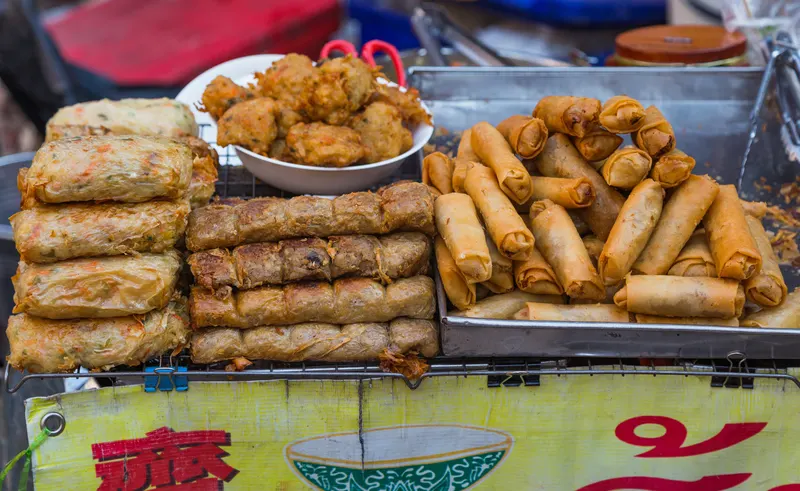
For the most traditional sweets at the lowest prices, head to the markets. Fresh markets like Or Tor Kor near Chatuchak keep dedicated dessert stalls with rows of khanom, and weekend and neighborhood markets almost always have a sweets corner. This is where to graze widest for the least money, and where the recipes are most old-fashioned.
Chinatown is a dessert destination in its own right after dark. Alongside the savory stalls, Yaowarat keeps beloved sweet counters — toasted bread thick with condensed milk or custard, traditional Chinese-Thai sweets, bird's nest and freshly pressed fruit juices. Many of these counters specialize in a single sweet made the same way for generations, and the queues tell you which.
At the refined end, Bangkok's café scene has turned Thai sweets into an art. Dessert cafés and serious coffee roasters in Ari, Thonglor and the old-town shophouses plate modern takes — a proper mango sticky rice, a Thai-tea cake, coconut and pandan desserts — in air-conditioned comfort. They make a good heat break and a gentle way to try the flavors without navigating a market.
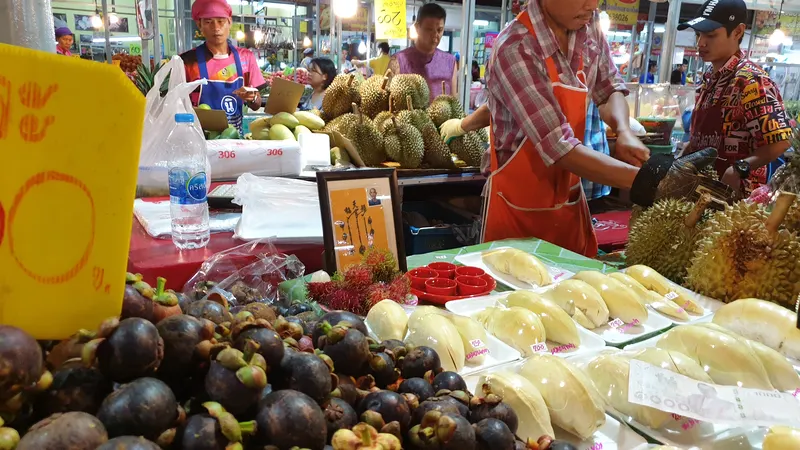
- Markets (Or Tor Kor, weekend and neighborhood markets): cheapest, most traditional sweets.
- Chinatown after dark: toasted custard bread, Chinese-Thai sweets, fresh juices.
- Dessert cafés in Ari, Thonglor and the old town: refined, air-conditioned takes.
- Follow the queues at the specialist counters — they mark the best single sweets.
What to order first, and how to enjoy it
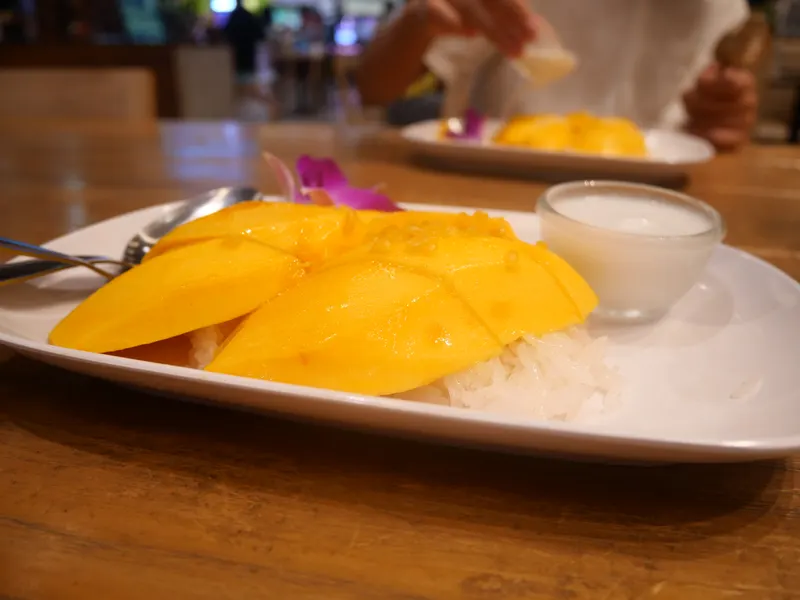
If you are starting from scratch, two orders will not steer you wrong: a plate of mango sticky rice (in the hot months, when the fruit peaks) and a scoop of coconut ice cream. Both are widely available, instantly likeable and a gentle introduction to the coconut-and-contrast logic of Thai sweets. From there, branch into a bowl of shaved ice on a hot afternoon and a mixed bag of khanom from a market tray.
Pace your sweetness. Thai cafés and stalls often serve drinks and desserts on the sweeter side by default, so if you find a dessert too sweet, you are not imagining it — ask for less sugar where you can, and balance a sweet with an unsweetened drink or a fresh coconut. The traditional sweets, with their salty-coconut edge, are usually better balanced than the modern sugar-forward versions.
Above all, treat dessert as punctuation rather than a single destination. A market breakfast, a long iced coffee through the heat, a shaved-ice cool-down in the afternoon and a Chinatown sweet after dinner is a deeply pleasant way to thread sweets through a Bangkok day. Pair this with the dish guides and the food itinerary and you will eat the city's sweet side properly.