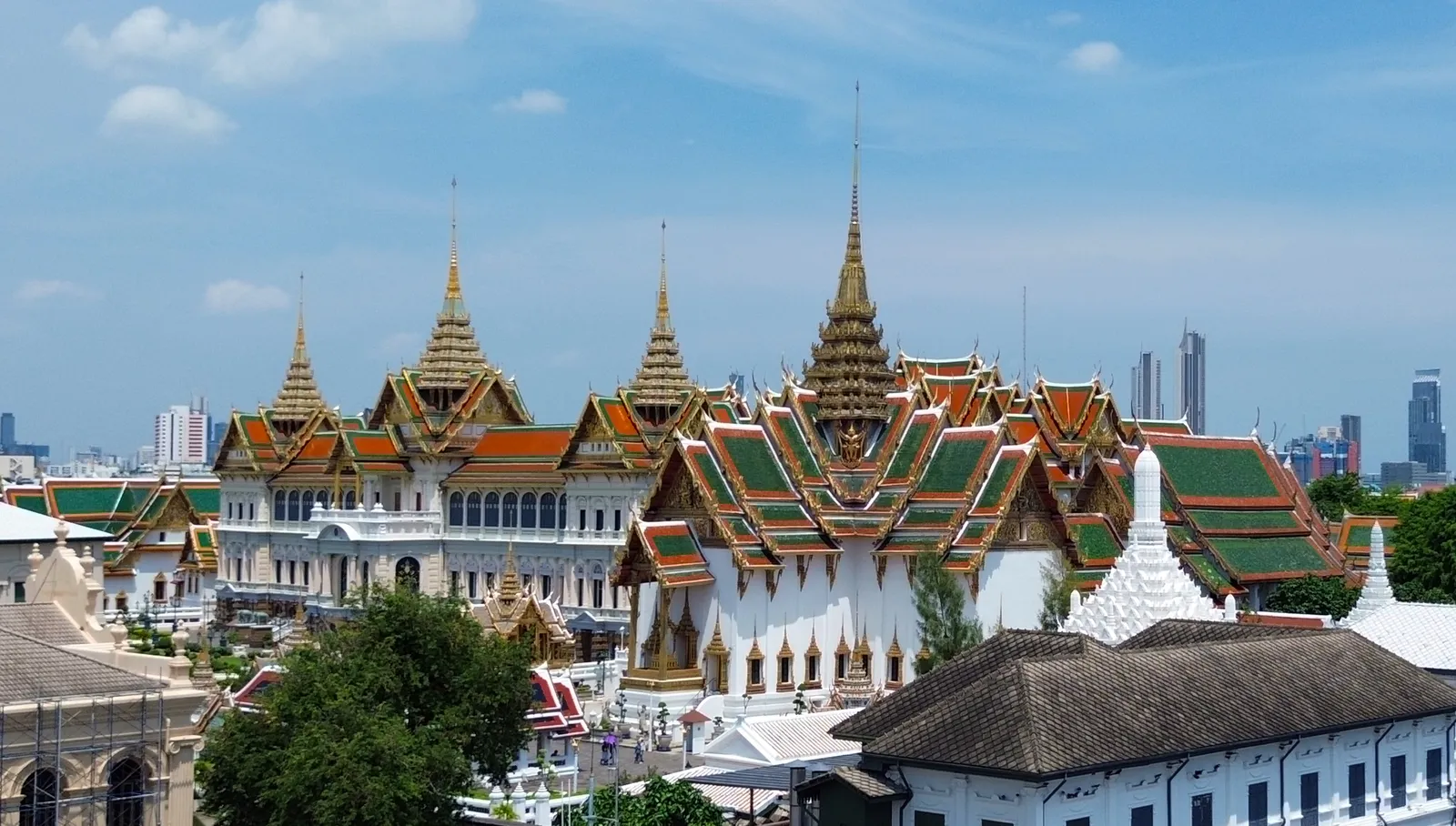
- Time needed
- Markets and Or Tor Kor are morning-to-afternoon
- Getting there
- Or Tor Kor and Chatuchak sit on the MRT and BTS at Mo…
- Price
- Street food and food courts run a few dozen baht a pl…
- Best for
- Food travelers
How this food day is built
Bangkok is one of the great eating cities on earth, and the mistake most visitors make is treating food as something that happens between sights rather than the plan itself. This itinerary flips that. It threads a single day around the city's food geography — a fresh market in the cool morning, a food court or café through the worst of the midday heat, an optional cooking class or guided tour in the afternoon, and a long, slow street-food crawl through Chinatown after dark. You can run it as written or stretch the same beats across two or three days of a longer trip.
The logic is the same one that governs every Bangkok day: front-load the outdoor, sweaty stuff while it's cool, retreat to air conditioning when the sun is overhead, and come back out when the city does, in the evening. Food fits that rhythm perfectly. Markets are morning creatures; Yaowarat is a nighttime animal. Build the day around those facts and you eat better and walk less.
Pace yourself. The goal is not to clear a checklist of dishes but to eat little and often, at the busy stalls where turnover keeps everything fresh. Carry water, keep cash in small notes for stalls and boats, and treat the food court and the café as deliberate rest stops, not failures of ambition.
- Morning: a fresh market for fruit, curries and ingredients (Or Tor Kor or Khlong Toei).
- Midday: a food court or café in the air conditioning while the heat peaks.
- Afternoon: an optional cooking class or guided food tour.
- Evening: the Yaowarat (Chinatown) street-food crawl, the day's main event.
Book ahead
Reserve any cooking class, fine-dining table or guided food tour ahead; the best Chinatown stalls have queues, not reservations — go early in the evening
Morning
Begin where Bangkok's cooks begin: a fresh market. Or Tor Kor, beside the weekend Chatuchak sprawl and reachable on the MRT, is the polished option — immaculate pyramids of fruit, ready-to-eat curries in trays, grilled river prawns and a small food hall where you can sit and eat what you've just been admiring. It is the gentlest possible introduction to the breadth of Thai food, and it's cool enough early in the day to wander without wilting.
If you want the raw, unvarnished version, Khlong Toei is the city's largest wet market — loud, wet underfoot and utterly real, the place where restaurants and stalls actually shop. Go early, watch your footing, and treat it as a documentary rather than a meal. Either market teaches you to read the ingredients you'll meet again on a plate tonight: the herbs, the chillies, the fish sauce, the palm sugar, the galangal and lemongrass that make a curry taste like Thailand.
Eat lightly here. A bag of cut fruit, a skewer, a small bowl of something — the point is to graze and learn, not to fill up before the day has properly started. Buy a bottle of water for the day while you're at it.
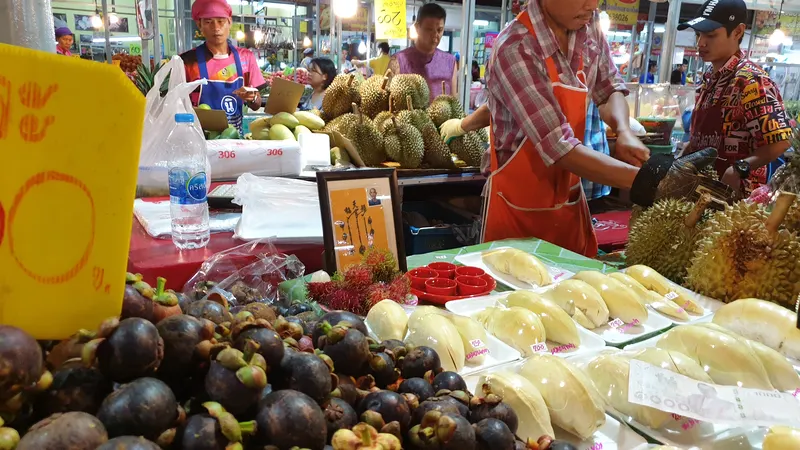
Photo: Michael / Wikimedia Commons (Public domain) - Or Tor Kor: the clean, beginner-friendly market with a sit-down food hall.
- Khlong Toei: the vast wet market where the city actually shops — go early and watch your step.
- Graze, don't gorge — a few small bites to read the ingredients you'll eat tonight.
Midday
When the sun is at its worst, eat indoors. Bangkok's mall food courts are a genuine highlight rather than a fallback: clean, air-conditioned, absurdly cheap and a fast survey of regional Thai cooking, from northern khao soi to southern curries, all under one roof. You load a card at a counter, order from whichever stalls catch your eye, and tap to pay — no language barrier, no haggling. It's the easiest, lowest-stress way to try ten dishes in an hour.
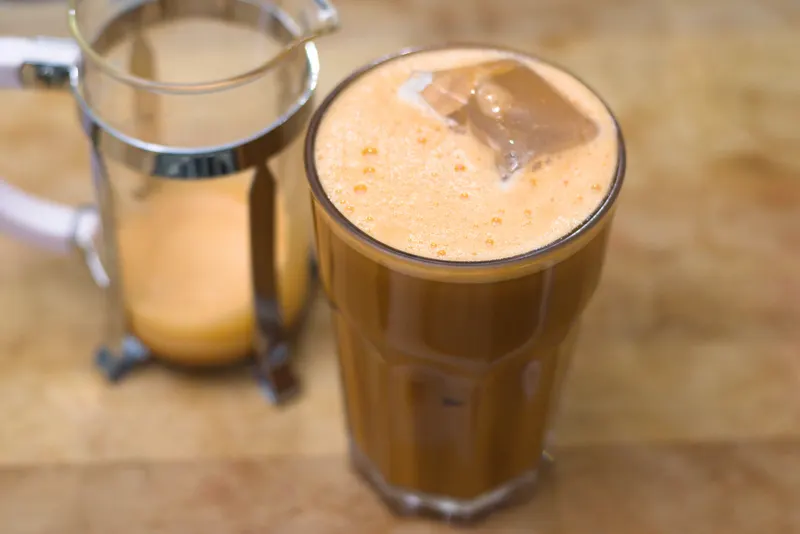
Between courses, slow down at a café. Bangkok's third-wave coffee scene is excellent, and a long iced coffee in a converted shophouse is both a rest and a small pleasure in its own right. This is also the moment to plan the evening: confirm your cooking class, decide whether you're booking the fine-dining table, and let the heat pass before you head back out.
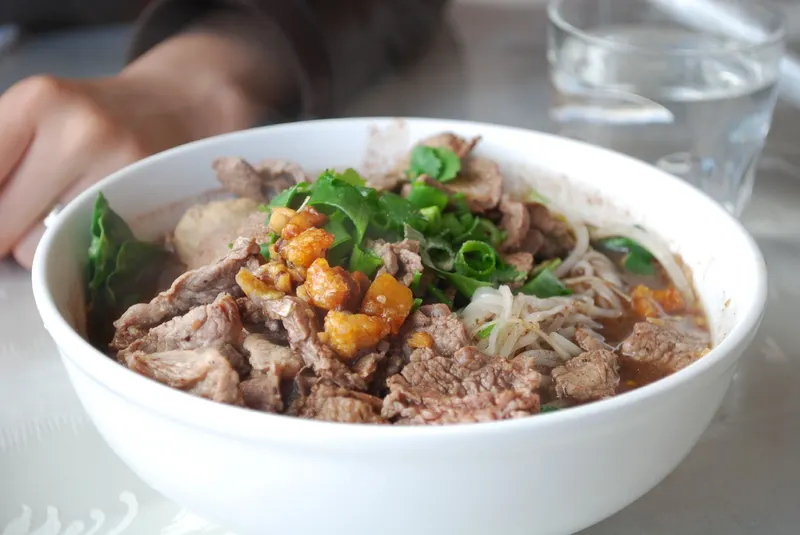
If you'd rather a single sit-down lunch than a food-court graze, this is the slot for it — a bowl of boat noodles, a plate of pad thai cooked to order, or a regional speciality you flagged at the market this morning.
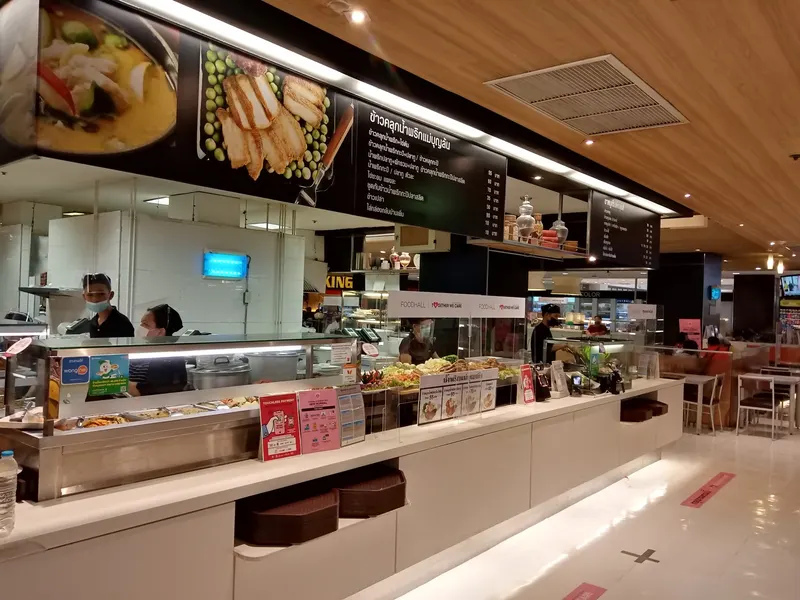
Photo: Phoebus 28 / Wikimedia Commons (CC BY-SA 4.0) Afternoon
The afternoon is where a food trip becomes a food education. A cooking class is the single best souvenir Bangkok sells: most run a half-day, start with a market walk to choose ingredients, and send you home able to actually make a green curry or a tom yum that tastes right. Classes book up, so reserve ahead and pick one with a market component if you can — it ties the whole day together.
If cooking isn't your thing, a guided food tour does the decoding for you. A good guide takes you to the stalls you'd never find or never dare, explains what you're eating and why, and handles the ordering in Thai. Chinatown food tours are especially worthwhile because Yaowarat is so dense that a first-timer can walk past the best plates without knowing it. Either way, treat the afternoon as the structured, learning half of the day before the free-form grazing of the evening.
Whichever you choose, leave a buffer before dinner. You'll likely eat something on the tour or in class, so arrive at Chinatown genuinely hungry rather than already full.
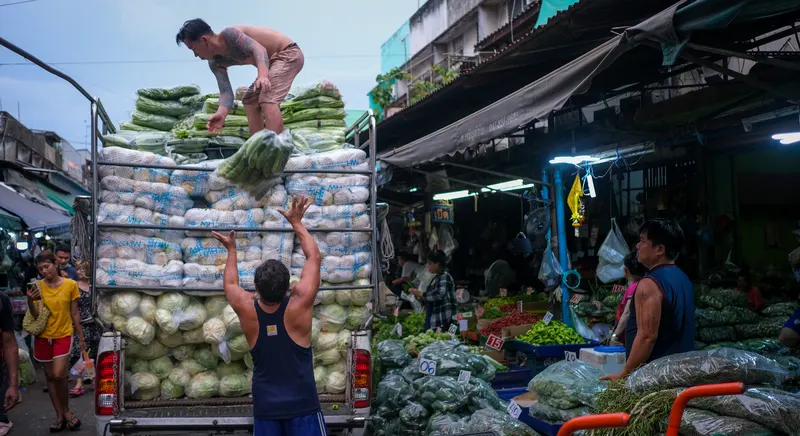
Photo: Alisdare Hickson / Wikimedia Commons (CC BY-SA 4.0) Evening
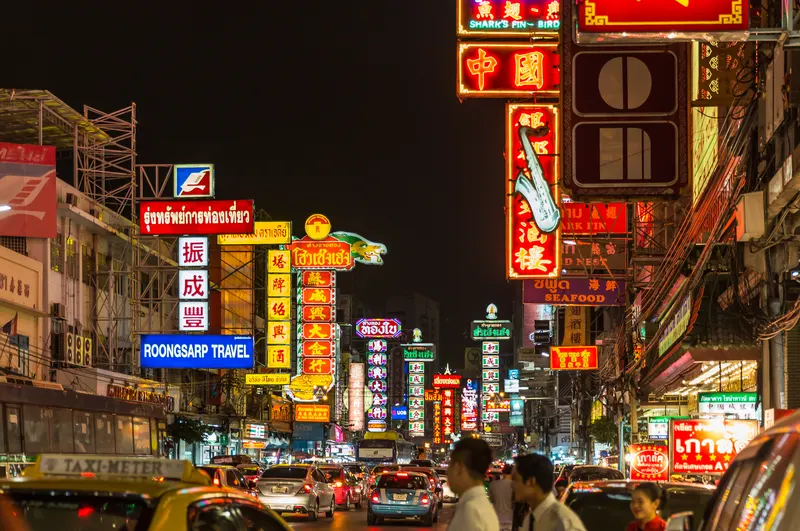
Save the best for last. After dark, Yaowarat Road — the spine of Bangkok's Chinatown — becomes the city's greatest open-air dinner table. The neon signs flicker on, the woks throw flames, vendors crack crabs and stir-fry mussels on the curb, and the sidewalks fill with tables until late. It is loud, crowded and gloriously alive, and it is at its most electric on weekend evenings.
Start near the Chinatown Gate at Odeon Circle (the MRT Blue Line drops you at Wat Mangkon, right in the thick of it) and drift west along Yaowarat, ducking into the side sois where the real magic lives: fish-ball noodle stalls, oyster omelettes, grilled seafood, dim sum counters and dessert carts selling toasted bread, pomegranate juice and sweet fruit. Come hungry, walk slowly, and order one or two things at each stop rather than a full plate — that's how you taste the whole street without filling up at the first stall.
If you want a contrast to close the night, this is also the moment to spend on one memorable meal: a Michelin-listed Thai restaurant or a fine-dining room that elevates the same flavours you've been eating all day. Bangkok does the high and the low equally brilliantly, and a food itinerary that touches both ends is the one you'll remember.
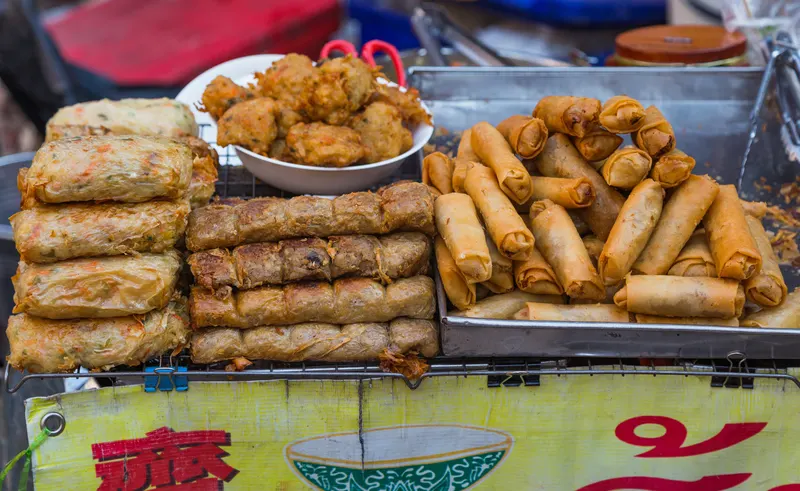
Photo: Marcin Konsek / Wikimedia Commons (CC BY-SA 4.0) - Start at the Chinatown Gate / Odeon Circle and graze west along Yaowarat Road.
- Dive into the side sois for fish-ball noodles, oyster omelettes and grilled seafood.
- Order one or two bites per stop, not full plates, so you taste the whole street.
- Optional finale: a Michelin-listed or fine-dining Thai meal as the day's peak.


Sources
- MICHELIN Guide — Bangkok restaurants ↗
Official MICHELIN listings; confirm current stars and Bib Gourmand picks.
- TAT — MICHELIN Guide Thailand 2026 ↗
Official release: 468 restaurants in the 2026 edition; use for current awards framing.
- Chatuchak Market — opening times ↗
Confirm Or Tor Kor / Chatuchak weekend market days before a market morning.