- Time needed
- 30–60 minutes is plenty for most visitors
- Best time
- Early morning
- Nearest
- MRT Khlong Toei
- Price
- Free to wander
What Khlong Toei Market is — and isn't
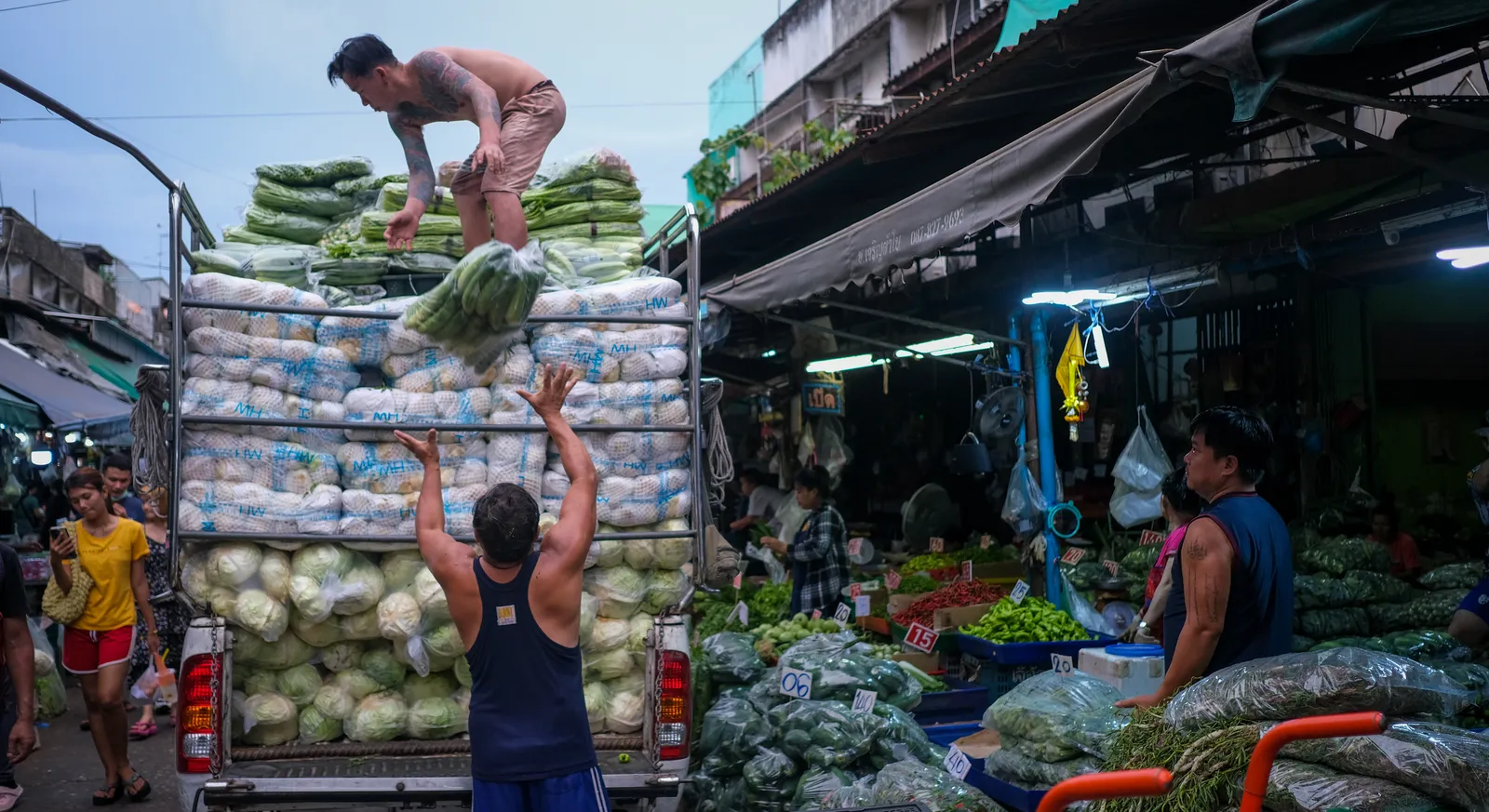
Khlong Toei is the city's largest fresh market, a sprawling wholesale-and-retail hub that supplies restaurants, street vendors and home cooks across Bangkok. It is the polar opposite of the polished, roofed calm of Or Tor Kor: a dense, loud, wet warren of stalls where whole fish are filleted on the spot, herbs and chilies are stacked in mounds, and trolleys and motorbikes push through aisles barely wide enough for two people. It is not a tourist attraction in any conventional sense, and that's precisely why curious travelers seek it out — it's about as close as you can get to how Bangkok actually eats.
Set your expectations accordingly. There are no signs in English, no photo spots laid on, no comforts. What there is, instead, is an overwhelming, fascinating window into the food supply chain of a megacity: the scale, the freshness, the smells and the sheer human energy of thousands of people buying and selling food before most of the city is awake. Come for the experience and the education, not for souvenirs.
- A working wholesale market, not a curated tourist sight.
- Produce, seafood, meat, herbs, flowers and prepared food at huge scale.
- Raw, wet, crowded and intense — and deeply real.
- Best appreciated as a window into how Bangkok actually feeds itself.
Watch out
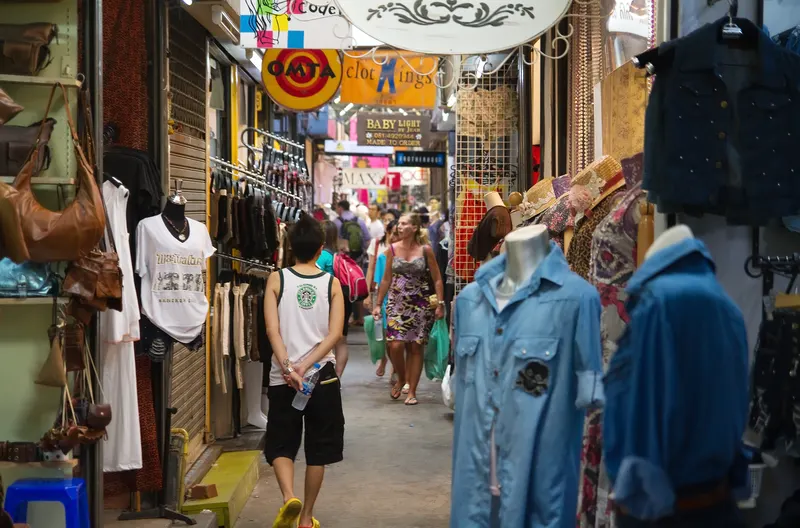
This is a working wholesale market, not a tourist site — watch motorbikes and trolleys in narrow aisles, mind your bag in the crush, and don't block vendors trying to work
When to go and how to get there
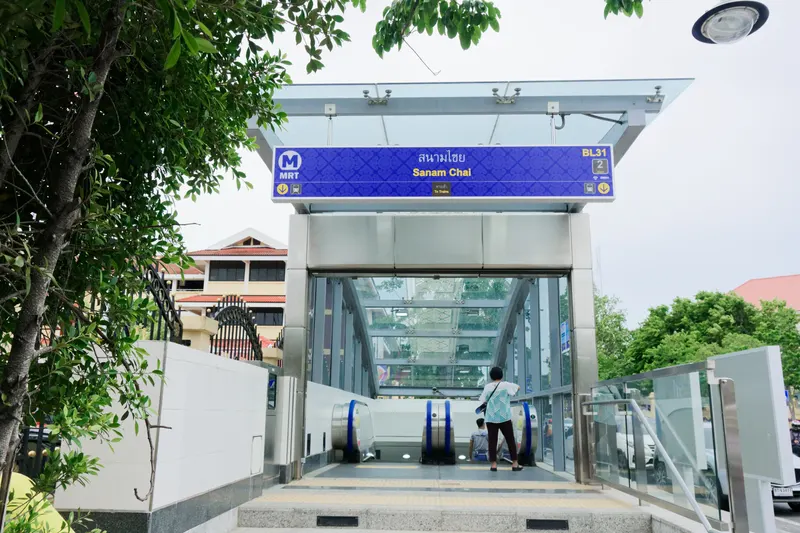
Timing is everything at Khlong Toei. The market comes alive in the small hours and is at its busiest, freshest and coolest very early in the morning; by mid-morning the wholesale rush eases but it's hotter and the most dramatic activity has passed. An early start also means thinner crowds of buyers and a far more comfortable wander before the day's heat settles in. The nearest station is MRT Khlong Toei, a short walk or a quick Grab from the market itself.
Dress for a working market, not a stroll: closed shoes you don't mind getting wet and dirty, light clothes, and a small bag worn in front of you. The aisles are slick underfoot, covered in places but hot and humid throughout, and the smells are strong. Carry a little cash if you want to buy fruit or a snack, keep your phone and valuables secure in the crush, and stay alert to motorbikes and trolleys that won't slow down for you.
- Go early morning — coolest, freshest and most alive.
- MRT Khlong Toei is the nearest station; a short walk or quick Grab away.
- Wear closed shoes you don't mind ruining; floors are wet and slick.
- Carry small cash and a front-worn bag; watch for bikes and trolleys.

Visiting respectfully and safely
Because Khlong Toei is a place of work, the single most important thing is to stay out of the way. Vendors and porters are moving fast with heavy loads, and a tourist standing in the middle of an aisle for a photo is a genuine obstruction. Keep to the edges, step aside for trolleys and bikes, and don't handle produce you're not buying. Photography is part of the appeal, but ask before pointing a camera at a vendor's face or stall — a smile and a gesture go a long way, and many will happily agree once asked.
On safety: Khlong Toei is not dangerous in the violent sense, but the crowding, the wet floors and the constant traffic of bikes and trolleys are real hazards, so move carefully and watch your footing and your bag. The surrounding district is one of Bangkok's denser, lower-income neighborhoods; daytime visits to the market are routine, but use the same street sense you would anywhere — keep valuables zipped away and don't flash cash or expensive cameras. If any of that gives you pause, this is a market best done early and, ideally, with a guide who knows the layout and the etiquette.
- Keep to the edges and let workers, trolleys and bikes pass.
- Ask before photographing vendors; don't handle goods you won't buy.
- Mind wet floors, your footing and your bag in the crush.
- Use normal city street sense; keep valuables secure and out of sight.

What to look for and what to eat
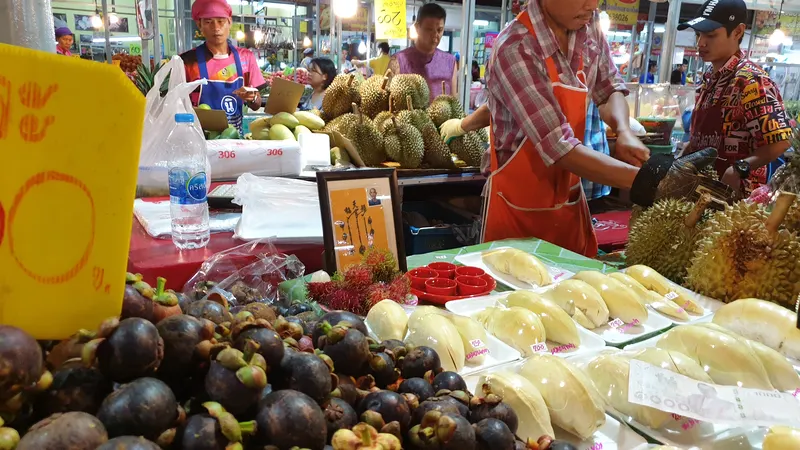
Even on a short visit, knowing what you're looking at turns the chaos into a lesson. The fresh-produce sections are a crash course in Thai cooking: pyramids of bird's-eye chilies and dried chilies, bundles of lemongrass, galangal, kaffir lime leaves and holy basil, banana flowers and bitter gourds, and tubs of curry paste and shrimp paste sold by the scoop. The protein aisles are not for the squeamish — whole fish and eels in shallow tanks, butchers working at speed, baskets of live crabs and clams on ice — but they're the clearest picture you'll get of where a street-food plate begins.
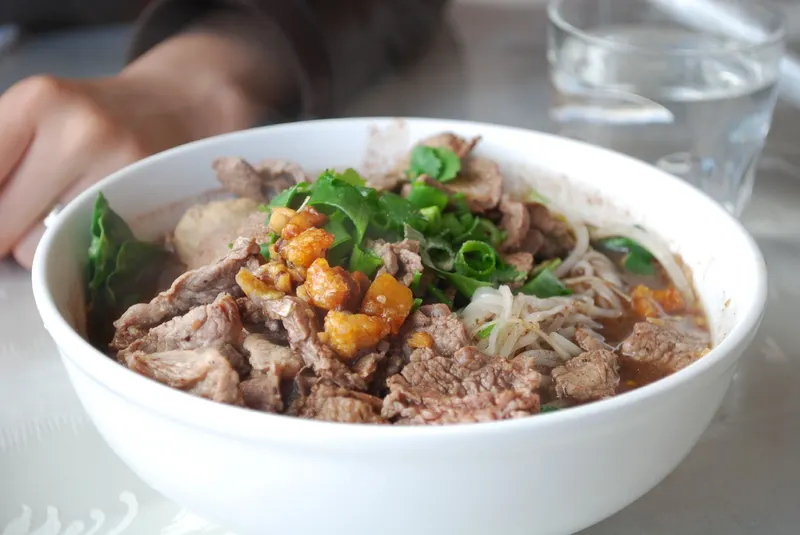
There is prepared food, too, and it can be excellent. Stalls and small cookshops around the edges sell curries by the bag, grilled and fried snacks, fresh fruit, sticky-rice sweets and drinks, all aimed at the vendors and porters who work here, which means it's fast, cheap and genuinely good. Buy a bag of cut fruit, a skewer or a sweet to eat as you walk, carry small notes for it, and treat anything you eat as a bonus rather than the reason you came — the spectacle is the main course.
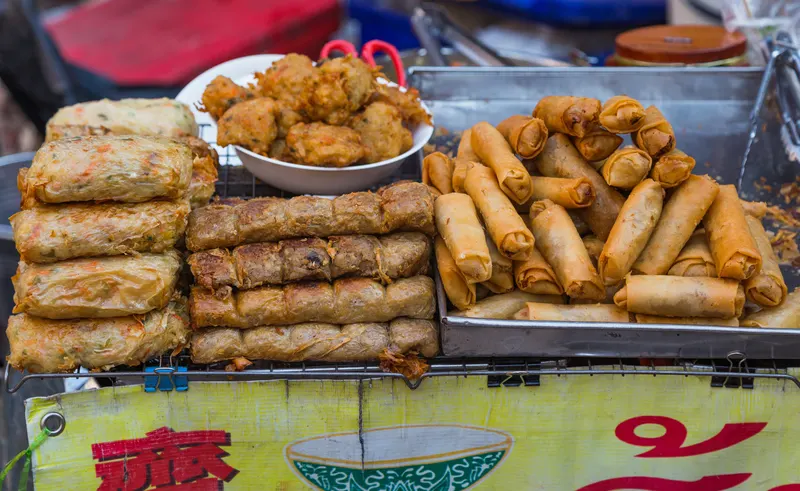
- Produce aisles: chilies, lemongrass, galangal, kaffir lime, basil, curry and shrimp pastes.
- Protein sections: live and fresh fish, seafood and fast-working butchers — intense, not for the squeamish.
- Edge cookshops: cheap curries, grilled snacks, fruit and sticky-rice sweets aimed at the workers.
- Eat as you go with small cash, and treat the food as a bonus to the spectacle.
The best way to experience it
For most travelers, the rewarding way into Khlong Toei is with a guide. A market or food tour turns an overwhelming scrum into a guided lesson: someone who can name the herbs and the unfamiliar fish, explain how the wholesale chain works, point you to the best prepared-food stalls, and handle the etiquette so you can simply watch and taste. Several Bangkok food tours start here or pass through, precisely because it's where the city's cooks shop.
If you'd rather go independent, treat it as a short, focused visit rather than a long wander — thirty minutes to an hour at first light is plenty to soak in the scale and energy without getting in the way or wearing yourself out. Either way, set it against the calmer markets so you know what you're choosing: Or Tor Kor for polished, easy grazing, the weekend Chatuchak for shopping, and Khlong Toei when you specifically want the raw, real thing.
- A guide or food tour is the easiest, most rewarding way in for first-timers.
- Going solo? Keep it short and early — 30–60 minutes is plenty.
- Choose by mood: Or Tor Kor for calm, Chatuchak for shopping, Khlong Toei for the real deal.
Sources
- Khlong Toei Market overview ↗
Background on Bangkok's largest wholesale-and-fresh market; MRT Khlong Toei is the nearest Blue Line station.
- MRT Bangkok (MRTA) ↗
Official subway operator — confirm the Blue Line route to Khlong Toei station.
- Tourism Authority of Thailand ↗
Official tourist information line and current safety guidance.