- Time needed
- One to two hours to do the elephant
- Best time
- Morning for cooler air and softer light on the bronze
- Nearest
- Chang Erawan (E17
- Price
- Admission around 500 THB adult / 250 THB child (2026)
What the Erawan Museum is
From the road, the Erawan Museum announces itself with one of the most surreal sights on Bangkok's southeastern edge: a colossal three-headed bronze elephant, the mythical Erawan of Hindu-Buddhist legend, standing atop a domed pedestal in a landscaped garden. It is enormous, instantly photogenic, and unlike anything else you will see on a Bangkok trip. Many travelers come expecting a single outsized sculpture and a quick photo — and then discover the building underneath is the real story.
Inside, the pedestal and the elephant's body house an intricate, multi-level interior that feels closer to a shrine than a conventional museum: stained glass overhead, antique ceramics and religious artifacts on display, and a spiral staircase that climbs up into the elephant itself. The craftsmanship is the point here, a labor-of-love piece of devotional design rather than a chronological exhibition. It rewards looking up and looking closely as much as standing back for the obvious wide shot.
It is run by the same private foundation behind the nearby Ancient City, which explains the shared sense of meticulous upkeep and the way the two sit so naturally on one itinerary. Treat the Erawan Museum as a sharp, high-impact hour or two rather than a half-day — its strength is concentration, not scale.
- A giant three-headed bronze elephant above landscaped pink gardens.
- An ornate interior of stained glass, ceramics and a spiral stair into the elephant's body.
- Run by the same foundation as the Ancient City — an easy pairing.
- A focused one-to-two-hour stop, not a full day.
Dress code
Modest dress is appropriate for the shrine-like interiors; cover shoulders and knees if you go inside the upper level
Getting there and pairing the detour
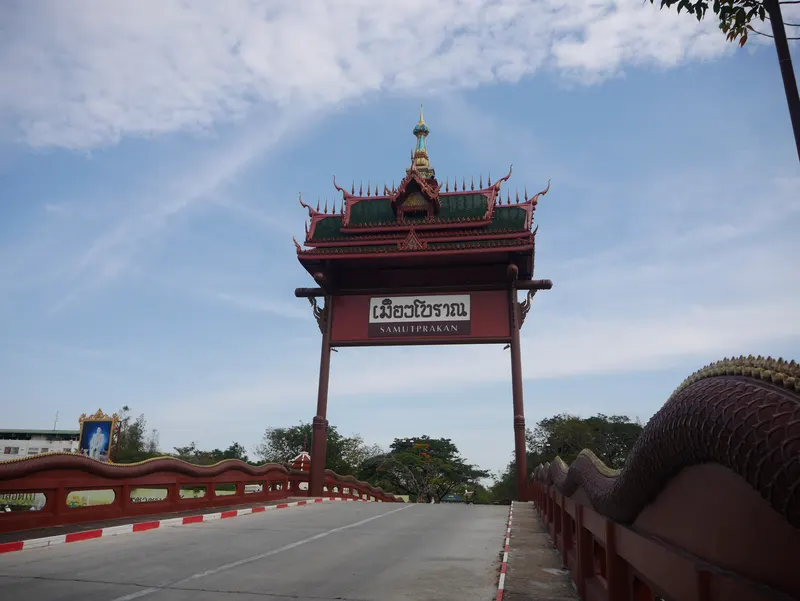
The museum sits in Samut Prakan, southeast of central Bangkok, and the most convenient public route is the BTS Sukhumvit line toward its southern end, alighting near Chang Erawan station and covering the short remaining distance on foot or by a quick hop. A direct Grab or taxi from central Bangkok is the alternative — faster door-to-door off-peak, but exposed to expressway traffic at rush hour, so leave a buffer either way.
The obvious question is whether the detour is worth it on its own, and the honest answer is that it is best as a pairing rather than a standalone errand. On its own it is a striking but short stop. Linked with the Ancient City — which lies a little further along the same southeastern corridor and shares the same foundation — it becomes the bookend to a genuinely full, low-stress day: the concentrated wow of the elephant, then hours of quiet wandering at the heritage park, or the reverse.
If you are building the wider region into your plans, the Samut Prakan guide maps how the Erawan Museum, the Ancient City and the river-mouth town of Pak Nam string together, and which combinations make sense by transport and time of day.
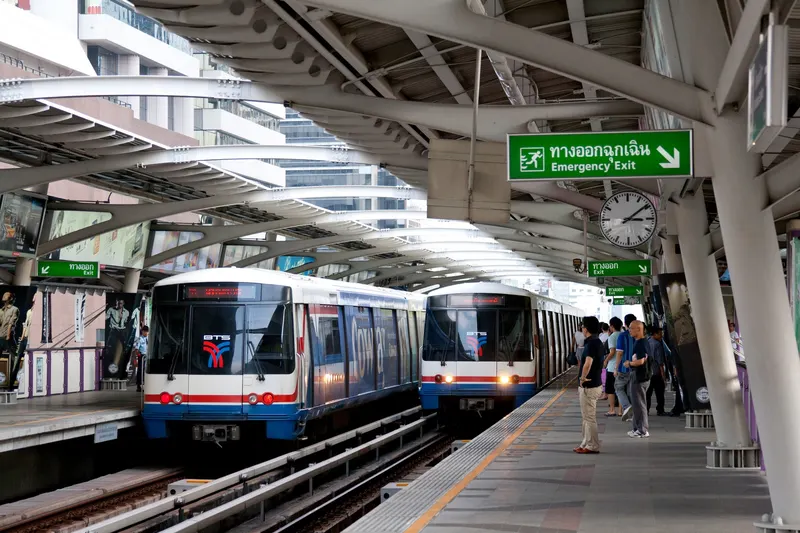
- BTS Sukhumvit line toward the southern end (alight near Chang Erawan), then a short hop.
- Or a direct Grab/taxi from central Bangkok, traffic permitting.
- Best paired with the Ancient City rather than visited on its own.
- Leave a buffer for expressway traffic on the way back.
Inside the elephant, and how to visit well
Give yourself time for all three layers of the museum: the gardens, the underworld-themed lower hall and the celestial upper chamber reached by climbing up into the elephant. The interiors are dimly lit and intricate, so they reward a slow circuit and an eye for detail rather than a rushed loop. The spiral climb into the body of the elephant is the signature moment — narrow, ornate and worth the small effort.
Because the upper level functions as a place of veneration, dress modestly and keep your voice low inside; cover shoulders and knees if you intend to go all the way up. Mornings bring cooler air and softer light on the bronze for photographs, and midweek visits are noticeably quieter than weekends. Outside, the gardens are pleasant for a short wander but offer little shade, so the heat-smart move is to do the interiors during the hotter part of your visit and the gardens early or late.
As a final decision point: come if you love striking design and devotional craft, or if you are already heading to the Ancient City and want a memorable bookend. Skip it if your Bangkok time is tight and you would rather spend a half-day on the city's headline temples and the river — those are the higher priority for a short first trip, and the Erawan Museum will keep for a return visit.
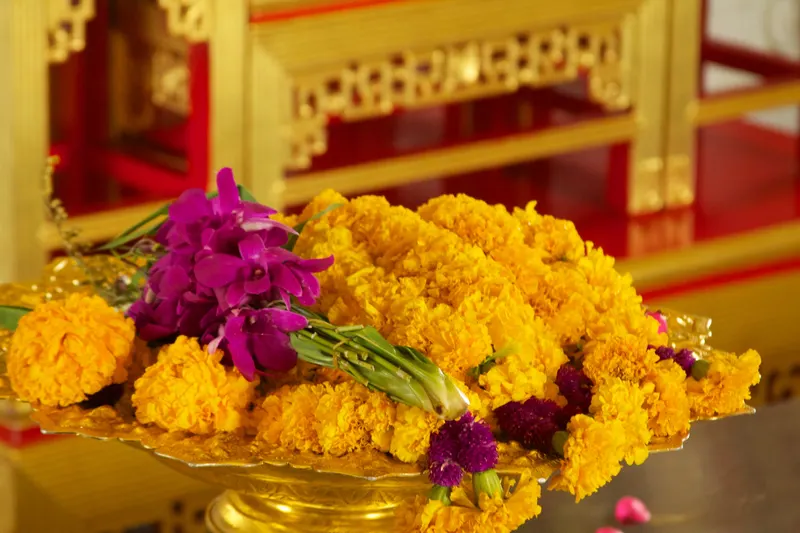
- Do all three layers: gardens, lower hall and the climb up into the elephant.
- Dress modestly and keep quiet in the shrine-like upper chamber.
- Mornings and midweek are coolest and least crowded.
- Come for design and the Ancient City pairing; skip on a very short first trip.
Sources
- Erawan Museum — ticket rates (official) ↗
Official admission prices for adults and children.
- Erawan Museum — visitor info (official) ↗
Official opening hours and what each ticket includes.
- BTS Skytrain (official) ↗
Sukhumvit line map and fares; Chang Erawan (E17) is the nearest station.
- Erawan Museum (official) ↗
Official site confirming the BTS Chang Erawan (E17, exit 2) approach.