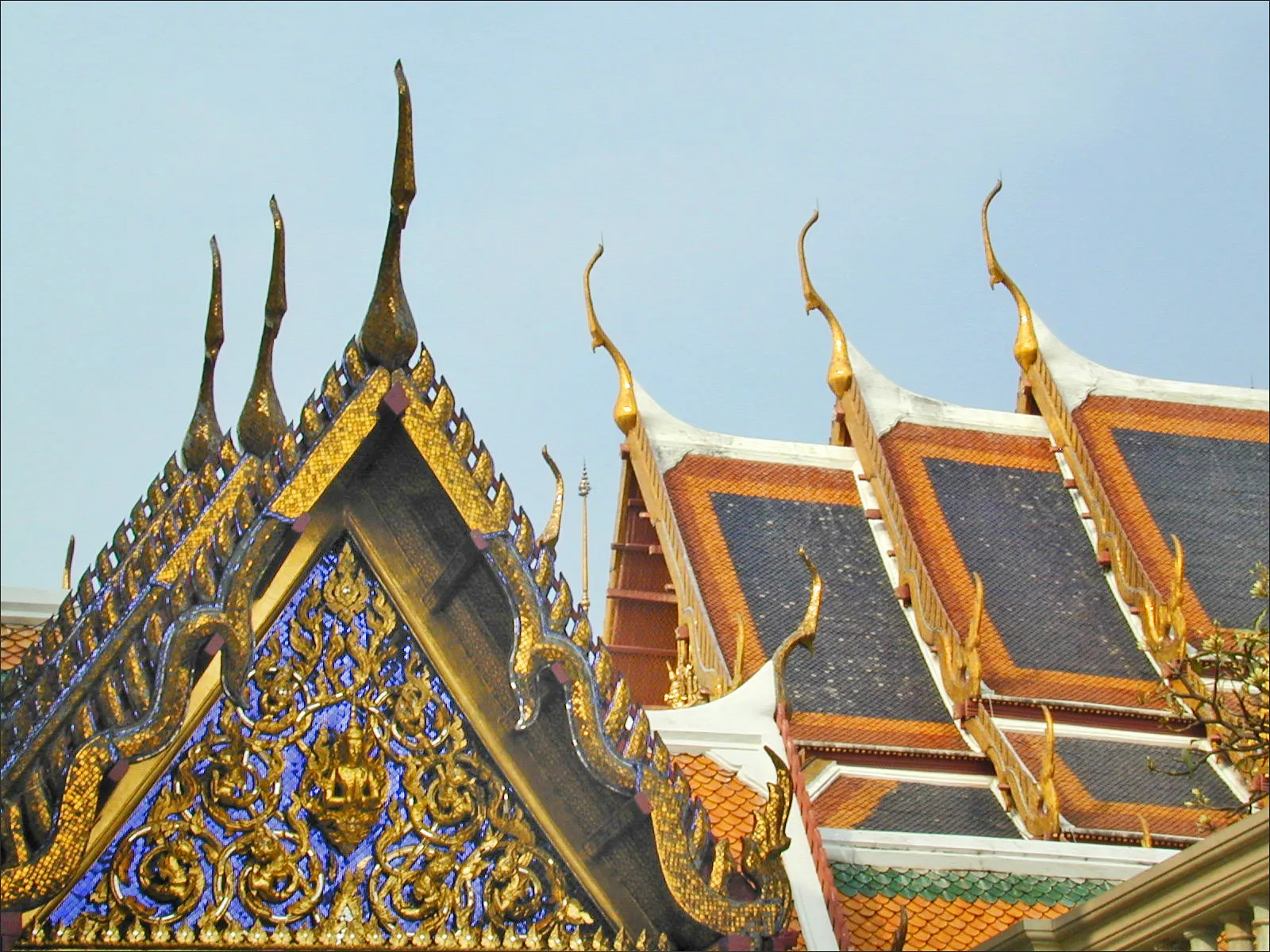
- Best time
- Buddhist holy days are most atmospheric around dusk
- Getting there
- Temples and royal sites cluster in the old city (Ratt…
- Price
- Observing holidays and joining temple activities is f…
Why the holiday calendar matters for your trip
Thailand's public-holiday calendar is one of the few pieces of Bangkok planning that genuinely changes what your day looks like, and most visitors only discover it the hard way — at a closed bank counter, or at a 7-Eleven that won't sell them a beer. The calendar mixes three kinds of day: fixed civic holidays, royal and national days tied to the monarchy, and Buddhist holy days whose dates move every year with the lunar calendar. Because so many of them shift, the golden rule is simple: check the current year's official dates before you lock in plans, rather than assuming a date you read once still holds.
The headline practical fact — the one worth tattooing on your itinerary — is the nationwide ban on alcohol sales on the major Buddhist holy days. On Makha Bucha, Visakha Bucha and Asalha Bucha (and on election days), shops, supermarkets, convenience stores, bars and many restaurants are legally barred from selling alcohol for the whole day. Bars in tourist zones may quietly close, and even hotels can be restricted. It catches people out constantly: if a holy day falls during your stay and you'd planned a rooftop night or a few beers with dinner, plan around it or buy nothing expecting to drink it that evening.
Beyond the bar, the rest follows a gentler pattern. Banks and government offices close on public holidays, and a share of museums and attractions close or run shortened hours — though the Grand Palace, the major temples and the malls generally stay open. Crucially, the mood of the city shifts on the religious days: Bangkok becomes calmer, more reflective and, for many travelers, more beautiful, as temples fill with merit-makers and the evening fills with candlelight. Far from a day to write off, a well-timed holy day can be the most memorable evening of a trip — you just have to know it's coming.
- Three kinds of day: fixed civic holidays, royal/national days, and lunar Buddhist holy days.
- Alcohol sales are banned nationwide on the big Buddhist holy days and on election days.
- Banks and government offices close; the Grand Palace, major temples and malls usually stay open.
- Holy days turn the city quieter and more reflective — often a trip highlight, not a write-off.
Watch out
Some attractions and government offices close on public holidays, and a few touts exploit the confusion with 'it's closed today, come this way' Grand Palace scams — verify official closures rather than trusting a stranger
Dress code
Cover shoulders and knees for any temple or royal site; on royal days, locals wear yellow (king) or light blue (queen mother) — joining in is welcome, never required
Buddhist holy days: the alcohol ban, quieter temples and candlelight
The Buddhist holy days are the ones that move, and the ones that most reward a little planning. Four matter most. Makha Bucha (around February–March) commemorates a spontaneous gathering of 1,250 monks. Visakha Bucha (around May) is the holiest day of the Buddhist year, marking the Buddha's birth, enlightenment and passing on a single date. Asalha Bucha (around July) honours the Buddha's first sermon and is immediately followed by Khao Phansa, the start of the three-month 'Rains Retreat' or Buddhist Lent, when monks remain in their temples. The retreat closes three months later with Ork Phansa (around October), marked by dawn alms-giving and merit-making. Every one of these dates is set by the lunar calendar and lands on a different day each year, so confirm before you plan.
On the three major holy days — Makha Bucha, Visakha Bucha and Asalha Bucha — the nationwide alcohol-sales ban applies in full: no shop, bar or supermarket may legally sell alcohol, and many entertainment venues close for the day. This is the practical heart of the page. If you want a drink with dinner on one of these dates, you will likely be out of luck, so plan a dry, temple-focused evening instead — which, conveniently, is exactly what the day is best spent on. Government offices and banks close, and the general rhythm of the city slows and quietens.
What you get in exchange is one of Bangkok's loveliest spectacles. As dusk falls, temples across the city hold the candlelit 'wian tian' procession: worshippers carry a lit candle, three incense sticks and a flower, and walk slowly clockwise three times around the main hall, the circling lights and rising smoke making for a deeply atmospheric scene. Wat Pho, Wat Saket (the Golden Mount), Wat Benchamabophit (the Marble Temple) and temples citywide all take part. Arrive around dusk for the procession — it's the highlight — dress modestly with shoulders and knees covered, and observe quietly. It's free, moving, and utterly different from a normal Bangkok night.

- Makha Bucha (Feb–Mar), Visakha Bucha (May), Asalha Bucha / Khao Phansa (Jul), Ork Phansa (Oct).
- Alcohol sales banned nationwide on Makha, Visakha and Asalha Bucha — plan a dry evening.
- Candlelit 'wian tian' procession at dusk — worshippers circle the temple hall three times.
- Best temples to observe: Wat Pho, Wat Saket, Wat Benchamabophit and temples citywide.

Royal and national days: closures, lights and dressing the part
The royal and national days are mostly fixed-date public holidays tied to the monarchy and the nation's history, and they shape your trip more through closures and atmosphere than through any restriction. Chakri Memorial Day (6 April) honours the founding of the ruling Chakri dynasty and King Rama I. Coronation Day (4 May) commemorates the coronation of the current king, Rama X. The King's Birthday is celebrated in late July, while the Queen Mother's Birthday (12 August) doubles as the national Mother's Day. And 5 December — the birthday of the late, deeply revered King Bhumibol — serves as both National Day and Father's Day. On all of these, banks and government offices close and some attractions follow suit, so check opening hours and don't bank on a museum visit falling on a holiday.
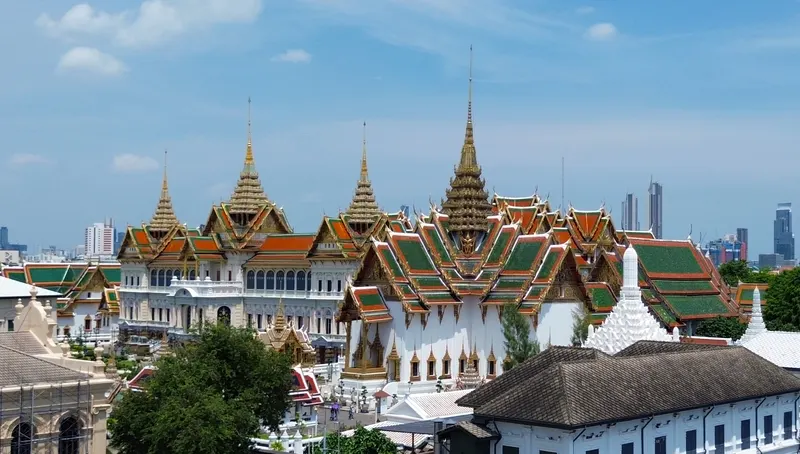
These days come into their own after dark, especially in the old city. Around the King's and Queen Mother's birthdays and on 5 December, Ratchadamnoen Avenue and the Sanam Luang ground beside the Grand Palace are strung with spectacular illuminations, the avenues lined with flags, and the city takes on a warm, family-oriented mood as people come out to stroll and pay their respects. The Grand Palace area is the focal point. Go in the evening to see the lights at their best, and pair the outing with a Rattanakosin walk and a riverside dinner.
Dressing the part is an easy, appreciated gesture. Thais associate colours with the royal family — yellow for the king (whose birthday colour also marks Mondays), and light blue for the Queen Mother — and you'll see the city dress accordingly on these days. Wearing yellow on the King's Birthday or 5 December, or light blue on 12 August, is a friendly way to join the spirit of the day, though it's never expected of visitors. The one firm rule is respect: keep behaviour and dress modest around royal sites and royal imagery, which Thais hold in very high regard.
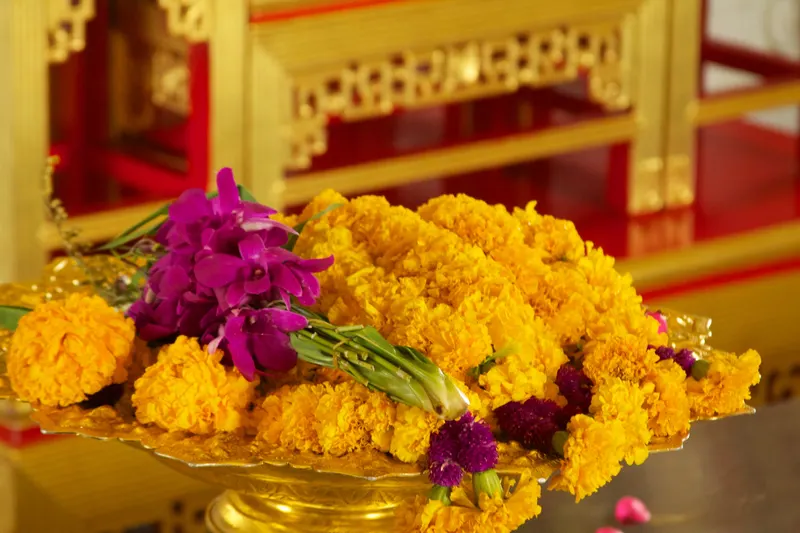
- Chakri Day (6 Apr), Coronation Day (4 May), the King's Birthday (late Jul), Mother's Day (12 Aug), National Day / Father's Day (5 Dec).
- Banks and offices close; some attractions shorten hours — check before you go.
- Evening illuminations light up Ratchadamnoen Avenue and Sanam Luang by the Grand Palace.
- Wear yellow (king) or light blue (queen mother) to join in — optional, but appreciated.
Planning around the holidays
Put it all together and the planning is straightforward. First, look up the current year's official holiday calendar — Thailand publishes it annually, and the Tourism Authority of Thailand is the reliable source — because the lunar holy days move and the government sometimes adds substitute holidays to create long weekends. Second, if a major Buddhist holy day falls during your stay, treat that evening as alcohol-free and plan a temple visit around the dusk procession instead of a bar night; it's a better use of the day anyway. Third, expect banks and government offices to be shut on any public holiday, and verify the hours of any specific museum or attraction you're counting on, since some close while the Grand Palace, big temples and malls stay open.
A couple of safety and comfort notes round it out. The old-city royal sites attract the classic Bangkok scams on busy days — the friendly stranger who tells you the Grand Palace is 'closed for a ceremony today' and steers you to a tuk-tuk and a gem shop is the textbook one, so verify any closure at the official gate, never with a tout. And because several holy days fall in the hot or rainy months, carry water and an umbrella and time temple visits for the cooler dusk, when the candlelight is at its best regardless. Handle those few things and the holidays stop being a trap and become some of the most rewarding, atmospheric days of a Bangkok trip.
- Check the year's official calendar — lunar dates move and substitute holidays get added.
- If a big holy day falls in your trip, plan a dry, temple-focused evening, not a bar night.
- Banks and offices shut; verify specific attraction hours (Grand Palace and malls usually open).
- Beware 'it's closed today' Grand Palace touts — confirm closures at the official gate only.


Public holidays FAQ
Can I buy alcohol on Buddhist holy days? No. On the major holy days — Makha Bucha, Visakha Bucha and Asalha Bucha — alcohol sales are banned nationwide, the same as on election days, so shops, convenience stores, supermarkets and most bars cannot legally sell it. Plan a dry evening, ideally around a temple visit.
Will everything be closed on a public holiday? No — but banks, government offices and some museums close. The Grand Palace, the major temples and the shopping malls generally stay open, though hours can vary, so confirm anything you're counting on. The festive royal and national days actually bring the city out in the evening for illuminations and strolling.
Why do the dates change each year? The Buddhist holy days follow the lunar calendar, so they land on a different date annually, and the government occasionally adds substitute holidays to form long weekends. Always check the current year's official calendar rather than assuming a date. What should I wear? For any temple or royal site, cover shoulders and knees; on royal days, yellow or light blue lets you join the spirit, but it's never required.
The Grand Palace & Wat Phra Kaew
Bangkok's most iconic complex — the former royal residence and the Temple of the Emerald Buddha. Go early; strict dress code.
Map pins
Map data © OpenStreetMap contributors · Tiles © OpenFreeMap
Sources
- Tourism Authority of Thailand (TAT) ↗
The reliable source for the year's official public-holiday dates, lunar holy days and alcohol-sale rules.