- Time needed
- Half a day to a full day depending on how many ruins…
- Best time
- Soon after opening for soft light and cool air
- Getting there
- Reach Ayutthaya by train
- Price
- Individual ruins charge a small gate fee (major templ…
How to choose among the ruins
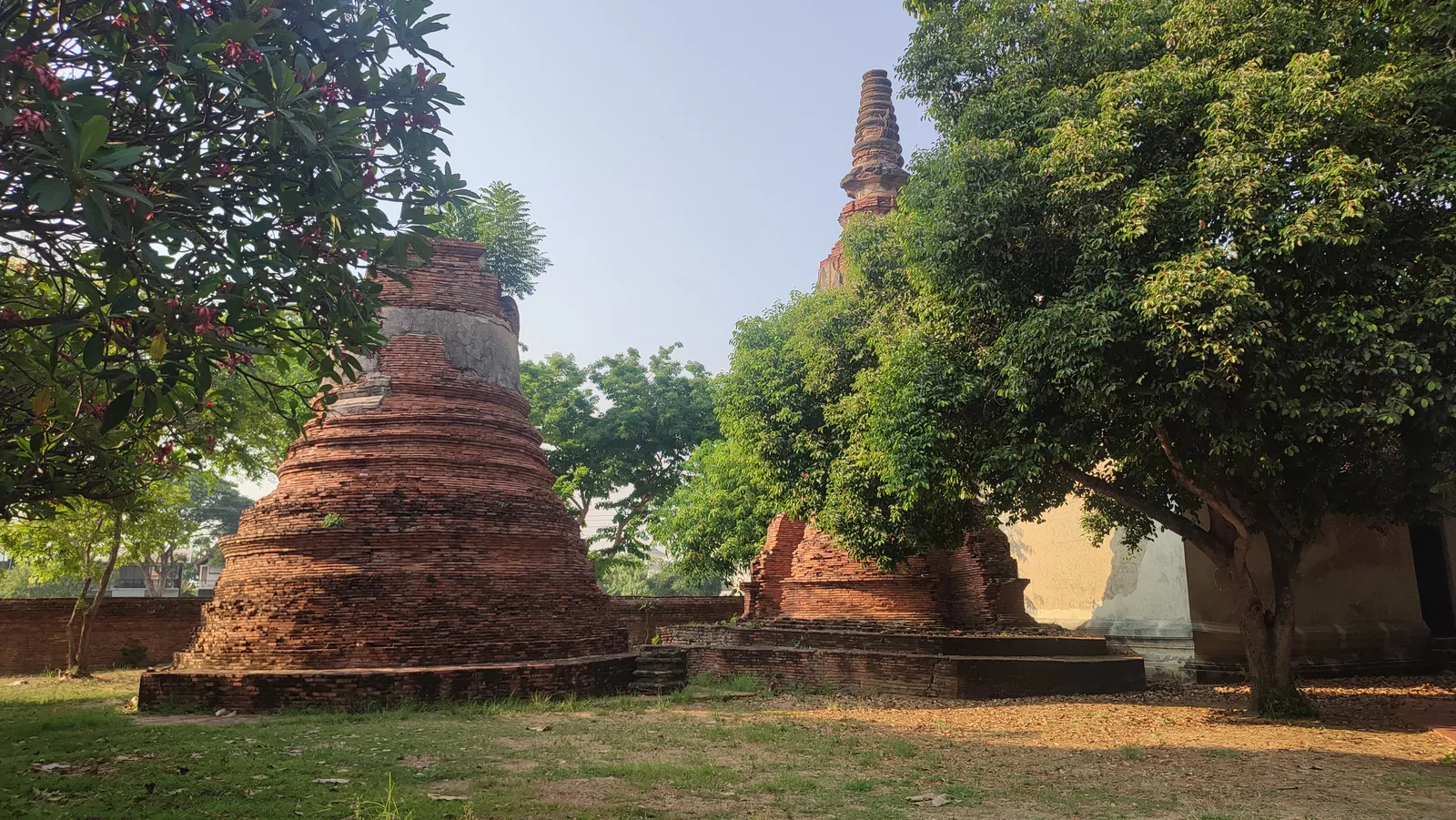
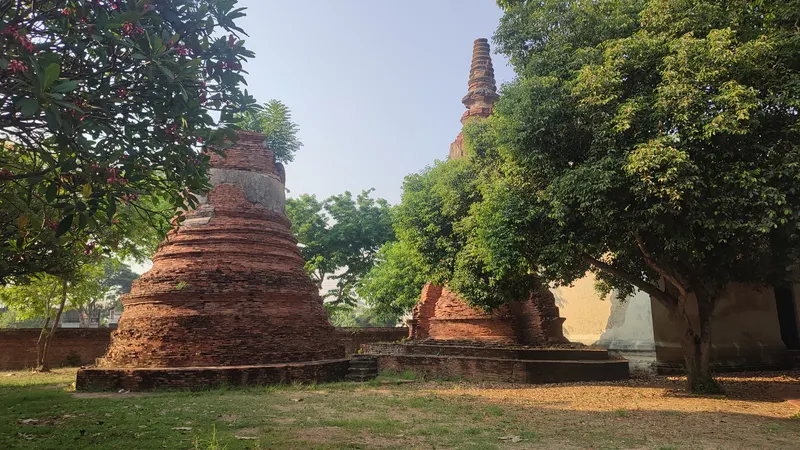
Ayutthaya has dozens of temple ruins, and trying to see all of them in a day is a recipe for heat exhaustion rather than wonder. The smart approach is to pick a handful of the best, cluster them so you ride short distances between stops, and leave generous time at the two or three that genuinely reward lingering. The ruins fall into a tight central cluster on the historical-park island, plus one essential outlier — Wat Chaiwatthanaram — across the river to the west, which is worth the extra ride for sunset.
The central cluster is flat and close enough to link by bicycle in the cooler hours, or by an hourly tuk-tuk if the heat is fierce. Most travelers can comfortably do the headline central sites in a morning, break for a long shaded lunch, and finish at the riverside temple as the light softens. Below are the ruins we would prioritize and why, in a rough order that flows as a route.
- Cluster the central ruins together and ride between them rather than walking in the heat.
- Save Wat Chaiwatthanaram, across the river to the west, for the golden-hour finish.
- Pick three or four sites to linger at instead of skimming a dozen.
- Keep small cash for individual gate fees, or buy the combined park ticket.
The ruins worth prioritizing
Wat Mahathat is the one everyone comes for — not for the ruined prang at its centre, striking as it is, but for the serene sandstone Buddha head that has been cradled in the roots of a fig tree for centuries. It is among the most photographed images in Thailand; arrive early to see it without a queue. Nearby, Wat Ratchaburana preserves one of Ayutthaya's finest central prangs, and you can climb a steep stair into the tower for a glimpse of the inner crypt — atmospheric and a little adventurous.
Wat Phra Si Sanphet, on the grounds of the former royal palace, gives you the classic postcard: three restored bell-shaped chedis lined up in a row, regal and photogenic in morning light. The reclining Buddha at Wat Lokayasutharam is a quick, open-air stop — a huge brick-and-plaster figure draped in a saffron robe out in the open, free and striking. Save Wat Chaiwatthanaram, the riverside Khmer-influenced complex west of the island, for last: its symmetrical towers glow at sunset and it is the single most beautiful ruin in Ayutthaya.
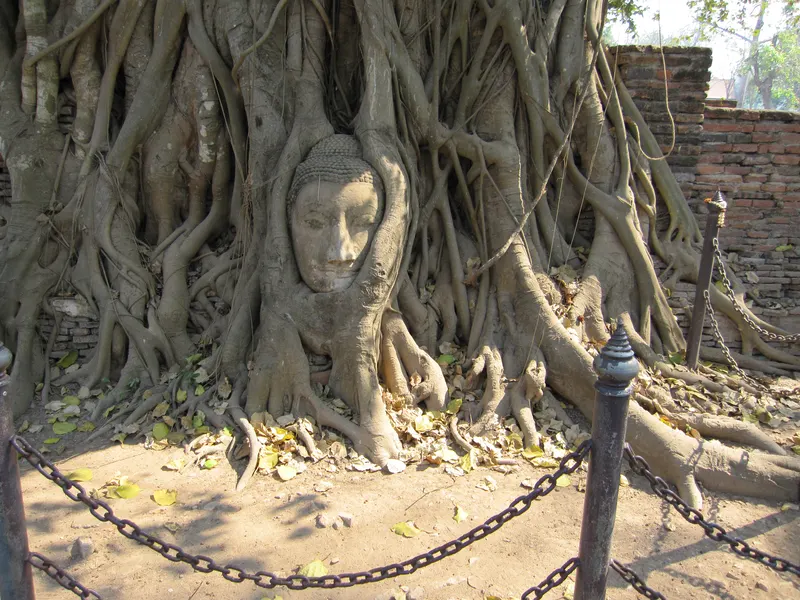
- Wat Mahathat — the iconic Buddha head in the tree roots; go early to beat the queue.
- Wat Ratchaburana — a well-preserved central prang you can climb into.
- Wat Phra Si Sanphet — the three royal chedis, best in morning light.
- Wat Lokayasutharam — a giant open-air Reclining Buddha, quick and free.
- Wat Chaiwatthanaram — the riverside showpiece, unbeatable at sunset.
Routing the day by bike, tuk-tuk or guide
A bicycle is the most enjoyable way to link the central cluster: the island is flat, the distances between the main ruins are short, and you set your own pace. Rent from a shop near the ferry or station, ride the central loop in the cool of the morning, and you will cover Wat Mahathat, Wat Ratchaburana and Wat Phra Si Sanphet without much effort. If the heat is intense or you have a family or older travelers in tow, an hourly tuk-tuk is the better call — the driver shuttles you between sites and waits while you explore, and it makes the longer hop to the riverside temple painless.
A guide adds the layer that ruins can otherwise lack: the history of the old capital, the meaning of the architecture, and the stories behind the headless Buddhas and the sacked city. If you come on a tour, that context is usually built in; if you arrive independently and want it, you can hire a licensed guide at the park. Whichever way you travel, dress for active temples — covered shoulders and knees, shoes off where asked — and ride rather than walk between the open, shadeless sites.

- Bicycle — best for the flat central cluster in the cooler hours.
- Hourly tuk-tuk — easiest for heat, families and the ride out to the riverside temple.
- Guide or tour — for the history and context behind the ruins.
- Dress for active temples and ride between the shadeless sites.

Timing the light and the heat
The ruins are at their best in the soft light soon after opening and again in the last hour before sunset, which conveniently brackets the harsh midday heat you want to avoid on the open brick anyway. Do the central cluster in the morning, retreat for a long lunch by the river when the sun is fiercest, and time your arrival at Wat Chaiwatthanaram for late afternoon so you finish on the most photogenic ruin as the towers turn gold. In the cool season this rhythm is easy; in the hot months it is essential.
Some riverside ruins are floodlit after dark, which can be worth a brief evening look if you are staying late or returning by a private driver. But for a day-tripper the morning-and-sunset pattern is the one to plan around — it gives you the two best windows for both comfort and photographs and keeps you out of the worst of the heat.
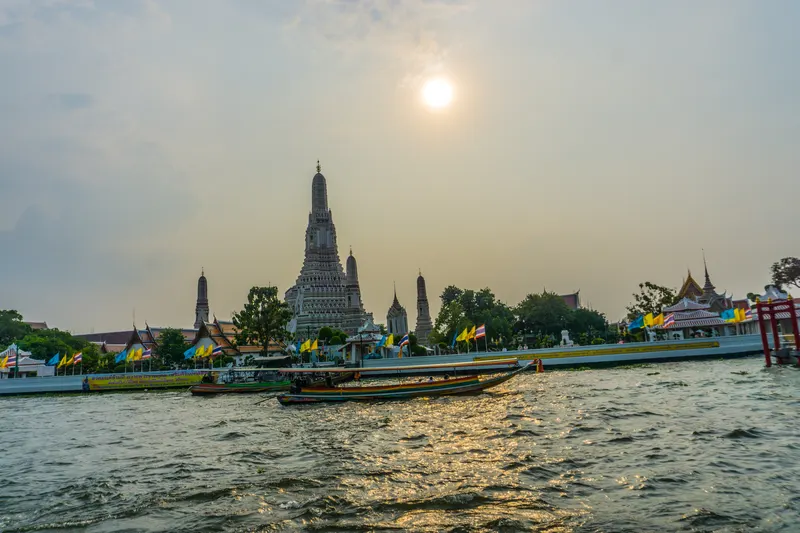
Wat Pho (Reclining Buddha)
Home of the giant Reclining Buddha and the birthplace of Thai massage — an easy walk south of the Grand Palace.
Map pins
Map data © OpenStreetMap contributors · Tiles © OpenFreeMap
Sources
- Go Ayutthaya — Historical Park ↗
Official Ayutthaya province page for the UNESCO historical park; confirm current gate fees and the combined ticket on arrival.
- Fine Arts Department ↗
The department that manages the historical-park monuments, ticketing and hours.
- UNESCO — Historic City of Ayutthaya ↗
Official background on the World Heritage site and its monuments.