
- Best time
- Cool season (Nov–Feb) for the easiest walking
- Getting there
- Day one is river-led from the Old City
- Price
- Royal temple tickets (Grand Palace 500 THB
How to split 48 hours
Two days is enough to see the headline Bangkok without rushing if you split the city cleanly: one day for the historic west — Rattanakosin's temples and the river — and one day for the modern east, around Siam, the malls, the museums and a rooftop. Slot Chinatown in as an evening on its own, ideally a weekend night when Yaowarat is at full electric crush. That rhythm keeps you from crossing the city at the wrong time of day, which is the single most exhausting Bangkok mistake.
Each day follows the same heat logic as a one-day trip: outdoors early, an air-conditioned break across the early afternoon, then back out as the light softens. The difference is that you now have room for the river, a real market and a proper sunset, rather than sprinting through only the temples.
Both days assume a transport-smart base. If you have not booked yet, choose your area before your hotel — somewhere on the BTS, the MRT or a river pier — because in Bangkok the neighborhood decides how the whole trip feels.
- Day 1: Old City temples, the Chao Phraya, and a Chinatown dinner.
- Day 2: Siam malls and a museum, a market, and a rooftop sunset.
- Keep Chinatown for an evening, best on a weekend.
- Book your area before your hotel — transit access beats everything.

Book ahead
Arrive at the Grand Palace early rather than booking; reserve a rooftop table and any dinner cruise ahead of busy weekend nights
Day one: temples, the river and Chinatown
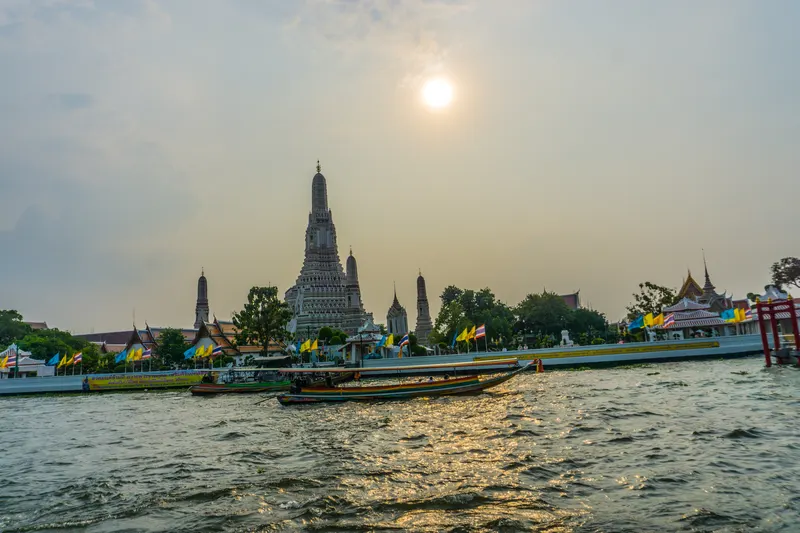
Run the classic Old City morning first: the Grand Palace and Wat Phra Kaew at opening, then Wat Pho for the Reclining Buddha, then the cross-river ferry to Wat Arun. Keep shoulders and knees covered for the royal temples and arrive early to beat both the heat and the tour groups. Allow the whole morning for the trio and do not try to add a fourth temple — the headline three are plenty for a two-day trip.
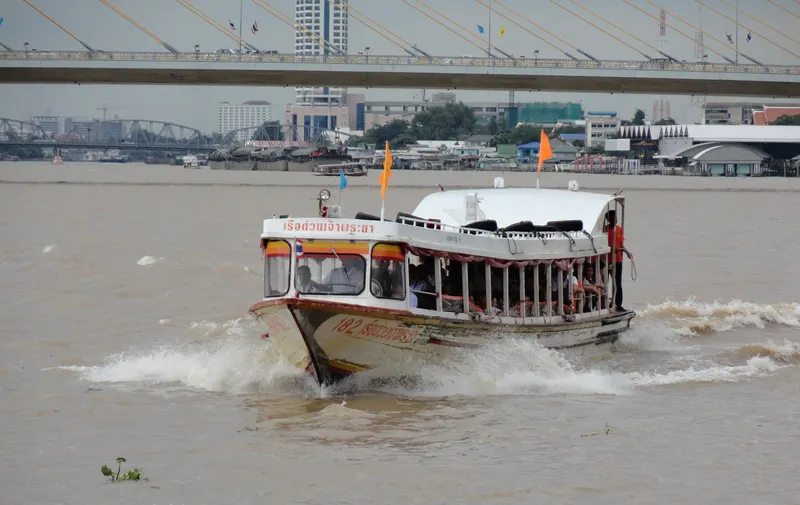
Spend the early afternoon on the water and out of the sun. The orange-flag express boat is cheap transport and the best free sightseeing in the city; ride it down to ICONSIAM for a cool, indoor floating-market lunch, or up toward the flower market at Pak Khlong Talat for a quieter, photogenic stop. As the light goes gold, the river is at its most beautiful, so time a crossing or a riverside drink for sunset.
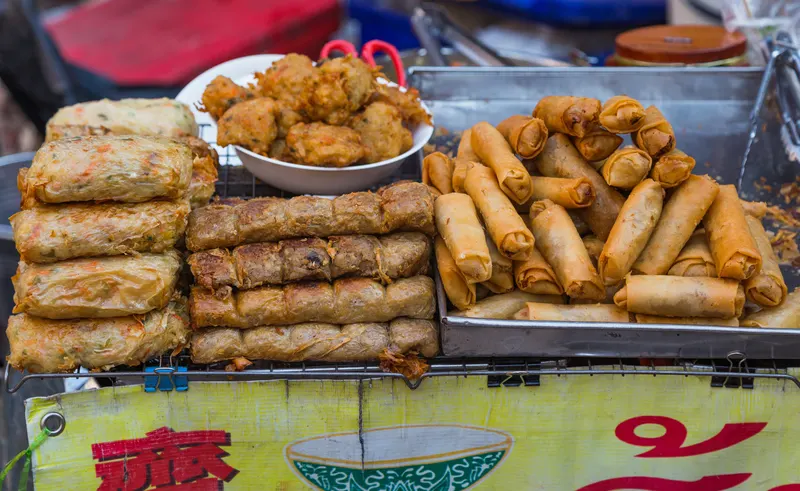
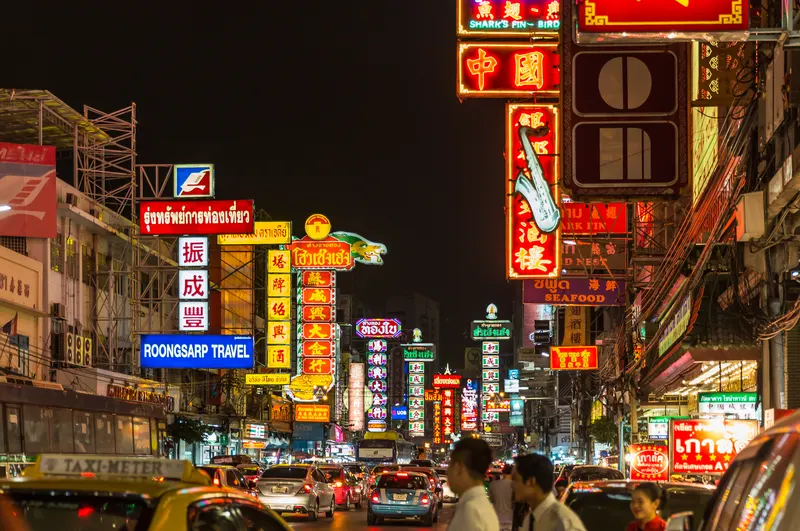
Save the evening for Yaowarat, the Chinatown strip, which turns into an open-air kitchen after dark — grilled seafood, noodle stalls, herbal pharmacies and dessert carts under flickering neon. It is busiest and most electric on weekend evenings, so come hungry and graze in stages rather than committing to one restaurant.
- Morning: Grand Palace, Wat Pho and Wat Arun, in that order.
- Afternoon: the express boat, ICONSIAM or the flower market, out of the heat.
- Sunset: time a river crossing or riverside drink for golden hour.
- Evening: graze Yaowarat (Chinatown) — best on a weekend night.
Day two: modern Bangkok, a market and a rooftop
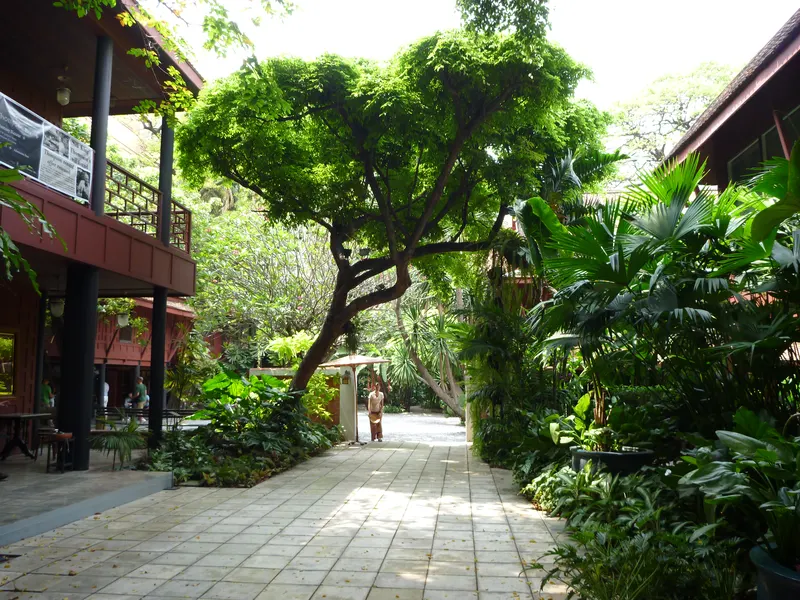
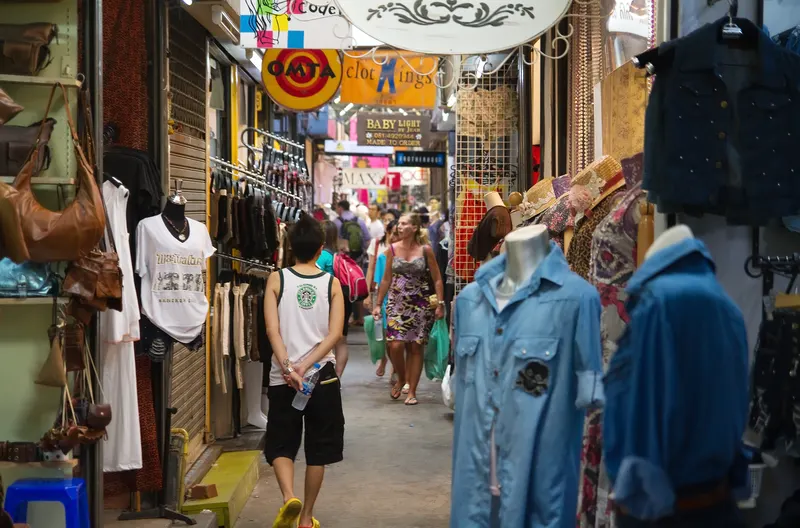
Day two swaps temples for the contemporary city. Start with a market — the weekend Chatuchak sprawl if your days line up, or the polished Or Tor Kor food hall and a fresh-fruit graze any day — then move to Siam, the central shopping and culture core. The malls here are genuinely worth an hour or two, and the Bangkok Art and Culture Centre and the Jim Thompson House make excellent, cool breaks from the heat. Siam is also where families and first-timers feel most at ease, with everything walkable and rain-proof under cover.
Take the BTS rather than the roads between stops; the Skytrain glides over the gridlock that swallows taxis. Keep the worst of the early afternoon indoors in a mall or museum, then aim east or toward Silom and Sathorn for the evening, where the rooftop bars deliver the skyline at sunset. Most enforce a smart-casual dress code, so dress up a little for the view.
If the sky opens up — likely on a wet-season afternoon — day two flexes easily: the malls, museums and food halls of Siam keep you dry and occupied without losing the thread of the day.
- Morning: a market — weekend Chatuchak or the Or Tor Kor food hall.
- Midday: Siam malls, the BACC or the Jim Thompson House, all air-conditioned.
- Evening: a Silom or Sathorn rooftop bar for the skyline at sunset.
- Travel by BTS to skip the traffic between stops.

Sources
- Grand Palace official visitor info ↗
Opening 8:30am, 500 THB foreign entry (2026) — arrive at opening to beat the groups.
- Chao Phraya Express Boat (official) ↗
Orange-flag flat fare (about 16–20 THB, 2026) along the main piers; confirm the current schedule.
- Chatuchak Market opening times ↗
Full market open Saturday–Sunday 9am–6pm (2026); plan a weekend morning if your day-two market is Chatuchak.
- Jim Thompson House visitor info ↗
Confirm current opening hours and ticket price for the teak-house museum.